



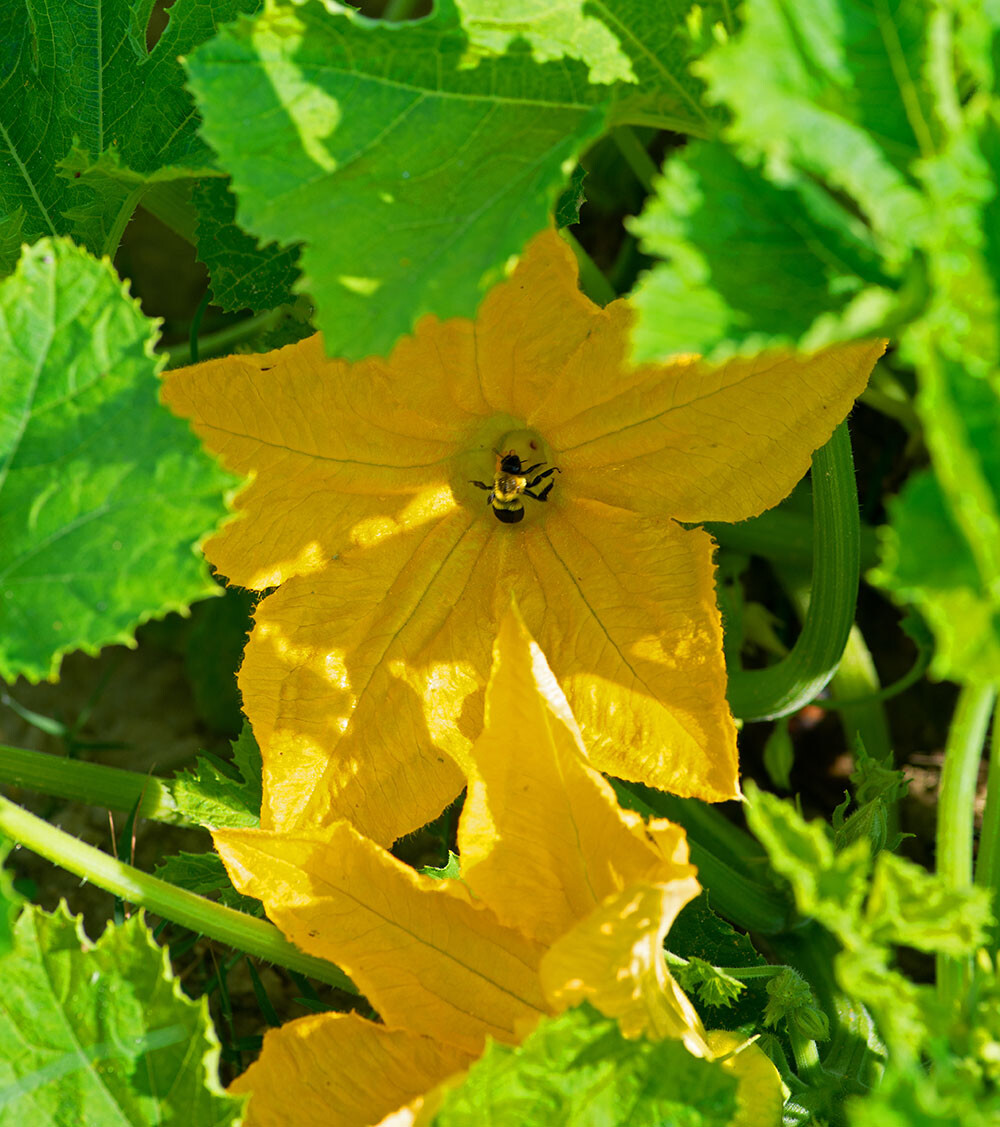
As your squash patch reaches maturity under the strengthening summer sun, well-tended plants should begin brimming with their delectable edibles, meaning you can reap the benefits by harvesting … and harvesting … and harvesting. Before you know it, you might be up to your neck in crookneck, straight neck, patty pan, or zucchini fruit.
But as much as you like squash, I’m sure you don’t want to eat it a zillion times or more until the first frosts of late fall bite the warm-season veggie garden. So, what to do? Pickle or freeze the excess? Give extras away? Or, as an alternative, perhaps try a new way to savor this old garden-to-kitchen staple?
Before squash plants bear fruits, they produce their bright yellow flowers, which, believe it or not, are edible. And tasty. With a flavor like squash fruit but fainter, these blossoms aren’t strangers in fancy restaurants, being served raw in salads as well as sautéed, fried, or baked for elegant side dishes.
Interested? Don’t chomp on a mouthful of flowers just yet — there’s a few basics to go over first, starting with insecticides. If you insist on spraying your garden with commercial bug killers, make dang sure they are cleared for use on vegetables, and even then, try to limit applications.
Now, let’s talk botanical birds and bees. Squash plants have both male and female flowers, with the he-blooms being typically perched on extended stems, while the she-blooms nestle closer to the bases of leaf stalks. There are usually many more male flowers than female blossoms, so if you want to also maintain a steady crop of squash fruit through the growing season, go for some of the boys first.
Although overall squash production will be reduced, female flowers can be picked as well. To make these blooms more interesting edibles, wait until a baby squash grows to about 1 to 2 inches long on each blossom base before harvesting.
Kitchen prep is pretty simple: First, examine the flowers for bugs, especially bumblebees — I can’t tell you how many times I have found these chubby buzzers blissfully asleep in blossoms. Then, snip out the pistils or stamens tucked inside the blooms, and wash the petals. Finally, let your inner culinary creativity be your guide.
I have enjoyed lightly fried squash blossoms with ranch dressing as a nifty appetizer myself, but do a search for “squash flowers,” and you will find a ton of other tantalizing recipes to try!
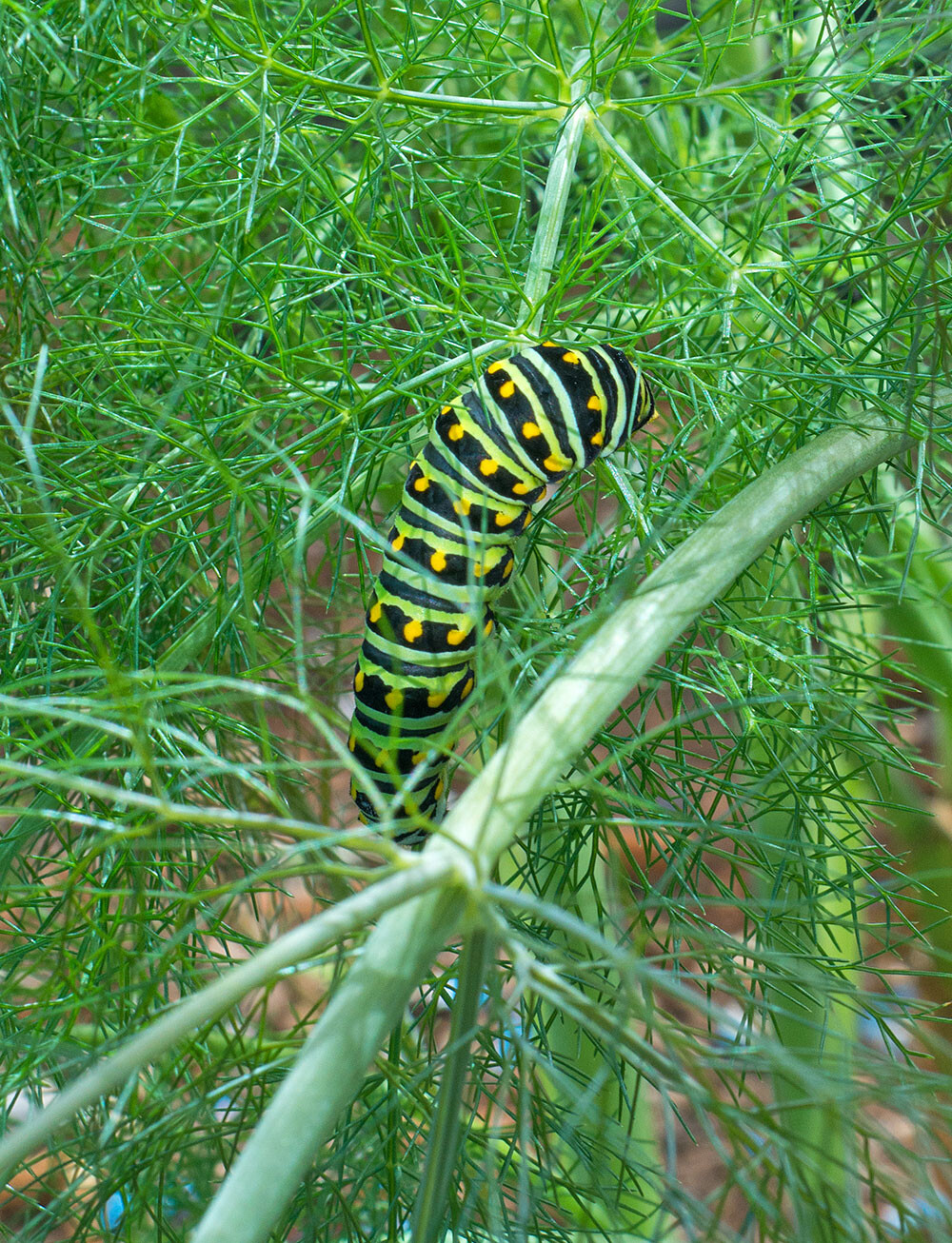
This fennel-munching caterpillar will become an eastern black swallowtail butterfly.
If you find the foliage of your carrot, parsley, fennel, cilantro, or dill plants being munched on by rather large green caterpillars with yellow dots banded by black and white stripes, don’t be so quick to reach for the bug spray. These are immature forms of the eastern black swallowtail butterfly. Instead of using insecticides on such beauties-to-be, consider growing more of their favorite plants than you will need for yourself in a separate part of the garden. Then, serve them up as sacrificial suppers, meaning when you find any of these caterpillars on “your” plants, simply relocate them to “their” plants to feast upon so they can bulk up for their continuing metamorphosis that will eventually result in pretty butterflies.
To Do in the Garden
June
- Make rakes, hoes, and shovels even more useful in your garden by marking the handles with paint, permanent marker, or waterproof tape in inch increments. This gives you handy measuring devices to use for checking row widths as well as planting depths and distances.
- If you remove some of the stem suckers off the lower portions of your tomato plants and tuck each away in a small pot filled with moist dirt in a semi-shaded spot, many will root and, in about a month, be ready as transplants that are exact copies of the momma plant for the midsummer veggie patch.
July
- To help prevent moist conditions that can be ideal for the development of nasty foliar diseases, use a soaker hose for irrigation or water plants early in the morning so leaves will dry off quickly in the rising sun.
- Enjoy a good drink after a long session in the summer garden? Your insect-eating feathered friends do, too, so be sure to clean out and refill the birdbath at least once a week during these hot, hazy days.

- Battle Bots: Giant Robot Fight Club
- Garden Adventurer: Savoring Squash Blossoms
- Recipes from Readers: Migas
- Liquid Assets: Tail Chaser
- Pay It Forward: Make a Splash at the Triangle Aquatic Center
- A Fresh Spin on Salad
- Small Business Spotlight: Bricks & Minifigs
- Dog-Friendly Destinations
- A Parade of Pets
- Golden Daze
- Things to Do: June/July 2026