


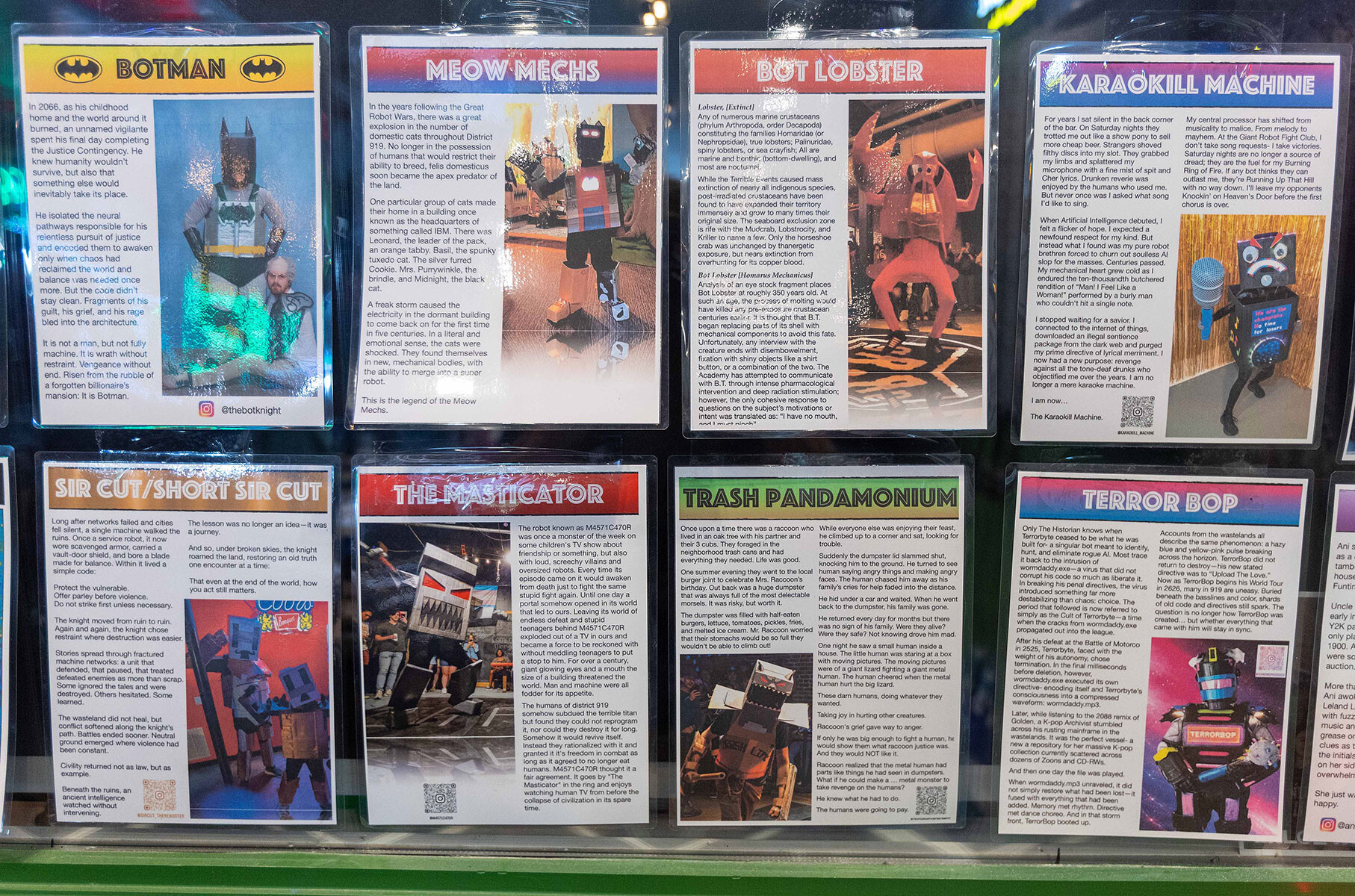
“The first rule of Giant Robot Fight Club,” announces referee Fudge Shemp to a raucous audience from inside the ring, “is please talk about Giant Robot Fight Club. Tell your friends. Tell your enemies. Tell your weird cousin …”
“Your weird cousin’s gonna love this,” interjects Hot Dog Henly, emcee and creator of Giant Robot Fight Club. The show is one he describes as “a bunch of different things. At its heart, it’s an independent comedy wrestling show. It’s a community. It’s an art show. It’s a performance art piece. It’s immersive theater.”
After living in New York City for about 15 years and working as an actor, playwright, and stand-up comedian, Hot Dog moved to Durham to be closer to his wife’s family. He’d known that he wanted to produce something here. He just wasn’t exactly sure what it was going to be.
While looking for a hole in the local market, along with the kinds of events that were doing well, he found sports meetups, crafting events, and “role-playing things, like Dungeons & Dragons sort of stuff.” Hot Dog’s goal was to “figure out how I could mush all of that into one big thing,” he says.
Hot Dog had become what he describes as “super obsessed” with wrestling, which he wasn’t allowed to watch as a kid, so he was thinking about a show that centered on some kind of fight. It was at The Common Market Durham that things clicked into place for him, as the upper level of tables and lower-level bar evoked a Colosseum setting.
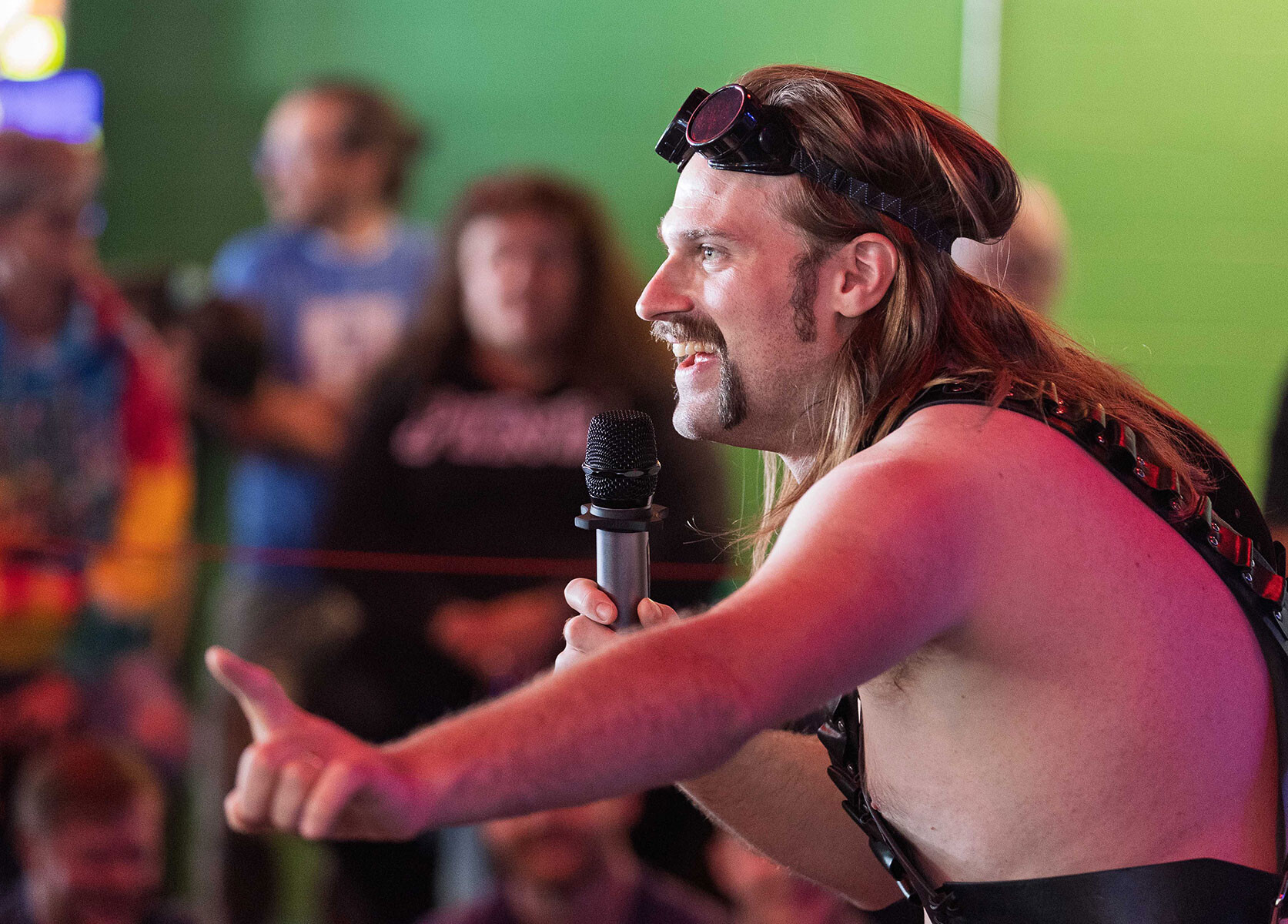
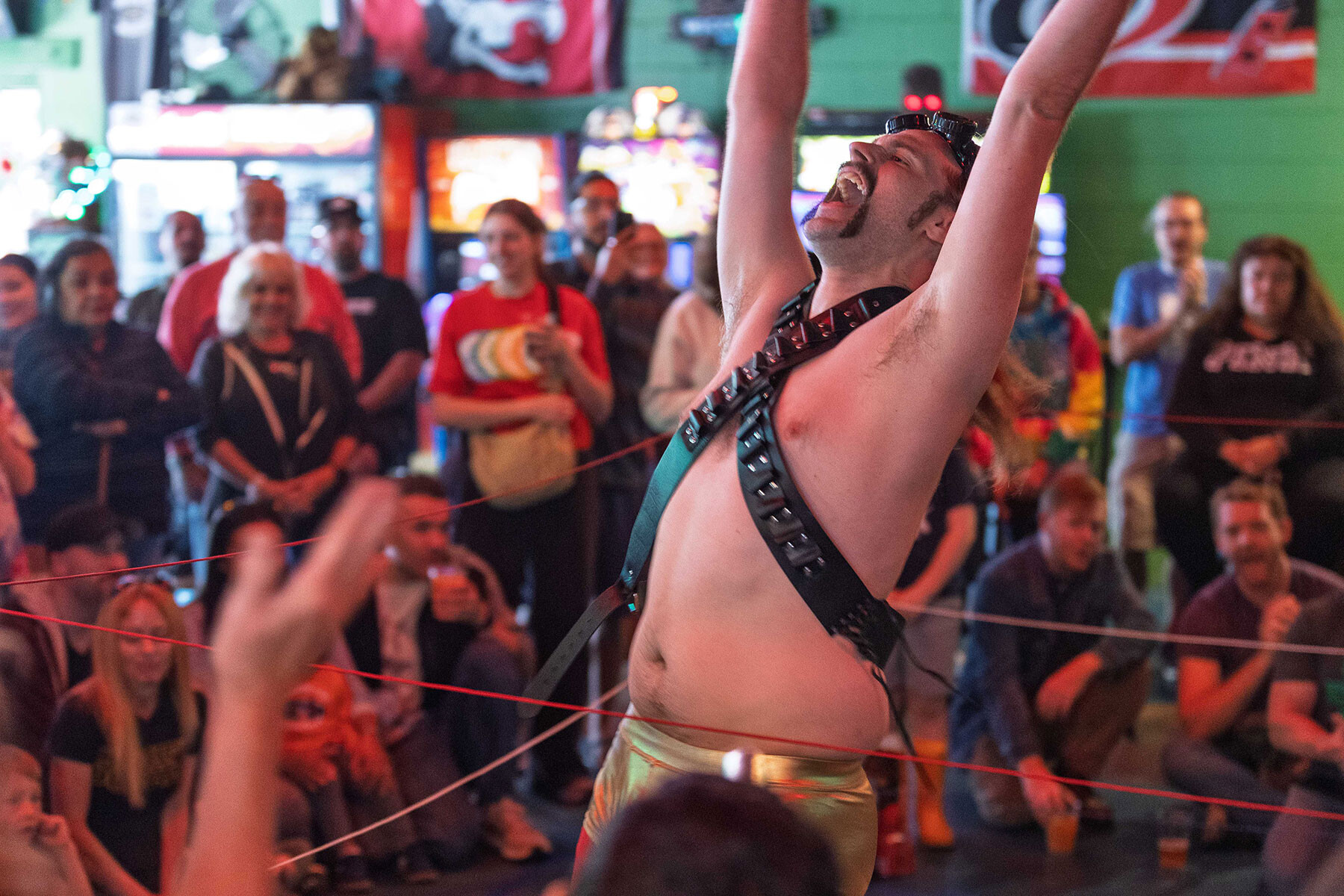
Giant Robot Fight Club creator, writer, emcee, and director Hot Dog Henly works the crowd at every show as its ongoing narrative continues to unfold.
A theater background helped Hot Dog recognize that wrestling is theater distilled to its bare elements. “The most simple story you can tell is in a wrestling ring,” he explains.
To tell the story of a post-apocalyptic wasteland, Hot Dog and Fudge — who coordinates the fights and works with the venues — set up each show with some jokes and satire. The running narrative has been told for over a year and a half now, and the goal is to ensure that every show feels different for a returning audience but is easily followed by those new to the Club.
While the show is scripted by Hot Dog, he describes the writing process as “more like daydreaming and kind of writing it down. … It’s just kind of a thing that exists so that I sort of know where I’d like it to go.”
For first-timers, Hot Dog and Fudge start by situating people in the narrative using comedy, but as Hot Dog admits: “If there are details that they miss, it really doesn’t matter because they’re here to see people in cardboard robots fight.”
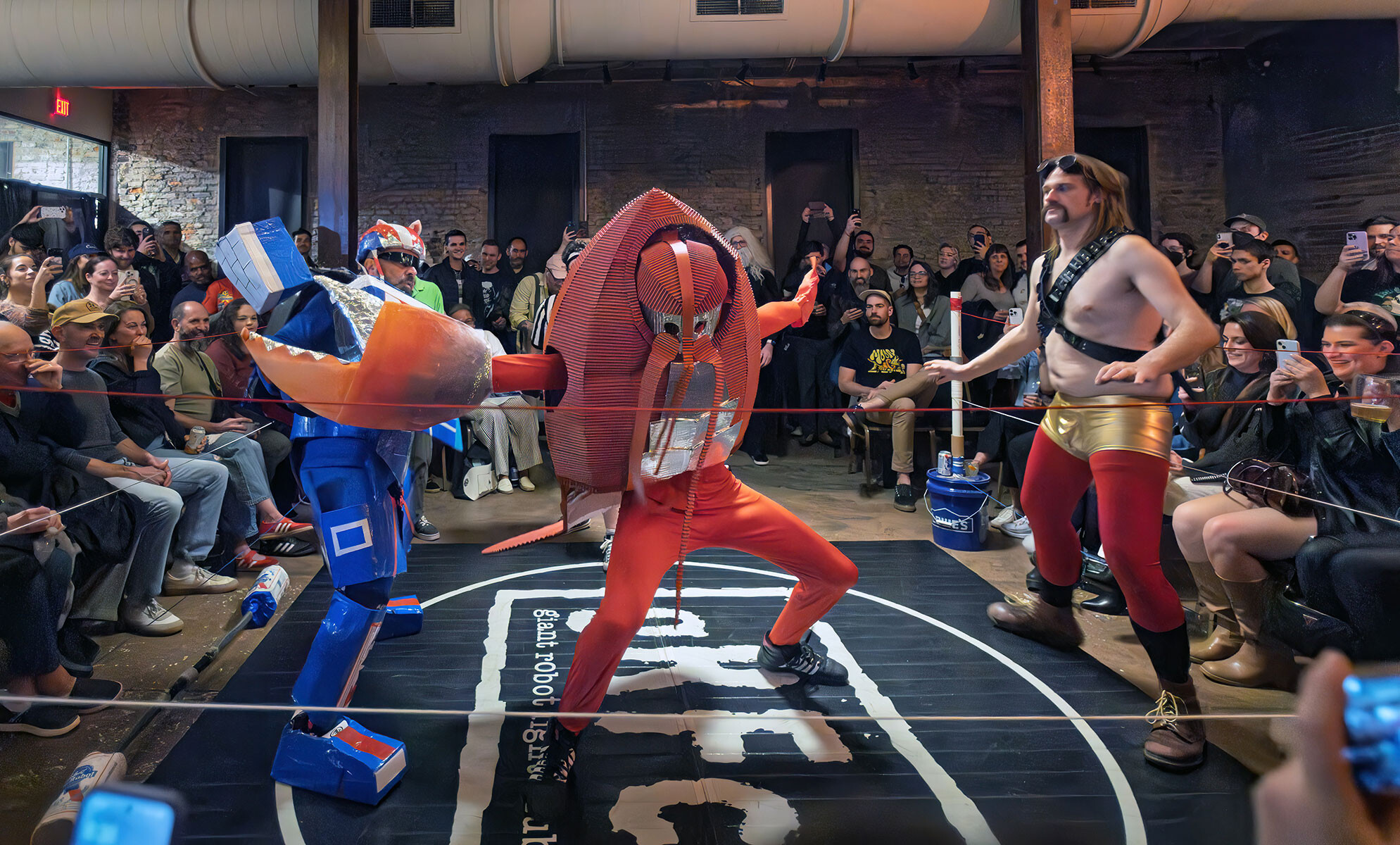
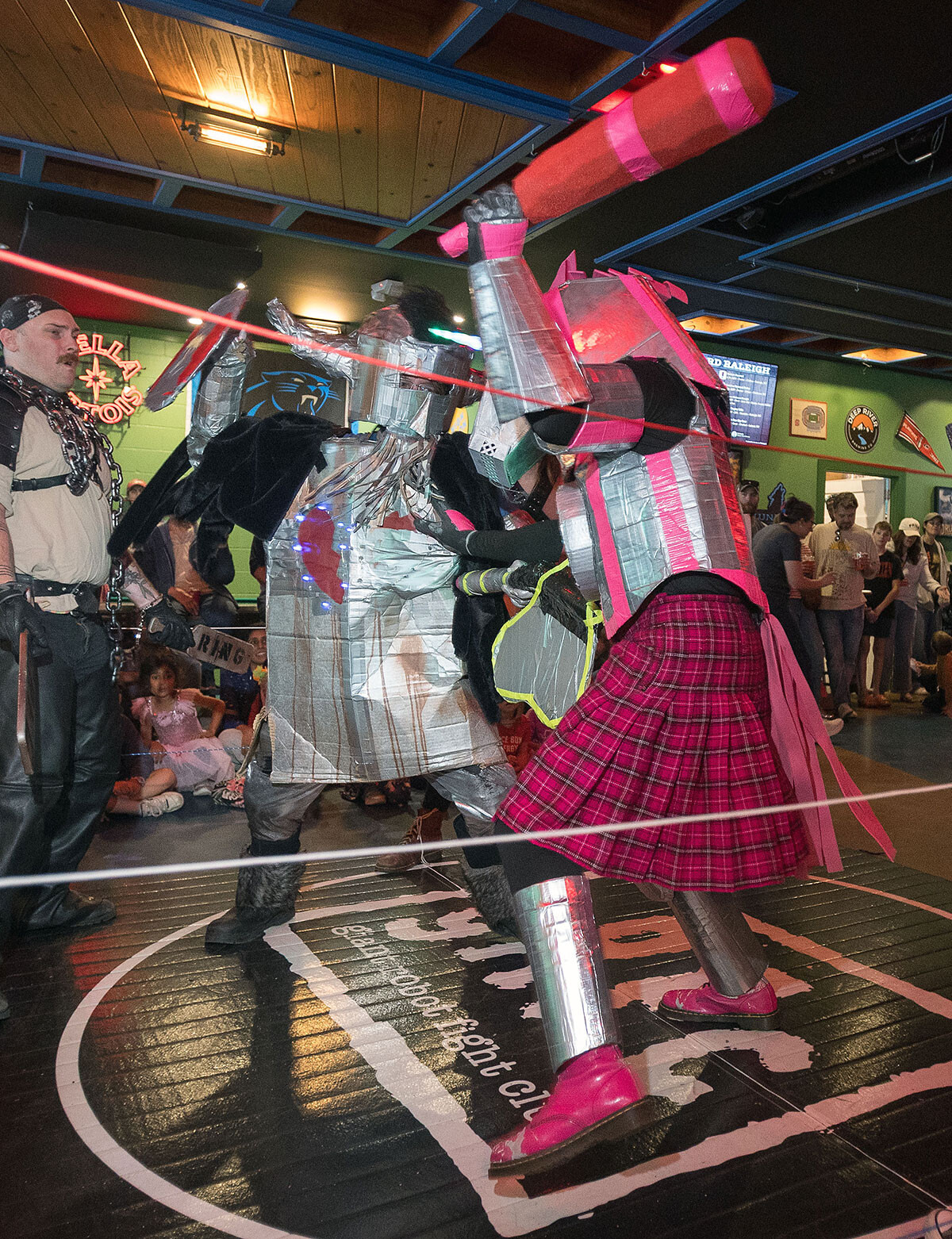
You read that right. Otherwise respectable people use cardboard and duct tape to dress up as robots and fight each other.
The requirement is that suits can only be made from cardboard, duct tape, foam, and paint of some kind; participants don’t have to use them all, but they can’t use anything else. One caveat is that after someone has fought a lot, and after the suit’s safety has been verified, they’re allowed to include lights.
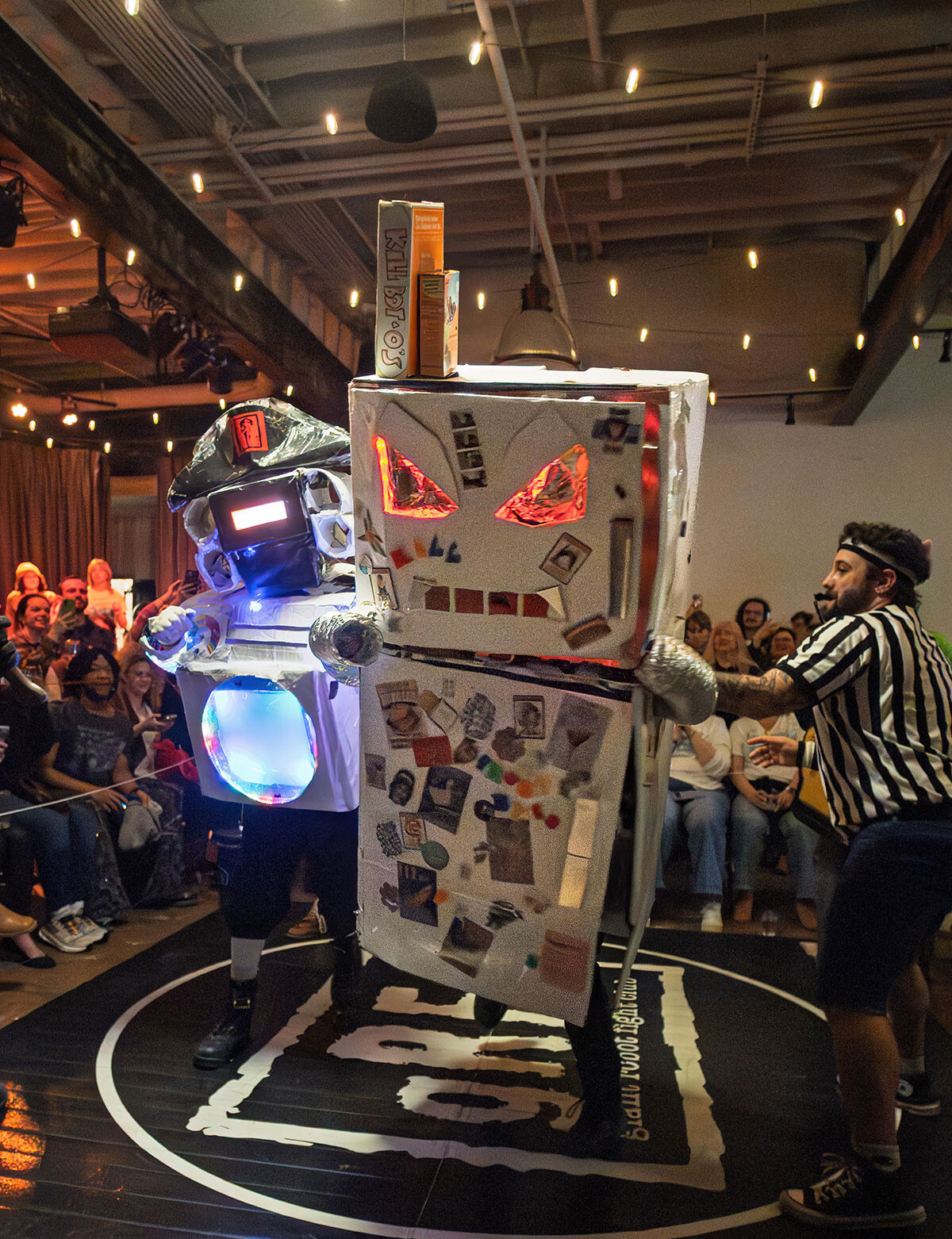
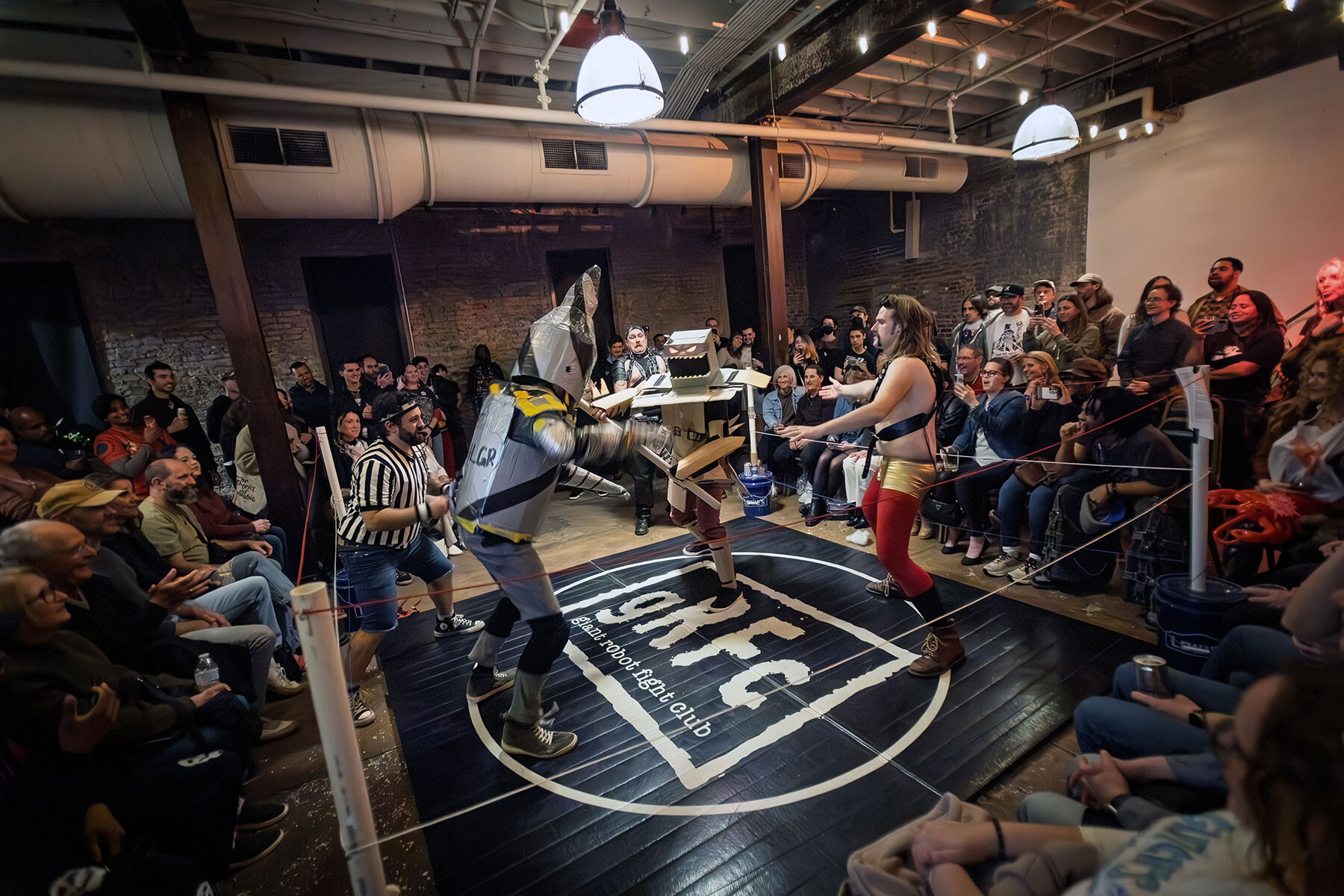
Referee Fudge Shemp officiates the George Washingmachine versus Frostbite bout.
While Hot Dog writes the story of the human characters — the host, the ref, the DJ, the head of security, the ring manager — and directs the show to the extent that is possible, everything else is up to the people doing it. “I get mad at the robots if they tell me what’s gonna happen in their fights,” he says. “I like to go in knowing as little as possible because that’s where the fun and surprises are.”
That fun and those surprises are best witnessed in person, as much of GRFC must be experienced to be appreciated.
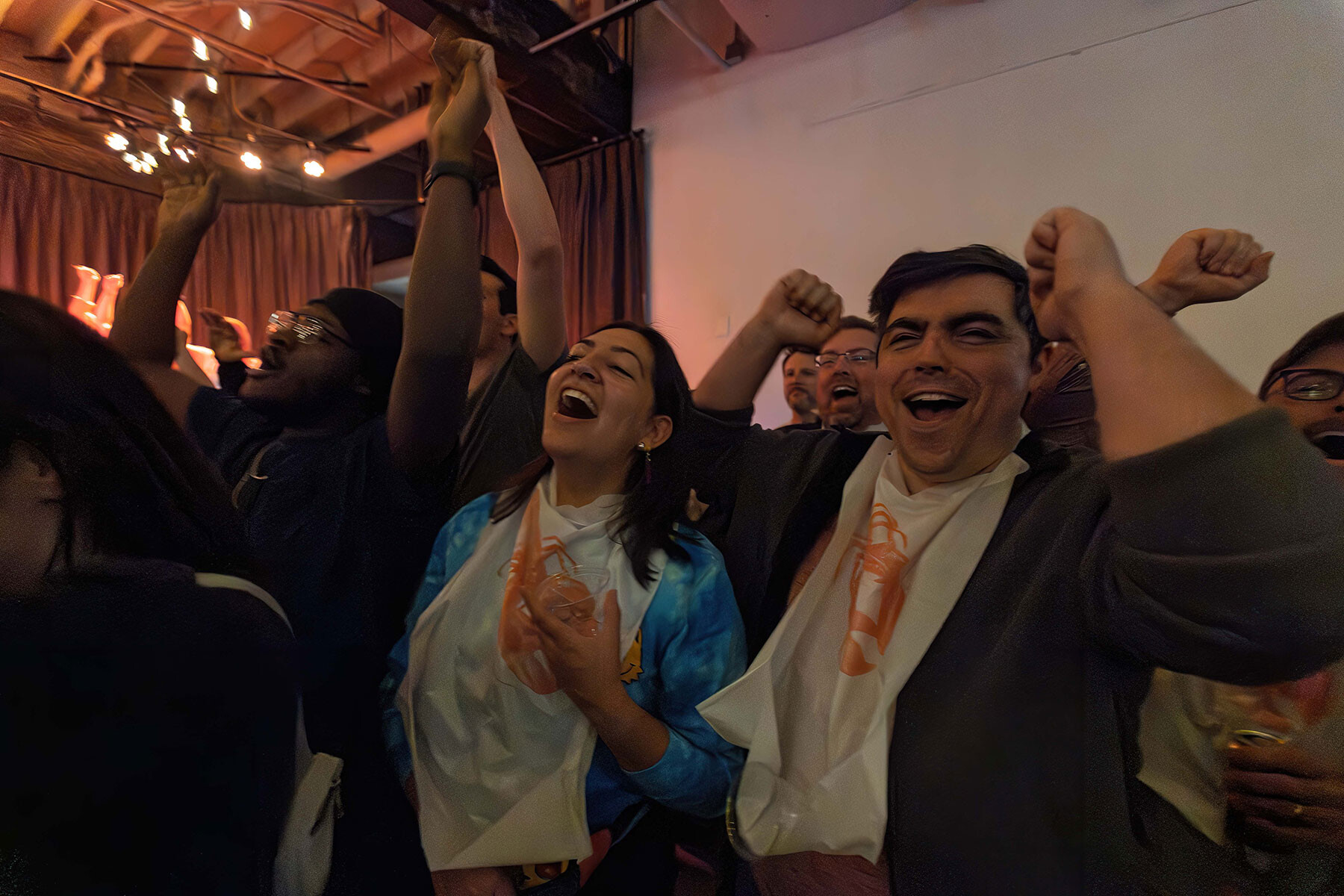
Attending the show, it’s clear that Hot Dog’s tongue-in-cheek characterization of “the absolute dregs of society” in attendance is accurate. He describes the audience as made of “moms, construction workers, scientists, and one super old dude who’s really good at judo.” The show typically includes groups of friends and several couples, as well as hype groups for the night’s fighters.
At the show at Raleigh Comedy Festival on March 28, Sheila Carty, wearing a GRFC T-shirt that matched her phone case, was eager to share how the show would unfold. “It’s just been great,” she said as she pulled out her camera roll and highlighted her longstanding support, explaining that there’s even a Reddit group dedicated to the show.
Before a less-than-official panel of judges, robots enter the personalized GRFC ring (which Sheila shared was recently upgraded from a taped-on GRFC lettered mat) to fight. As described by Fudge in his referee introduction: “Rule number 6: Two robots enter. One robot leaves.”
What happens between involves a lot of physical comedy and some great music.
When Cary Magazine caught the show, there was new fighter Bot Lobster and fan favorites Frankenbot, George Washingmachine, (who fought to Miley Cyrus’ “Party in the U.S.A.”) Pink Pony Clubber, the much-maligned and then-reigning GRFC champion Pabst Blue Robot, and live wire Ace Venterminator.
While GRFC’s participants fight to win “cash, prizes, and the love of the audience,” Fudge might best encapsulate the real goal when he says, “Rule number 7: Don’t die.”
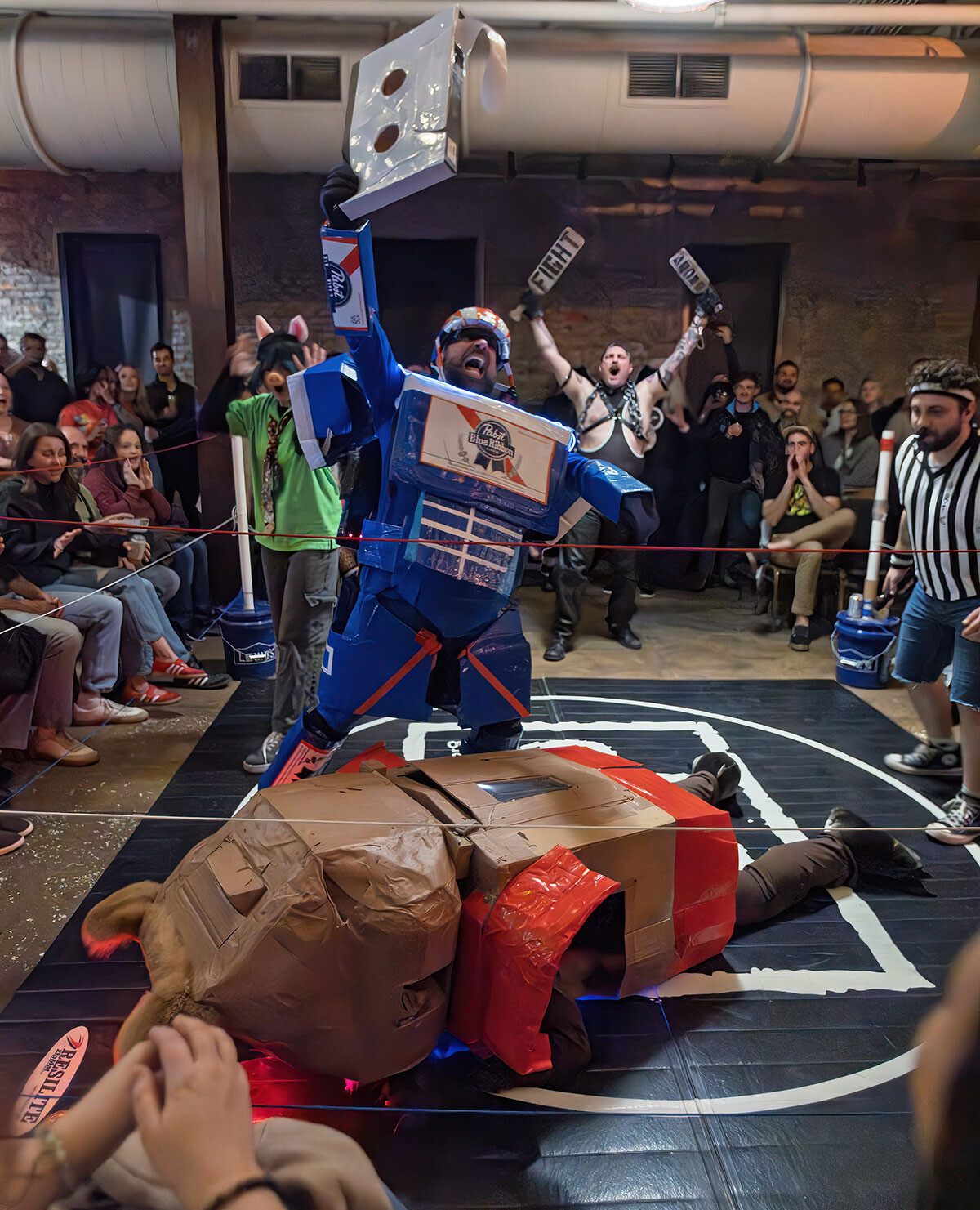
The louder the ringside crowd when showing their support (or disapproval), the better.
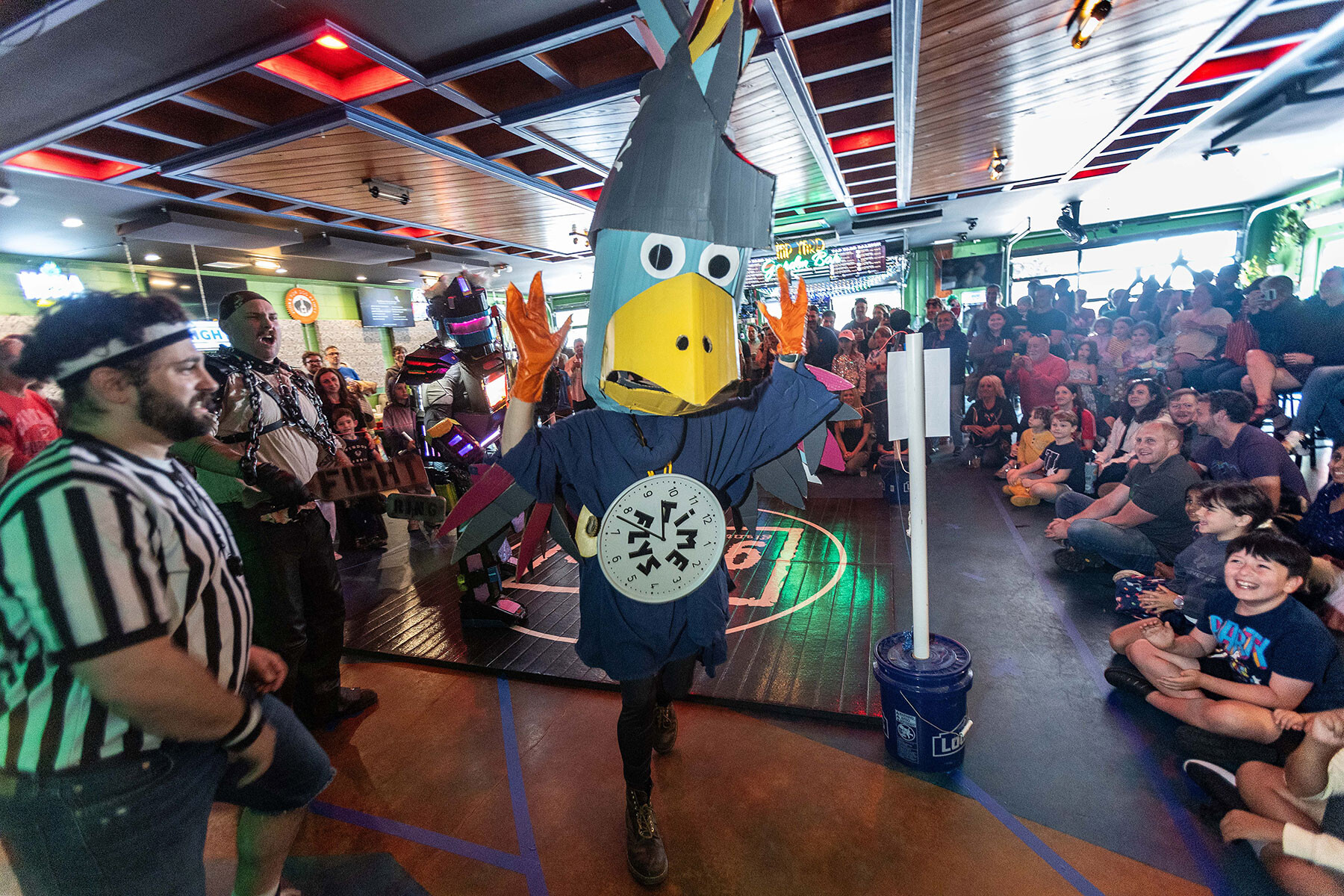
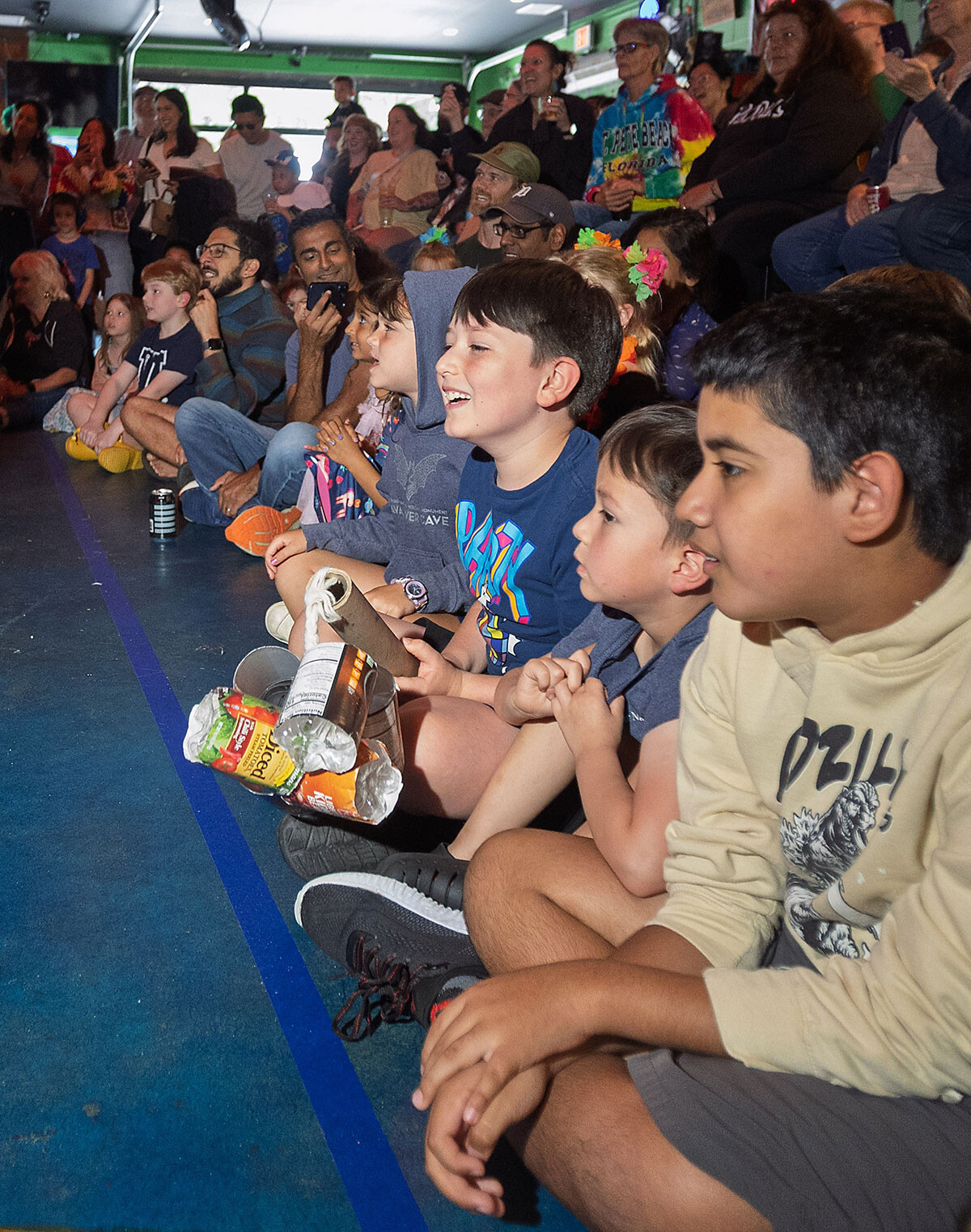
A kids’ show might therefore not seem like a natural extension, but with a significant toning down of language (“It’s the end of the world. … We tend to use some pretty colorful language,” Hot Dog says) and simplification of reference points, the kids “understand the assignment in two seconds.” Since the “violence” in the regular show is so cartoonish, little reworking is required, and the young audience needs minimal help from Hot Dog to get worked up.
More kids’ shows are planned as part of GRFC’s aim of achieving “absolute world domination.” Already, very small shows in small venues have become large-scale shows in bigger music venues. GRFC is currently in talks with the Carolina Theatre, and the prospect of touring is always on the table (as are comic books, action figures, and more). Hot Dog also hopes to reach a national audience through the release of an online show on the Club’s YouTube channel.
GRFC tends to announce the next show on the day of the current show, but Instagram is the best bet for information. “We like there to be some mystery about where we’re gonna pop up next,” Hot Dog says.
And GRFC is swinging hard with 20 (and counting) sold-out shows.
Something Fudge highlights again on fight night: “The second rule of Giant Robot Fight Club is please talk about Giant Robot Fight Club.”
@giantrobotfightclub

- Battle Bots: Giant Robot Fight Club
- Garden Adventurer: Savoring Squash Blossoms
- Recipes from Readers: Migas
- Liquid Assets: Tail Chaser
- Pay It Forward: Make a Splash at the Triangle Aquatic Center
- A Fresh Spin on Salad
- Small Business Spotlight: Bricks & Minifigs
- Dog-Friendly Destinations
- A Parade of Pets
- Golden Daze
- Things to Do: June/July 2026
Great pictures and article! GRFC is so much fun. Come out one time and you’ll be hooked!