



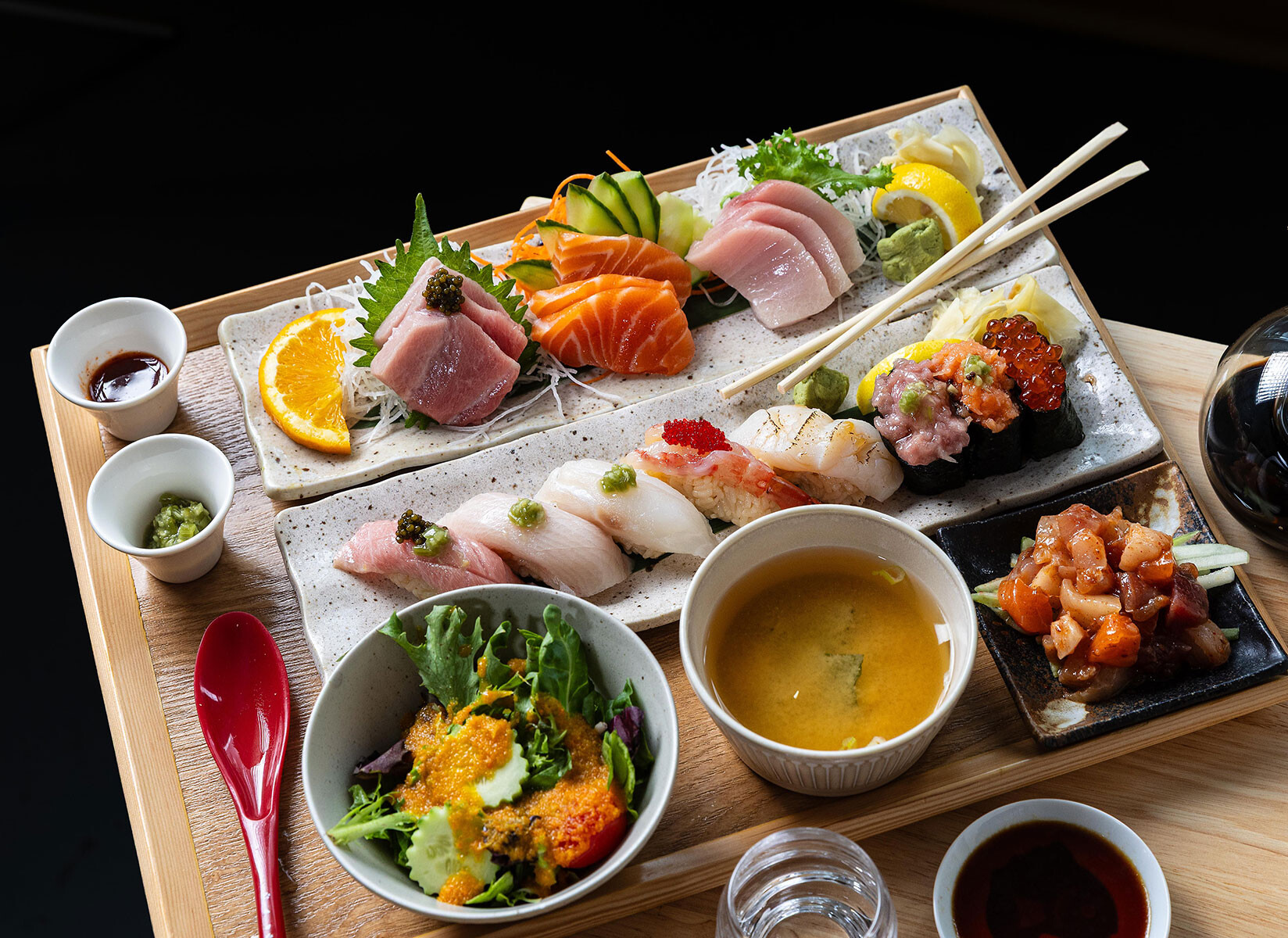
The sashimi and nigiri, Shijiri’s signature combo, on this board was sourced, selected, and prepared by a chef who turned down retirement because he still loves doing his work.
The name on the door at 9924 Chapel Hill Road in Morrisville doesn’t appear in any Japanese dictionary. Instead, “Shijiri” was created by owner Thana Lucksanapirak, who conceived the restaurant name by combining the names of his three beloved children: Hashi, Heiji, and Heyri. It is a word that may mean nothing to anyone outside the family, but it means everything to those within it.
In many ways, that’s the whole philosophy of Shijiri Sushi Bar, where a Thai-born entrepreneur and a veteran chef are quietly reimagining what a sushi bar can be.
Thana is, by his own description, the idea man. “I am the creator,” he says matter-of-factly. “I have the concept. I think what he makes happen.”
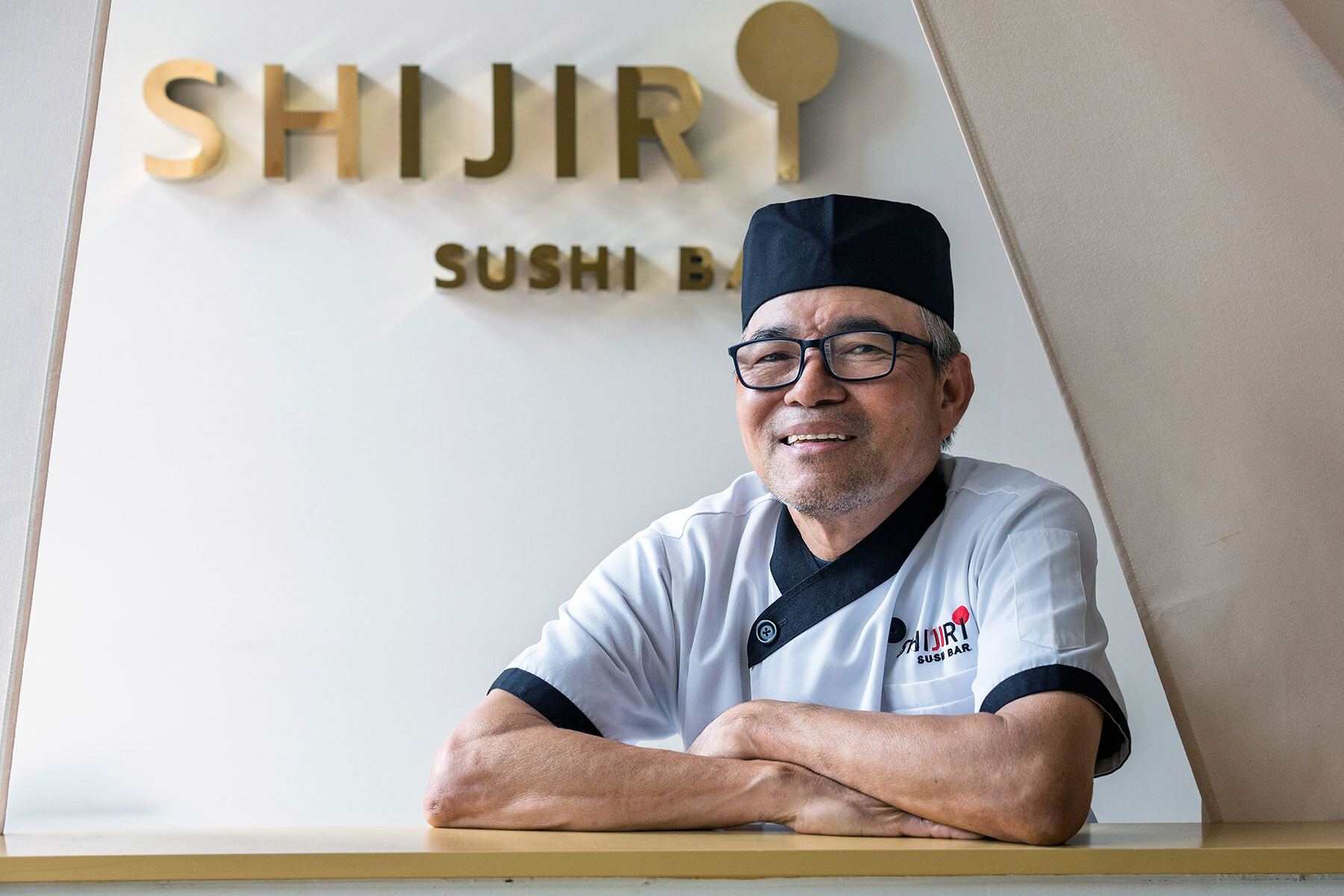
Chef John Ratana has spent 36 years honing his eye, and knife skills, for fish.
The “he” in question is Chef John Ratana, a 36-year master of Japanese cuisine who trained in Japan before spending nearly two decades at Sushi-Thai in Cary and who has now, approaching what might have been retirement age, found a new purpose.
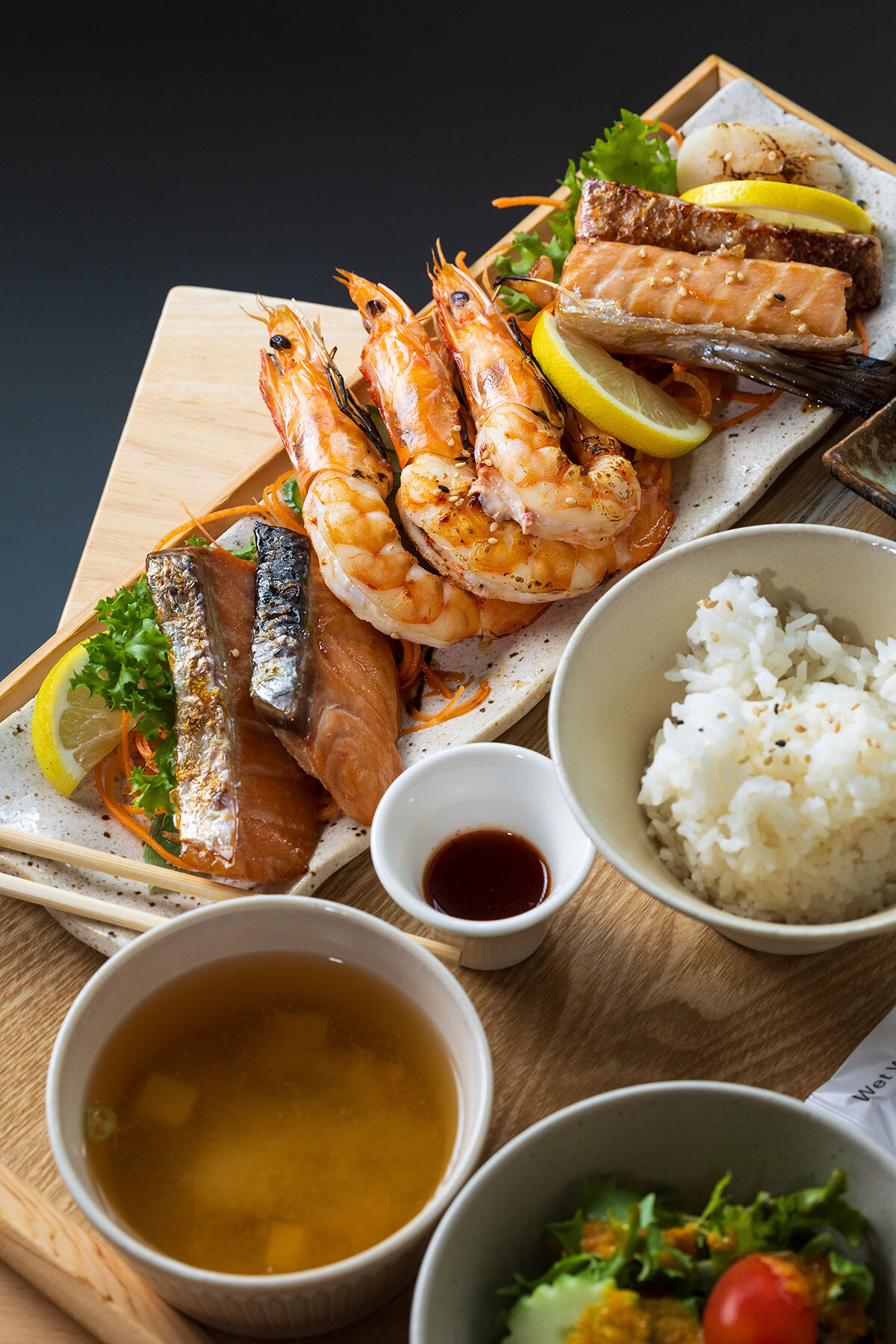
“I still love to do this kind of job,” Chef John says. “I love to make customers happy.” Joking that retirement, if it comes, is still a few years away, Chef John — who singlehandedly prepares everything that comes out of the kitchen — is hardly slowing down.
The partnership between Thana and Chef John required some negotiation at the start, after they first met on a local golf course. Chef John had spent decades building a reputation on his own approach; a new concept required trust and flexibility from both sides. “We did a lot of testing,” Thana says. “In the beginning, we fought each other many times.” But that early friction was also productive.
What emerged is a menu that Chef John calls genuinely different from anything he has made before and from what other sushi restaurants are currently making. His most loyal customers have noticed that difference.
“I can’t eat at another place without it being totally different,” he says, repeating the feedback from regulars who have followed him to Shijiri and from newcomers who have discovered him there since the restaurant opened in late 2025. “Sometimes they tell the chef somewhere else, ‘You have to make it like John,’” he shares. “And that chef says, ‘No, I cannot do that.’”
What differentiates Shijiri isn’t a single dish or a clever concept. It is conviction about what sushi is, and what it has become in the American market.
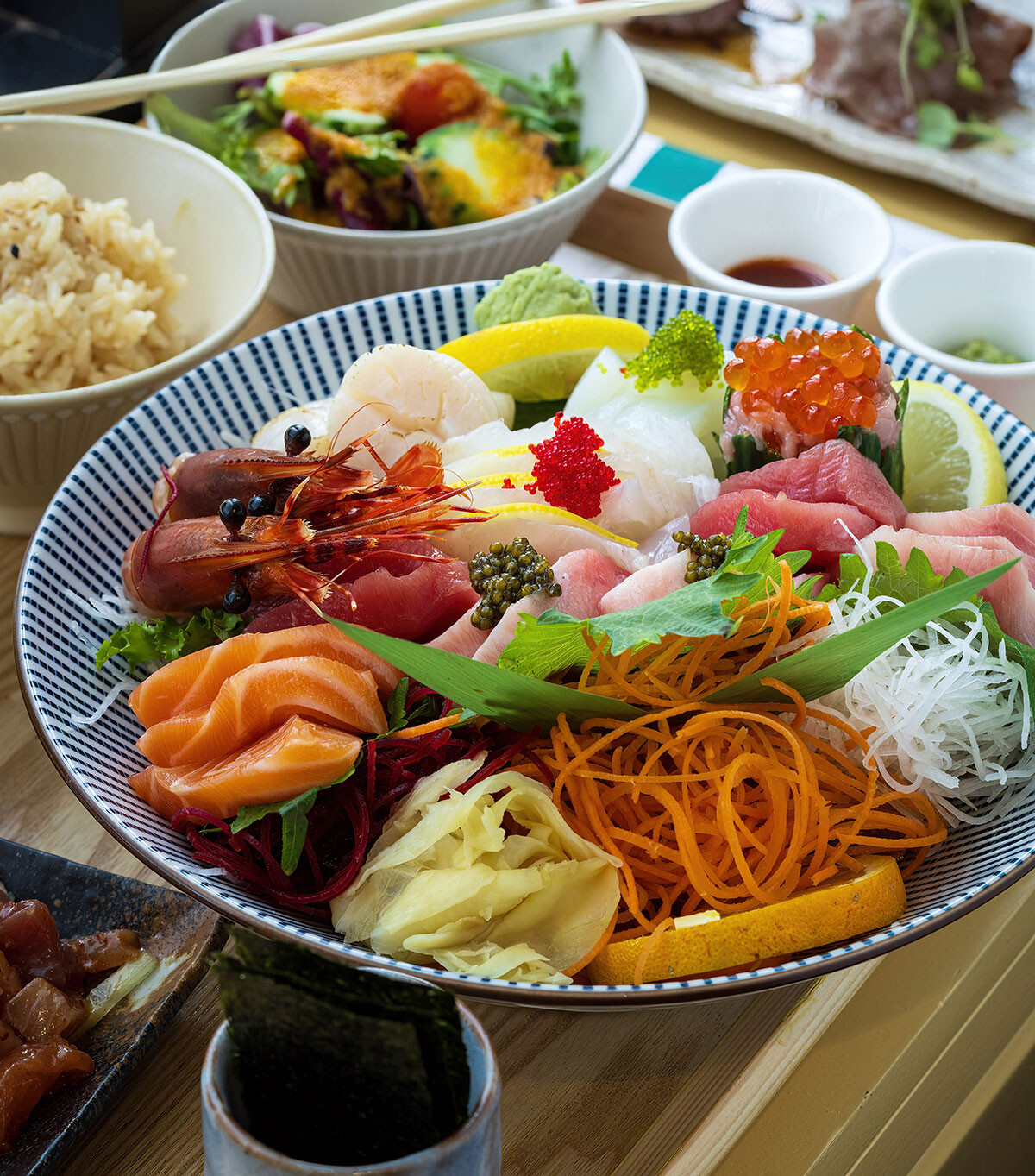
An exquisite spread of toro, salmon, yellowtail, scallop, amaebi sweet shrimp, ikura, tobiko, and kisame wasabi over rice
“Most of the sushi around here is with a lot of rolls,” Chef John explains. “Because the customer is not comfortable eating raw fish, everything is cooked, fried, stuffed. ….” Shijiri is a deliberate departure from that. The menu is built around sashimi — clean, precise, unadorned — alongside nigiri, Japanese-style chirashi rice bowls, and a signature combo platter that pairs sashimi with nigiri on a single plate. The goal is to draw guests toward the fish and not away from it. “We try to bring the people who know how to eat fish” to Shijiri, Chef John says. “It makes a big difference.”
Whole fish is broken down onsite. Chef John uses no pre-cut sashimi and employs no shortcuts. Ingredient sourcing spans the world, from Hawaii to Boston and (of course) Japan. Orders are placed through suppliers who call each morning after the boats come in. “They’ll say, ‘John, we have this, this, this, this …’” the chef says. “I tell them what I want and the next day, they ship it here.”
Scallops from Hokkaido. Tuna belly so well marbled it dissolves on contact. Fresh wasabi — kisame — the real kind that builds slowly and is mild and grassy rather than sharp and burning. The squid, cut from the meaty body of the mongo squid and served as sashimi, has a crunch that prompts diners to pause and listen to each other chew.
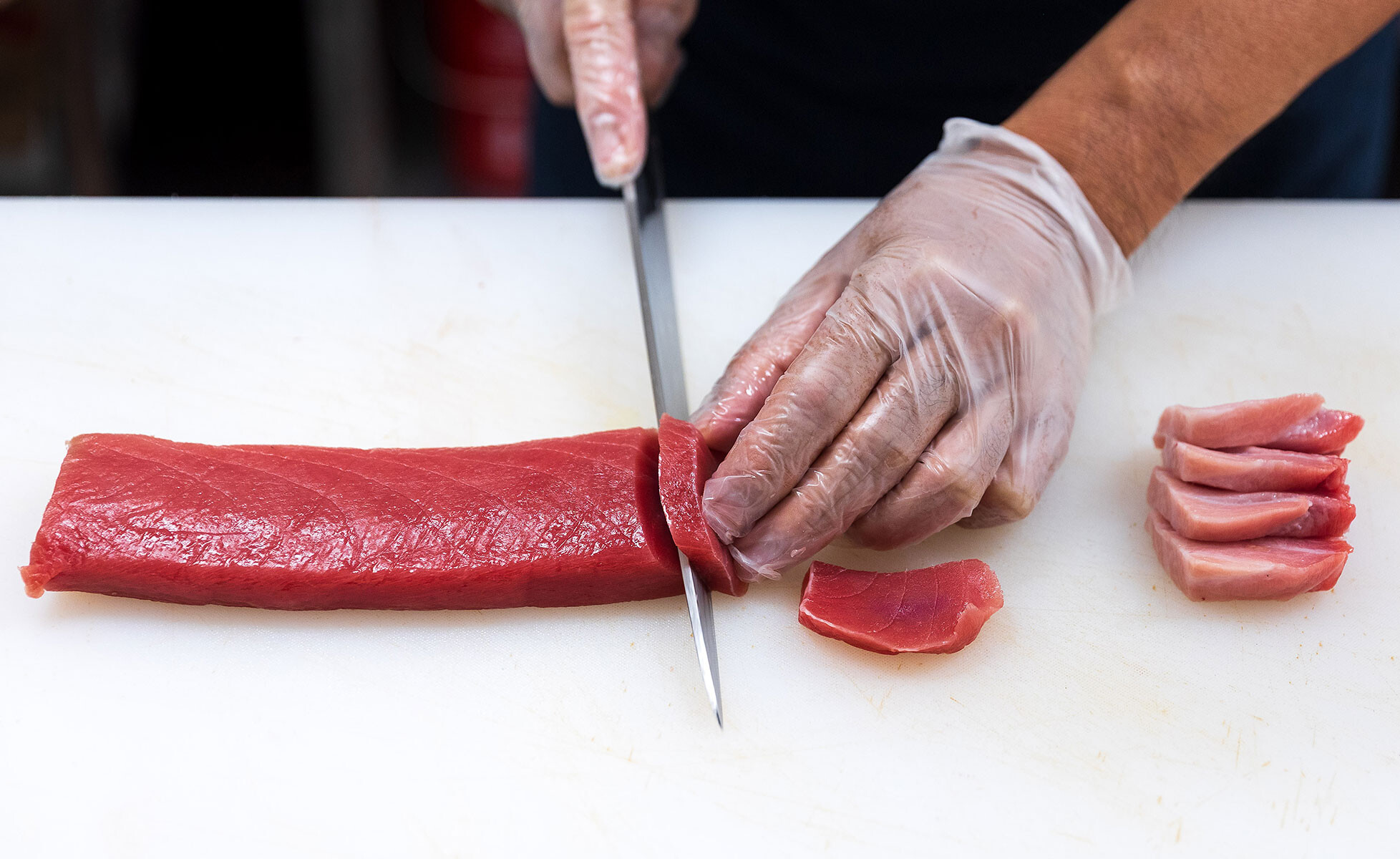
At Shijiri, excellent sourcing speaks for itself.
The menu changes whenever the season or supply dictates. Certain dishes stay as long as customers keep ordering them. Others rotate with the availability of the best fish. Tariffs have pushed prices up — “three times already,” Thana says without complaint, just acknowledgment — but the quality Shijiri seeks out hasn’t budged.
The Shijiri Reserve, a 25-piece sashimi platter, arrives with fish laid out in careful rows and with colors shifting from the deep red of tuna to the pale pink of salmon to the opalescent white of squid. The Chirashi Concept — what Chef John calls “really Japanese” and distinct in spirit and execution from the American rice bowl — pairs immaculate fish with seasoned sushi rice. For those diners who can’t, or won’t, commit to one or the other, The Shijiri Signature combo splits the plate between nine pieces of sashimi and eight pieces of nigiri. Wagyu beef arrives seared and draped in kisame and blanketing rice, a combination that seems to melt even before you bite.
Even the bowls, trays, and spoons are imported directly from Japan. The restaurant’s website states it, and it is immediately evident once you step inside the warm, considered, and minimalist space: even the tiniest details matter.
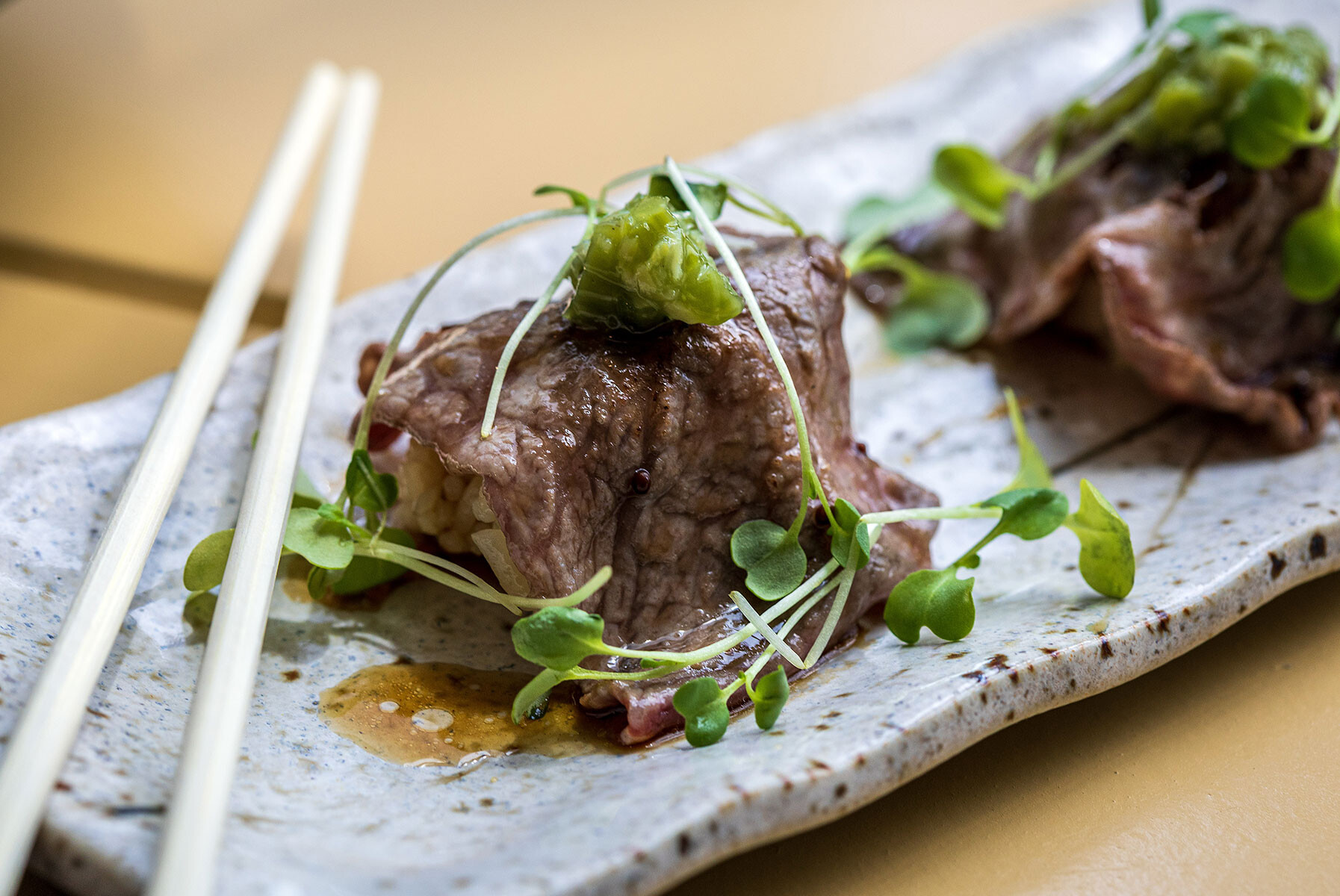
Mouthwatering Wagyu beef over rice
Thana came to the sushi bar business thanks to one of those details wrapped in the form of a problem. After moving his family from Chiang Mai, Thailand — the country’s second largest city, quieter than Bangkok and therefore not entirely unlike Cary — he spent a year going out to restaurants, cooking at home, and paying tips on meals he didn’t always enjoy.
“Even when we don’t like it, we still have to pay a tip,” he says about a cultural difference he wanted to address when opening his first restaurant after years in Thailand as an entrepreneur in the warehouse business. The question nagged at him and became a running conversation at home. Together, his family decided: “Okay, this is our restaurant … no tips.”
In Japan, tipping is not an expectation built into the economics of the meal. Paying tips is not part of the culture, a practice and philosophy that Thana wanted to bring to Cary. When guests receive their bill at Shijiri and ask where to add a gratuity, Thana’s answer is simple: “You just pay what you see. That’s it.” Consider that a platter of 17 pieces of pristine sashimi — sourced globally from wherever it is freshest, broken down that day from the whole fish, served with fresh wasabi and house sauce — comes in under $90. The largest spread in the Chef’s Assortment lands at around $111. On top of these already fair prices, there is no tip. That alone would be enough to build a following. The food makes Shijiri a destination.
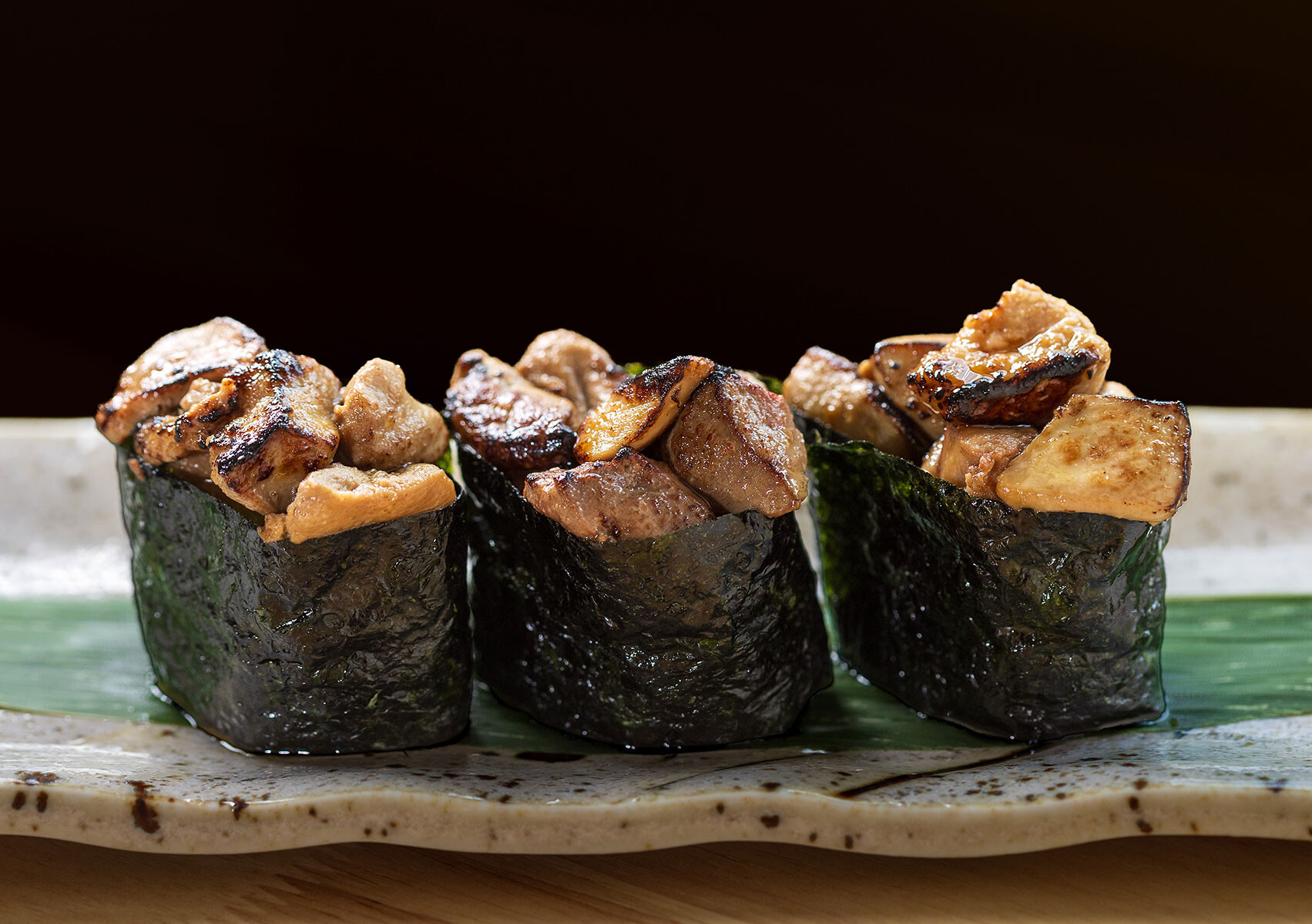
Seared foie gras from the Chef’s Reserve portion of the menu
Thana makes clear the staff are paid well enough that they don’t need tips to survive. This decision frees guests from the mental math that ends every American dining experience and has become, along with the quality of what’s served, one of the most talked-about aspects of Shijiri. Some customers, Thana notes, come in specifically because of the no-tipping policy. Others discover it only to end up telling everyone they know.
If there is one detail that stops guests, and the Cary Magazine team, cold, it is this: the 15-year-old son who played a prominent role in building (and growing) the restaurant.
Hashi — the first syllable of the restaurant’s name — handled the lease negotiations, contacted the landlord directly, set up the POS system, designed the network infrastructure, built the payroll software, manages social media accounts, and runs the website. He also bakes the heart-shaped, delicately flavored, silky-textured matcha cheesecake on the menu.
“He was only 14 when we came here,” Thana says about the family’s move to the US just a year ago. “He contacted the landlord. He negotiated the agreement.”
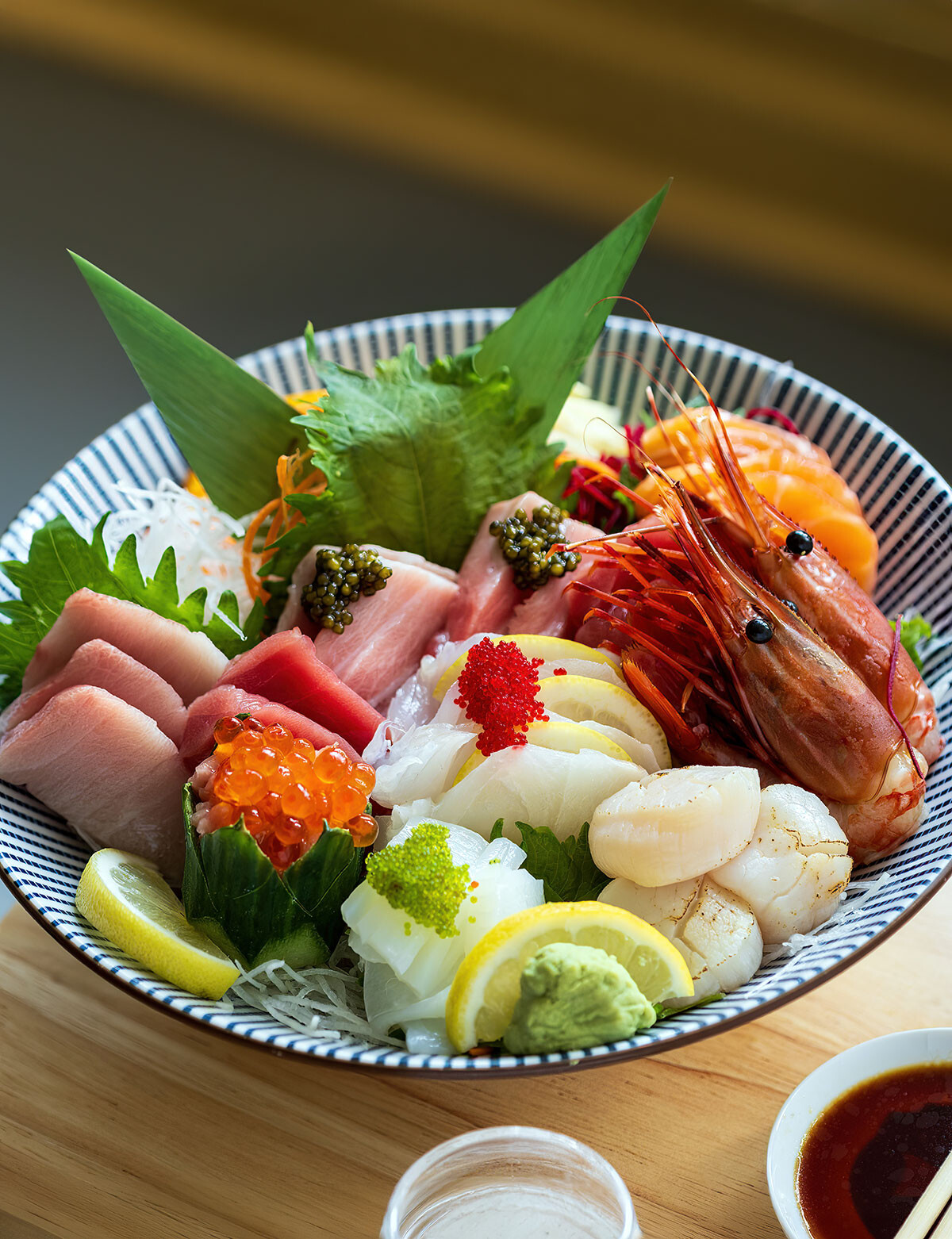
The Chirashi Concept is described as a “15-piece mosaic of seasonal seafood over seasoned sushi rice.”
What was (and continues to be) Thana’s role, you may ask? Essentially, backup. “I let him do everything he wants,” he shares. “I just try to help it happen.”
From the name on the door to the teenager building the systems that keep payroll running, Shijiri is clearly a family operation in the deepest sense. It welcomes diners for lunch between 11 a.m. and 2 p.m. or dinner after 5 p.m. every day of the week but Monday.
The tagline “Defined by No Definition” isn’t a marketing ploy — it’s a genuine operating principle. The restaurant doesn’t tell guests how to feel. It creates the conditions and then steps back so that the experience can be as authentic as those who are behind it.
What most guests feel, in practice, is surprised. Surprised that tradition can taste this fresh. Surprised that a meal out can feel like an extension of home.
“I want everyone to try something new,” Thana says. “Really natural, really polite.”
That’s the only definition Shijiri needs.
shijiri.com
@atshijiri
Currently, reservations aren’t accepted. Private events are available during off-hours by arrangement.

- Erica Chats: Special Occasion Spots
- Defined by No Definition: Shijiri Sushi Bar
- Familiar Faces: Patrick Stapleton
- Pay It Forward: Read and Feed
- Small Business Spotlight: Vino & Tap
- Noodle Blvd
- Garden Adventurer: The Riddle of Swiss Chard
- Liquid Assets: Sicilian Sun Martini
- Grounds for Connection: The Turkish Coffee Lady
- All In
- Things to Do: August 2026