



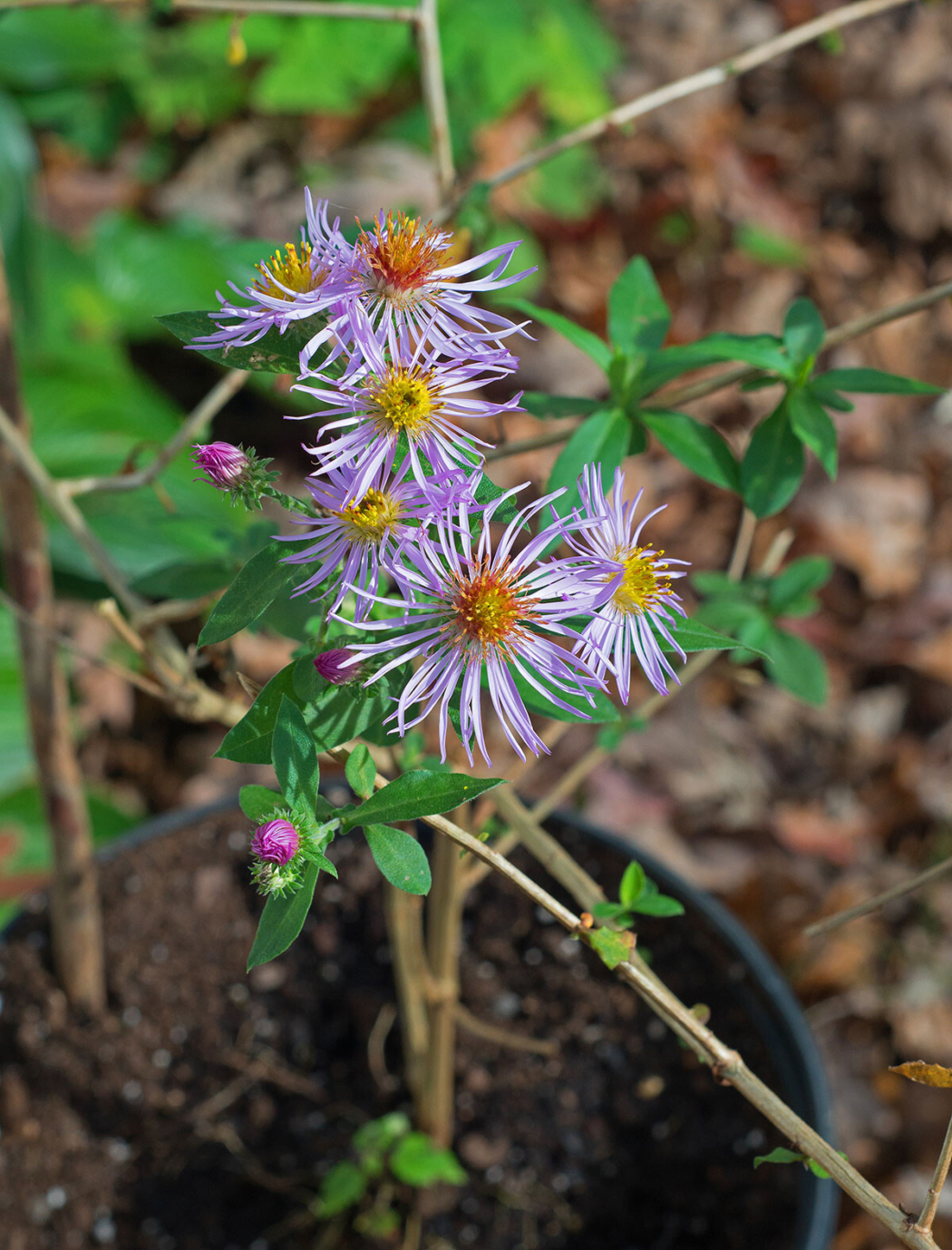
As summer ends, many gardeners turn their attention to the blazing colors that will soon adorn autumn landscapes. I, too, enjoy watching sections of my landscape gradually go up in “flames,” but for me there is still time to enjoy ornamentals sporting cooler hues. In particular, purple is just beginning to be served up in heapin’ helpings courtesy of asters, which save their regal shows until fall’s arrival.
And when it comes to the asters of autumn, I lean toward native selections, with three of my favorites below:
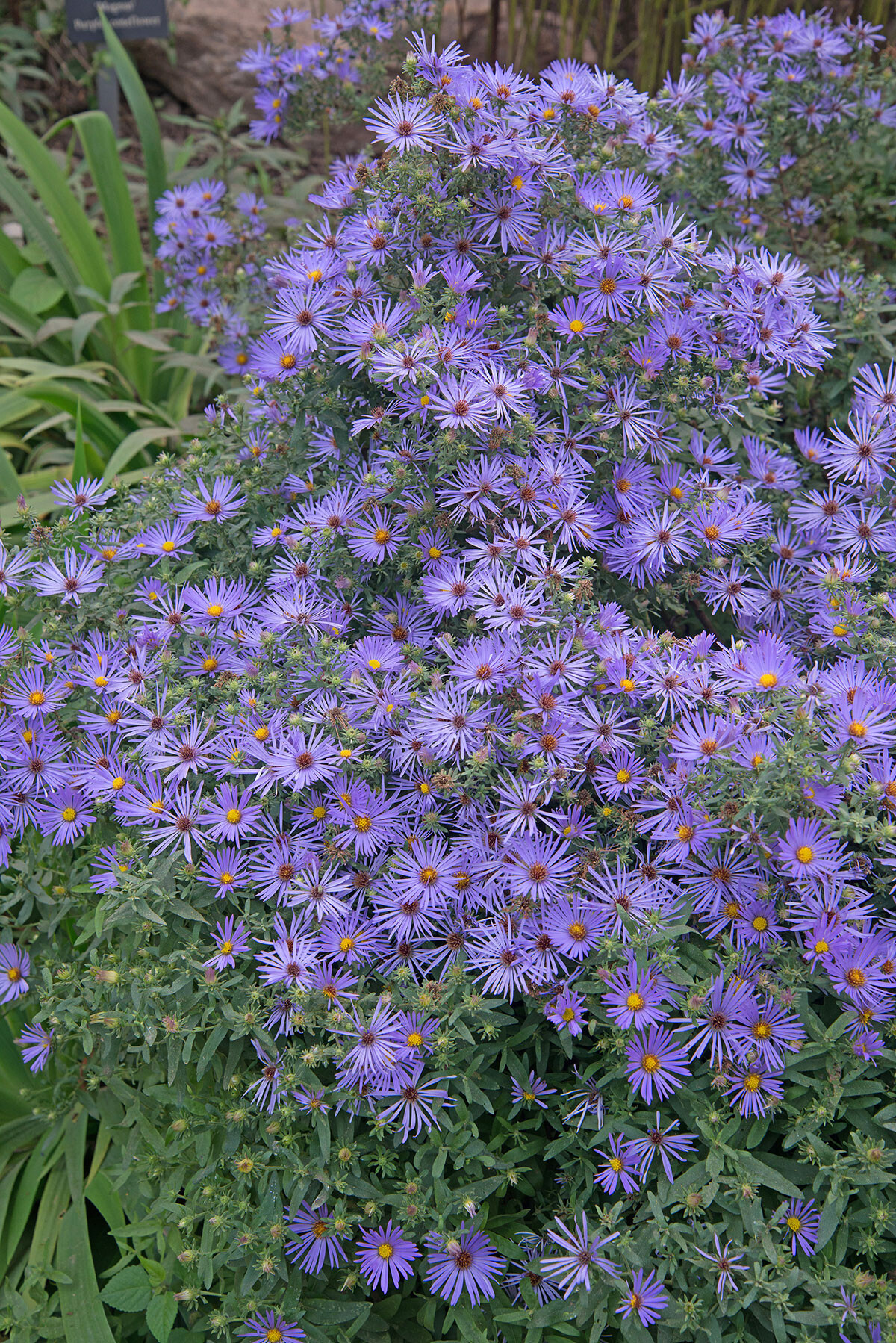
Purple wave! New England aster flowers can almost cover their entire plant.
New England Aster (Symphyotrichum novae-angliae). From big-box nursery centers to independent garden shops, this is probably the easiest indigenous aster to find locally. It salutes the coming autumn with a purple wave of starry blooms that can almost cover the whole plant, which typically stretches 5 feet tall and wide.
True to its tough native roots, New England aster is not only drought and deer resistant, but is also tolerant to heavy clay soils. In addition, it is an early fall favorite of lingering bees and butterflies. Plant breeders like it, too, and have created many cultivars, with the compact ‘Purple Dome’ (2 feet high and wide) being one of the easier to find.
Aromatic Aster (Symphyotrichum oblongifolium). As advertised, this aster has leaves that, when rubbed, release a pleasant scent similar to a balsam fir. The fragrant leaves also provide a solid green backdrop to help highlight a profusion of dazzling lavender flowers. Although usually short in stature — about 3 feet high and wide — aromatic aster makes up for it visually with its bloom boom that starts in September and can last until November. This native pretty is a sun lover that does best in well-draining sites.
Aromatic aster isn’t as well known as its New England kin, but it can still be spotted locally, with the popular cultivar ‘October Skies’ being a standard find.
Climbing Aster (Symphyotrichum carolinianum). While many native asters are somewhat mounding in their growth habit, climbing aster is a rambler. Behaving like a vine, this oddity can stretch out to over 8 feet long, making it a candidate to help doll up a bare trellis or clunky fence in the fall with sweeps of pleasing pinkish-purple sprites.
In spite of its Southeast origin, climbing aster is not a typical sight at area nurseries. I have seen it at the Farmers Market in Raleigh, Carolina Habitats (formerly Niche Gardens) in Chapel Hill, and Plant Delights Nursery during their Open House days, but check with your favorite local garden shop, too, just in case.
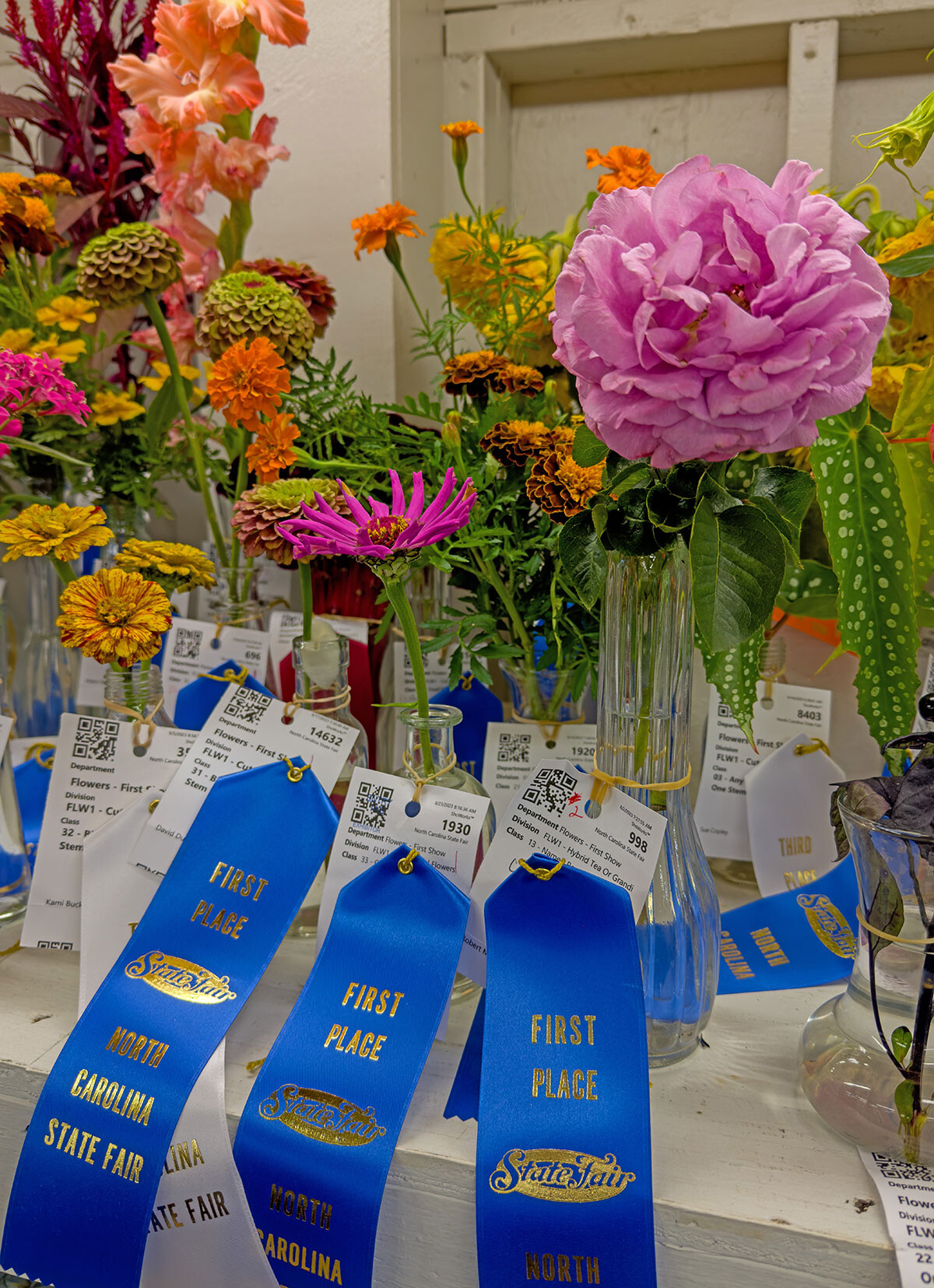
Is there a blue ribbon winner in your garden?
The State Fair will start its 10-day fun-fest next month on October 15, and its Flower and Garden Exhibit will be holding horticultural competitions that include floral arrangements, bonsai designs, and display gardens as well as contests for best flowers, houseplants, vegetables, and fruits. With so many blue ribbons up for grabs, why not give some of your botanical best a chance at winning? But don’t dally — registrations close the 15th of this month. For more information, go to: ncagr.gov/divisions/nc-state-fair/competitions/general-competitions/flowers-and-gardens
To Do in the Garden
September
- The fall season’s arrival means it’s time to switch to full-blown cool-season crop mode in the veggie patch, as such delectable edibles as cabbage, lettuce, turnips, carrots, radishes, spinach, edible-pod peas, kale, mustard greens, onions (bulbs), cauliflower, Swiss chard, and collards can all be started this month.
- Before herbaceous plants die back, place ID markers beside them to lessen the chances of them being disturbed during next spring’s planting frenzy. Also, think about adding when each plant was put in the garden on its marker to help monitor the maturity rate of your perennial pretties.
- Houseplants have had their outside vacation this year, but it will soon be time to start bringing them indoors before the autumn chills arrive. During this transition, carefully check each plant for insects and especially their eggs, which could hatch in balmy room temperatures and cause problems for your overwintering pretties.

- Women of Western Wake: Susan Weis
- Women of Western Wake: Dr. Mariah Walker
- Women of Western Wake: Dr. Bobbi Stanley
- Women of Western Wake: Joanna Helms
- 2026 Women of Western Wake
- Women of Western Wake: Mandy Becker
- Garden Adventurer: The Indigenous Asters of Autumn
- Recipes from Readers: Prosciutto & Peach Pizza
- Liquid Assets: Mi Oaxaca Top Shelf Margarita
- Erica Chats: Small Steps for Self-Improvement
- Familiar Faces: Debbi Burns
- Pay It Forward: Avendelle at Picardy Point
- Meche’s Moment
- Small Business Spotlight: Juliet Books & Beautiful Things
- Betting on Herself: Molly Grantham
- Pass It On
- Things to Do: September 2026