



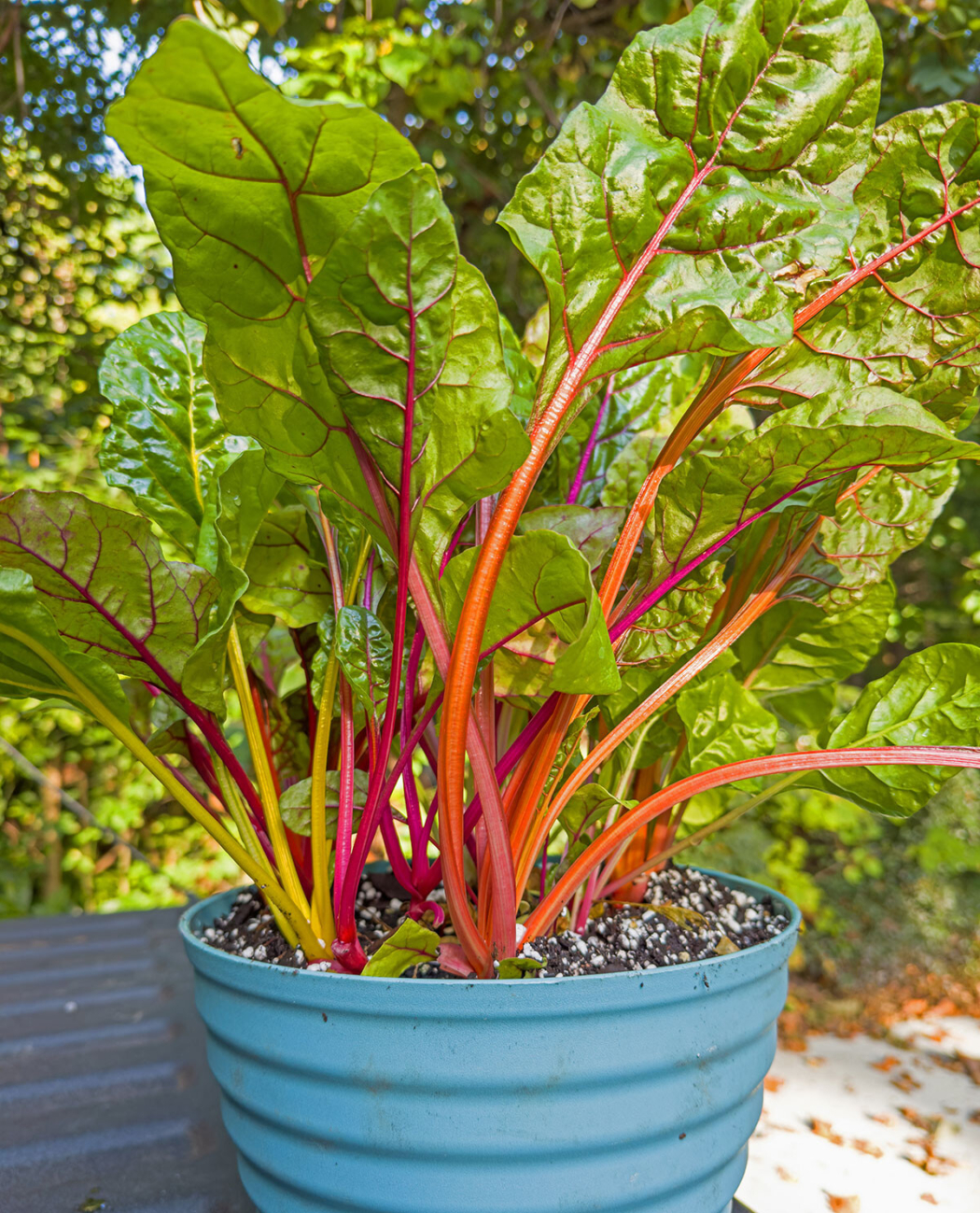
What is Swiss chard?
First let me tell you what it isn’t. It’s not from Switzerland, but rather the Mediterranean region of Europe. I know this factoid doesn’t solve the riddle, so let’s dig deeper before you think about adding such a mystery to your fall veggie garden.
In spite of being related to beets — a root crop — Swiss chard is grown mainly for its nutritious leaves, which can be eaten either raw or cooked. To me, the flavor is a bit like spinach but with a slight nutty twang added. The sturdy stalks are also edible delights and have a satisfying, tasty, celery-like crunch.
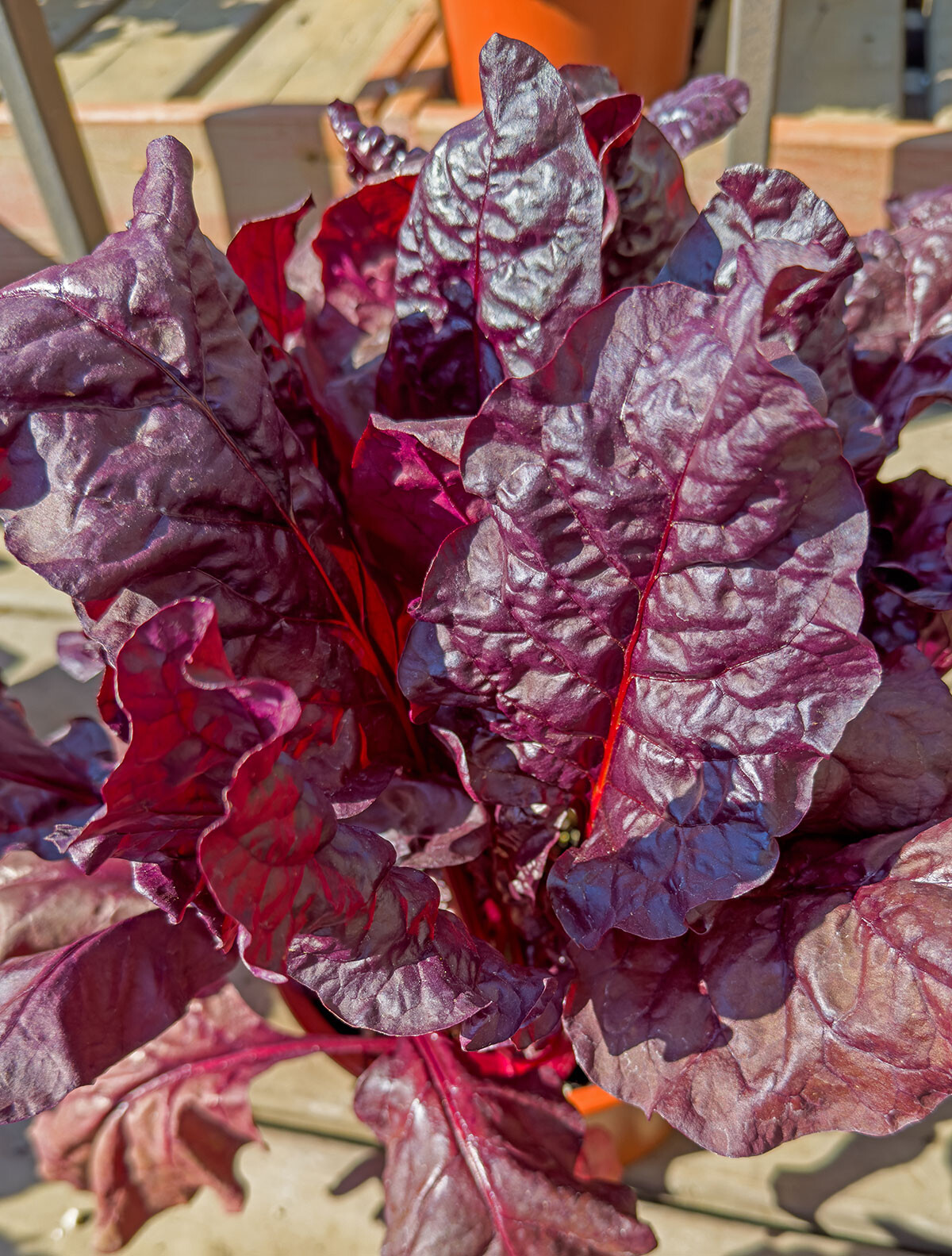
‘Firebird’ Swiss chard is a dusky beauty.
The plants can be a feast for the eyes, too. For years, ‘Bright Lights’ (All-America Selections winner in 1998) has flaunted sassy, multi-colored stems that are hard to ignore either in the vegetable or ornamental garden. Even the heirloom variety ‘Ruby Red’ has held its own visually over the years with sizzling crimson stalks. Lately, though, I have gone to the dark side, with my head being turned by the dusky introduction ‘Firebird’ and its smoldering burgundy leaves supported on deep red stems.
Swiss chard can be added to the garden either in the spring or now into early September. I usually go with starter plants at this time of year, just so I can enjoy the tasty leaves sooner rather than later, but seeds will respond well to the warm soil temperatures of late summer.
Winter will, of course, come, but I no longer worry about my autumn-planted Swiss chard and cold weather because I left some in a container outside last year, just to see how they would handle the low temperatures. Many nights below freezing — including some in the t-t-t-teens — and the two snows we had bit the leaves down to nubs, but this spring, three of the four plants in the pot came back strong to provide me with munchies early in the growing season.
Now, are you ready to try Swiss chard? It does love the sun, so give it as much exposure as possible. Also, rich, well-worked soil heavily amended with organic additives along with the application of a complete fertilizer such as 8-8-8 or 10-10-10 at planting time will help produce a nice crop of flavorful stems and leaves.
The only riddle left now is, with Swiss chard being so nutritious, delicious, productive, and pretty, why did it take you so long to discover its edible and ornamental possibilities?
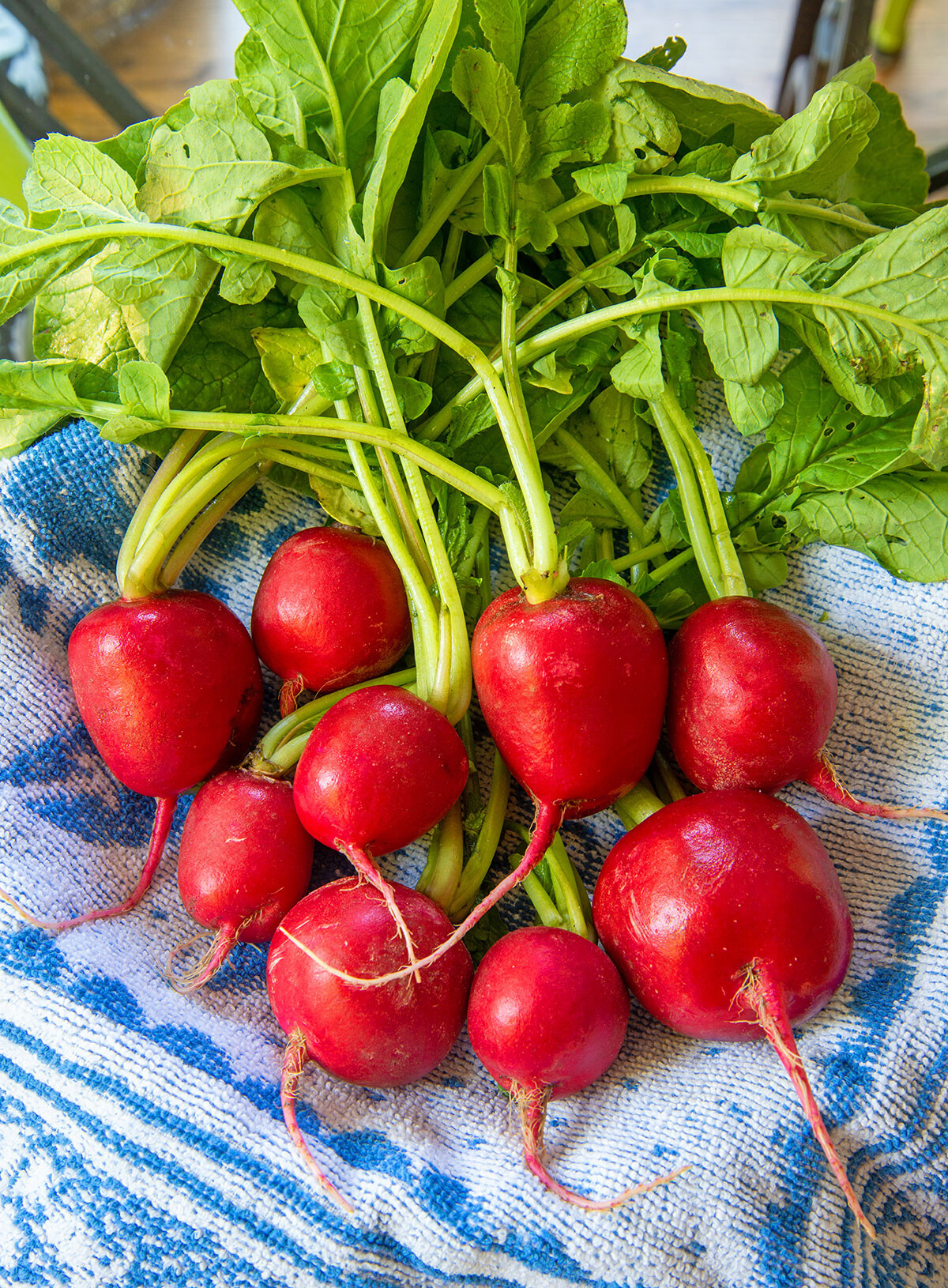
Radishes mature quickly in the late summer/autumn veggie patch.
Besides Swiss chard, there are many other delectable edibles that can be added to the veggie patch early this month. Despite the heat — and the fact that fall is right around the corner — it can be a busy planting time with plenty of both warm- and cool-season vegetables to choose from, such as mustard greens, eggplant, kale, spinach, squash, tomatoes, lettuce, field peas, radishes, onions, parsley, green beans, turnips, collards, cucumbers, broccoli, beets, Brussels sprouts, carrots, cabbage, and cauliflower. Where possible, start with set plants now (especially with warm-season vegetables) rather than seeds to hasten harvests during the shorter autumn growing season.
To Do in the Garden
August
- With The Great Annual Autumn Leaf Drop coming soon, take time to examine your woody ornamentals and cut off any dead, diseased, or damaged limbs. Leave healthy branches alone because pruning them this month could encourage new growth that might not have time to harden off before killing freezes settle in for the winter.
- If fall webworms are turning your trees into an undesired state of ugly, for an all-natural way to put the lights out on their parties, use a pole to rip open their protective tents. This lets deadly efficient predators such as birds and wasps get in to feast on the beasts.
- Now is a good time to prepare planting sites for fall-planted, spring flowering bulbs. Dig and turn over the beds at least 12 inches deep and add beaucoup compost or commercial soil conditioner to fluff up the growing ground for your pretties-to-be.

- Erica Chats: Special Occasion Spots
- Defined by No Definition: Shijiri Sushi Bar
- Familiar Faces: Patrick Stapleton
- Pay It Forward: Read and Feed
- Small Business Spotlight: Vino & Tap
- Noodle Blvd
- Garden Adventurer: The Riddle of Swiss Chard
- Liquid Assets: Sicilian Sun Martini
- Grounds for Connection: The Turkish Coffee Lady
- All In
- Things to Do: August 2026