



At The Turkish Coffee Lady in Apex, the service you’ll experience is akin to a cultural inheritance.
“It’s feeding people,” says co-owner Elif Dilekoglu when asked to define Turkish hospitality. Her business partner, Nuriye Taskin, nods along. “Every time we go to our families,” she says, “every time we go to Türkiye and see friends: ‘Eat this; eat that.’ You have no time to talk. Just eat all the time.”
That spirit — generous to the point of insistence, warm to the point of disarming — is the foundation of the café the two women opened in Apex nearly two years ago and proudly refer to as “a culture house.”
The story of The Turkish Coffee Lady begins with a chance encounter years ago when Nuriye had lived in Maryland. There, she’d known of the original Turkish Coffee Lady franchise founder, though the two never actually met.
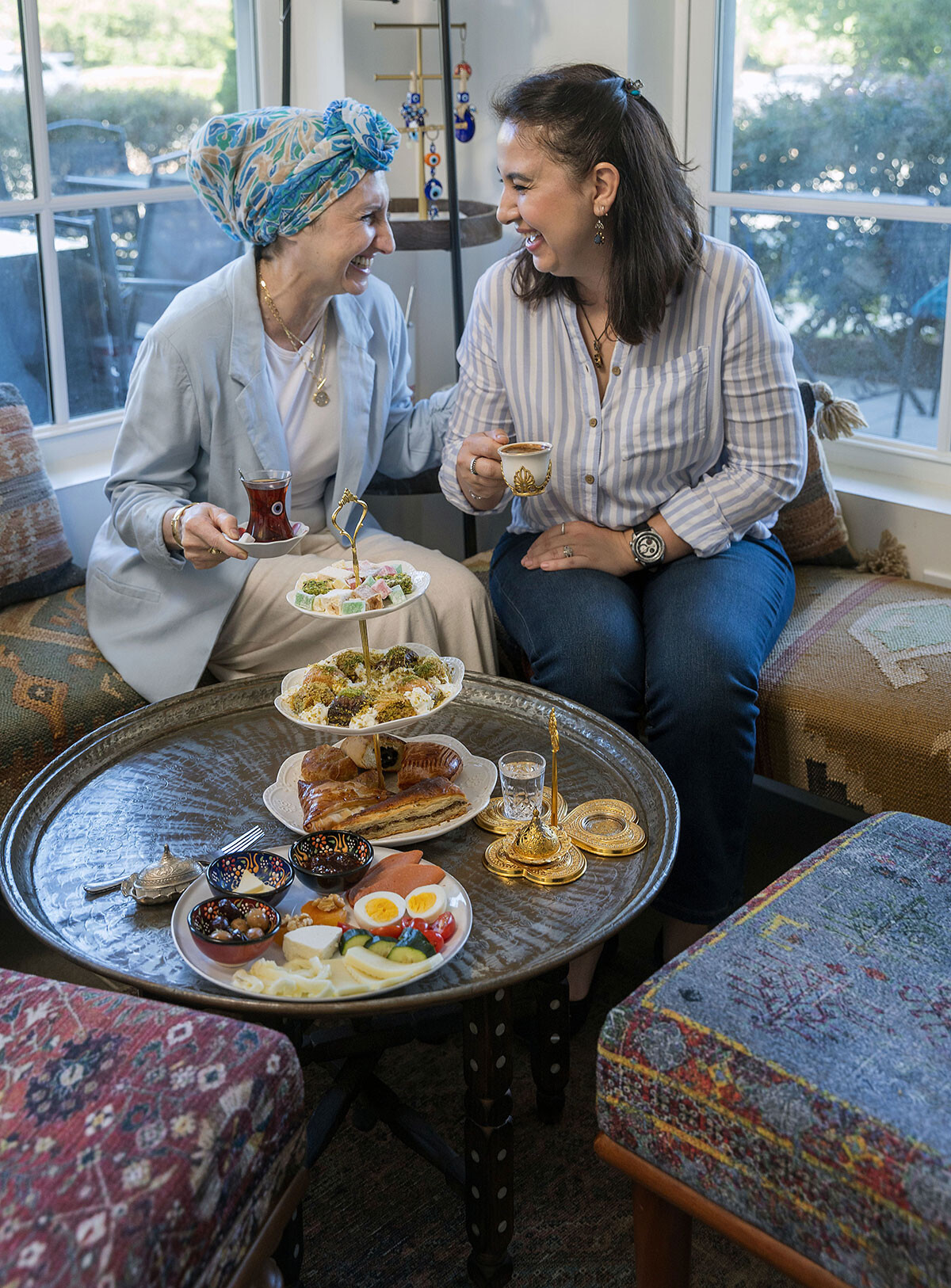
Nuriye Taskin (left) and Elif Dilekoglu hope to serve the Apex community as a culture house.
After Nuriye relocated to North Carolina, the founder came through the area to introduce Turkish coffee culture locally, holding an event at UNC’s Turkish Student Association. The franchise opportunity that followed planted a seed Nuriye, who’d studied chemical engineering and worked in various industries, had carried for years. “It was my dream to do something with Turkish coffee, tea, cultural things,” she says.
The missing piece was a partner. Enter Elif, whom Nuriye had met when Elif, a real estate agent, helped her purchase a property. The two became close friends. When Nuriye brought her the idea, the timing was meaningful for Elif. She had spent years supporting her husband Onur in the family restaurant business and raising her children. She wanted something of her own.
What sealed the partnership was a mission to bridge cultures. Nuriye explained that the café would be a place to share Turkish hospitality and tradition with the Apex community. And underneath that, her deeper purpose was to use the business to support children and families in need, including for earthquake disaster relief efforts in Türkiye. “That hit me,” Elif says. Her response to her friend? “Whatever you want to do, I’m in.”
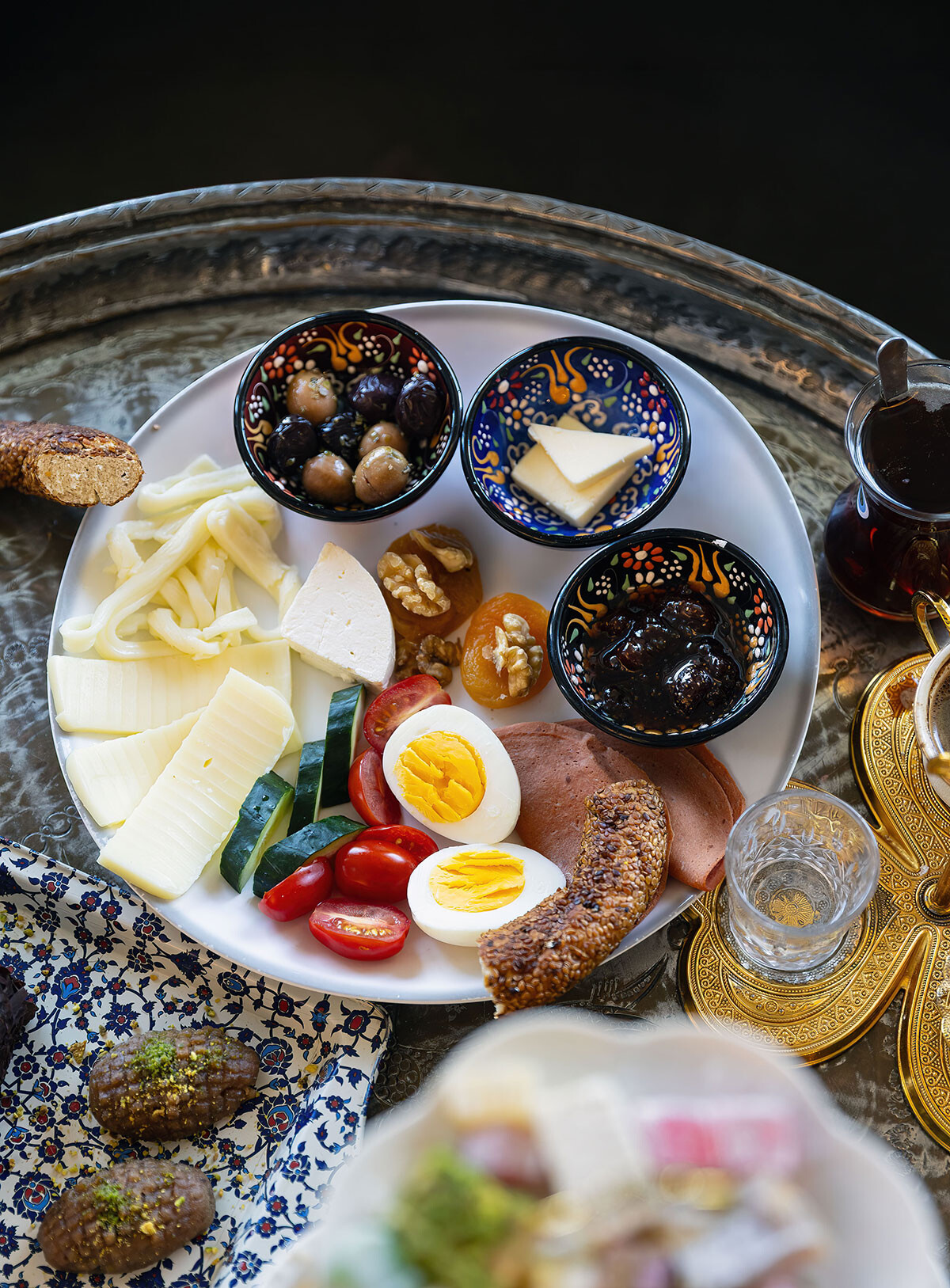
The two opened The Turkish Coffee Lady NC on September 7, 2024, a clearly treasured anniversary for both women.
Though Nuriye and Elif are both Turkish, they come from different parts of the country. This fact surfaces constantly, and affectionately, in their conversation. The friendly rivalry over whose regional cuisine reigns supreme is a running joke between them, and a genuine source of pride. Elif hails from Gaziantep, a southeastern city near the Syrian border famous for baklava, pistachios, and kebabs — “900 different types,” she says without the hint of a joke. Nuriye was raised in Ankara but traces her family roots to the Black Sea region, which shaped her own food preferences and traditions.
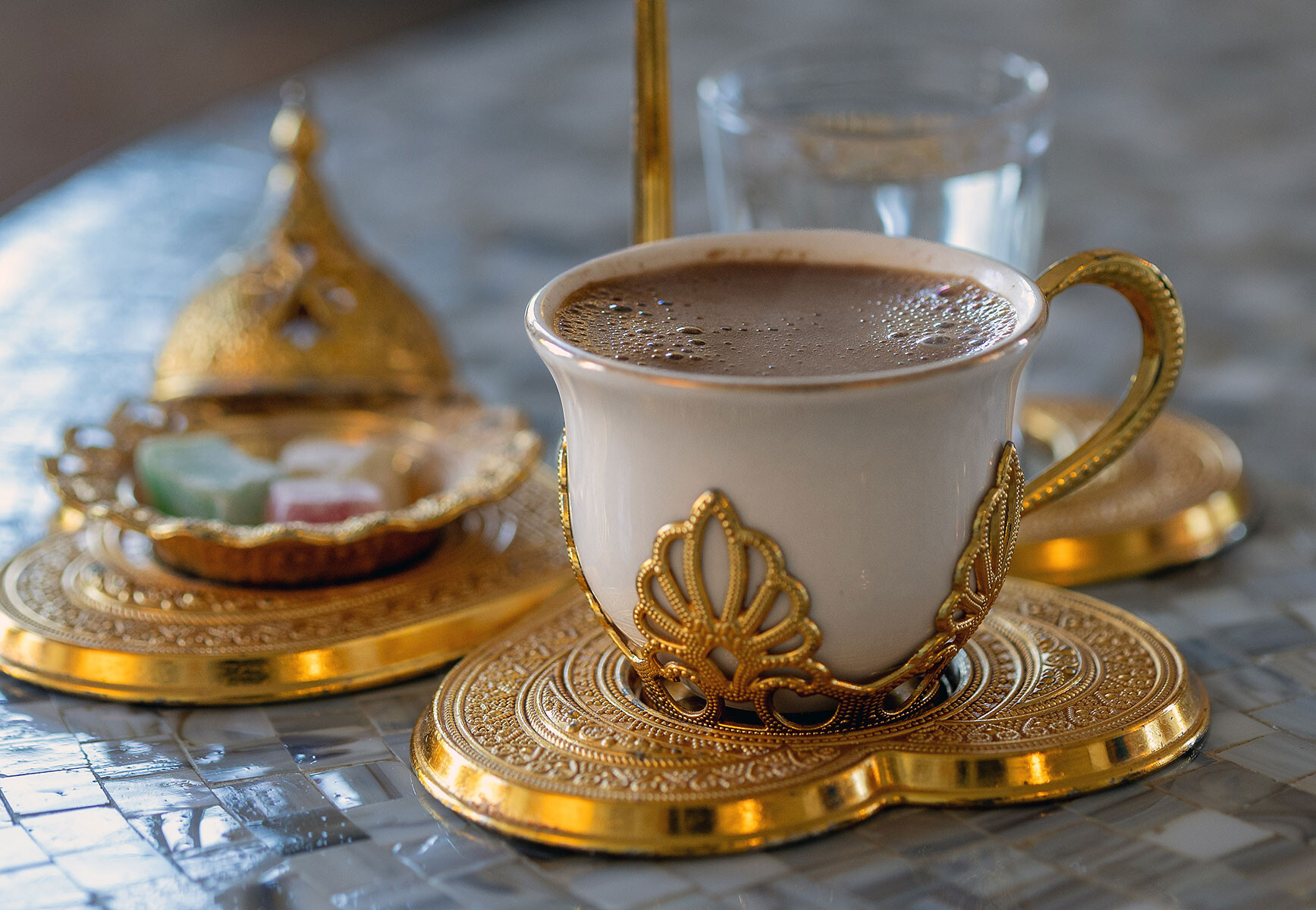
For the uninitiated, Turkish coffee is less a beverage than a small ceremony — the rules of which Nuriye and Elif are quick to walk newcomers through. The coffee isn’t brewed but boiled directly with water, grounds and all, then poured so the silty base settles and the “juicy part” rests on top. That top layer is what’s drunk. It is never taken with cream or milk. It is never sipped during a meal.
“A cup of coffee has 40 years of memory,” Elif says, citing a Turkish saying that captures coffee’s role as a vehicle for friendship and conversation rather than fuel.
There’s also the matter of fortune-telling. After the coffee is finished, the cup is flipped onto its saucer, allowed to cool, then turned over and read for symbols said to reflect the past, the present, and the future. From time to time, the café hosts coffee reading workshops. “We always tell everybody when they come here, honestly, nobody knows the future,” Elif says with a laugh. “It’s just fun,” Nuriya adds.
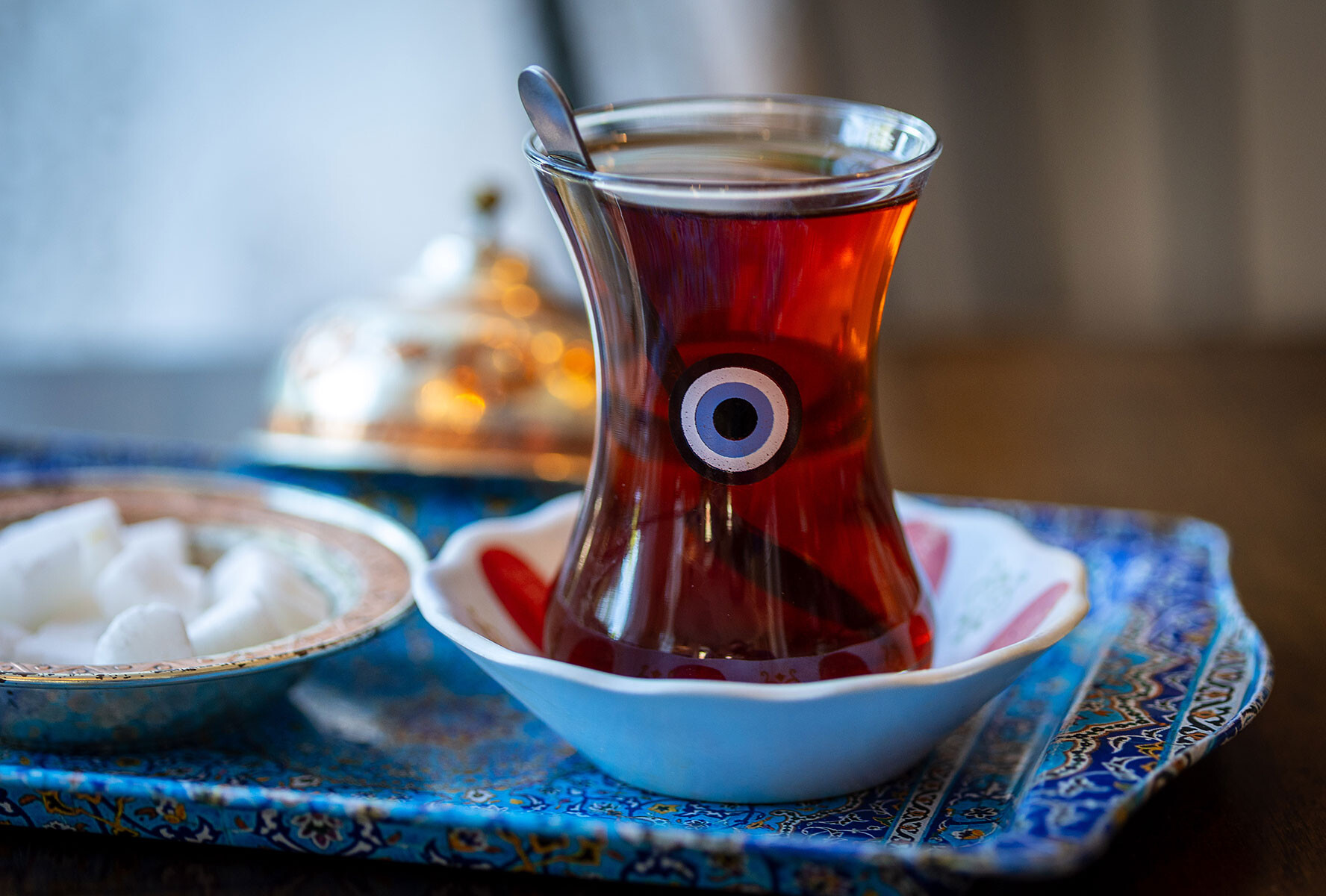
Tea carries its own customs. It is always served black, in tulip-shaped glasses set on a saucer (the glass has no handle and would otherwise burn your fingers). Though milk is never added, sugar is optional.
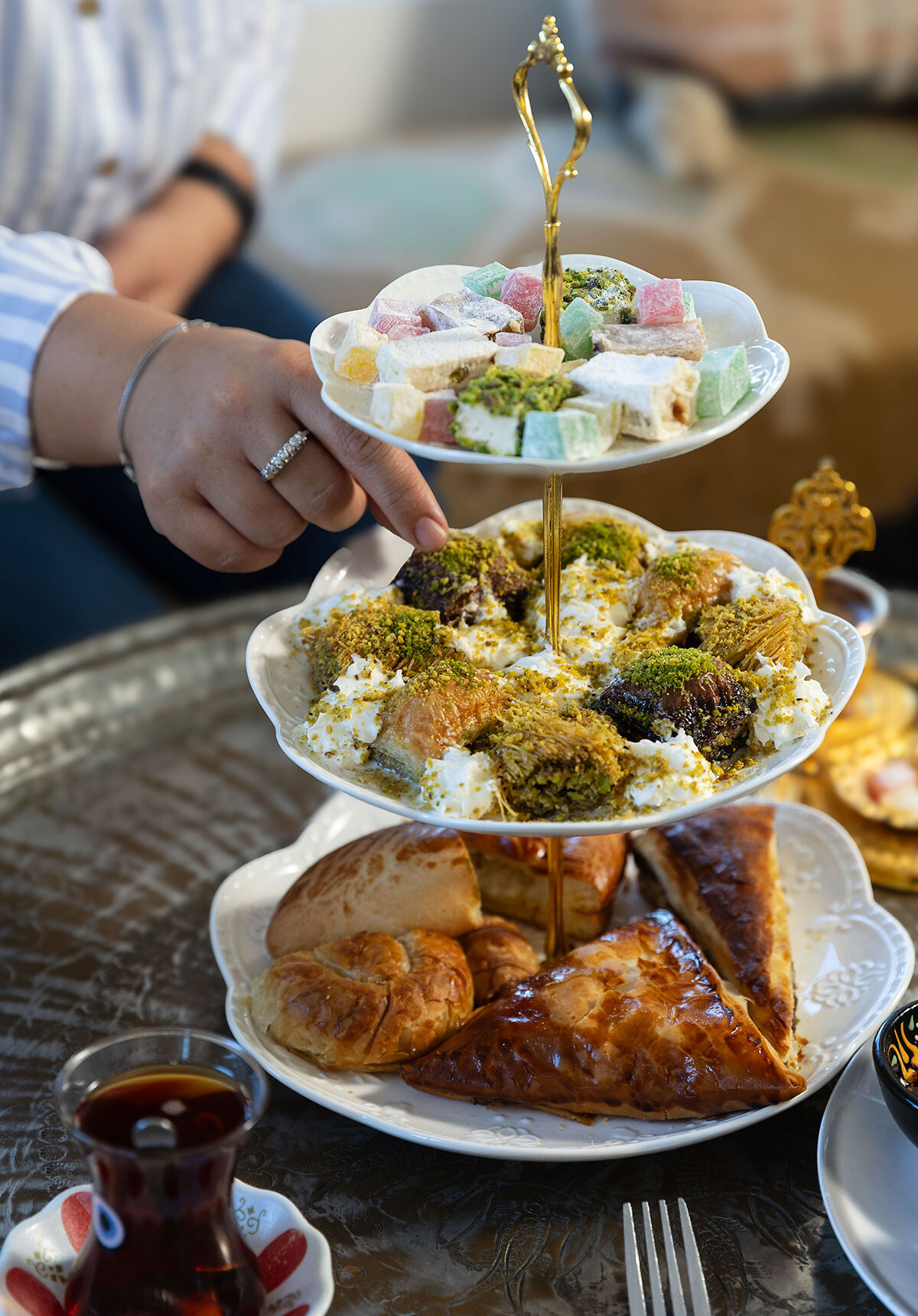
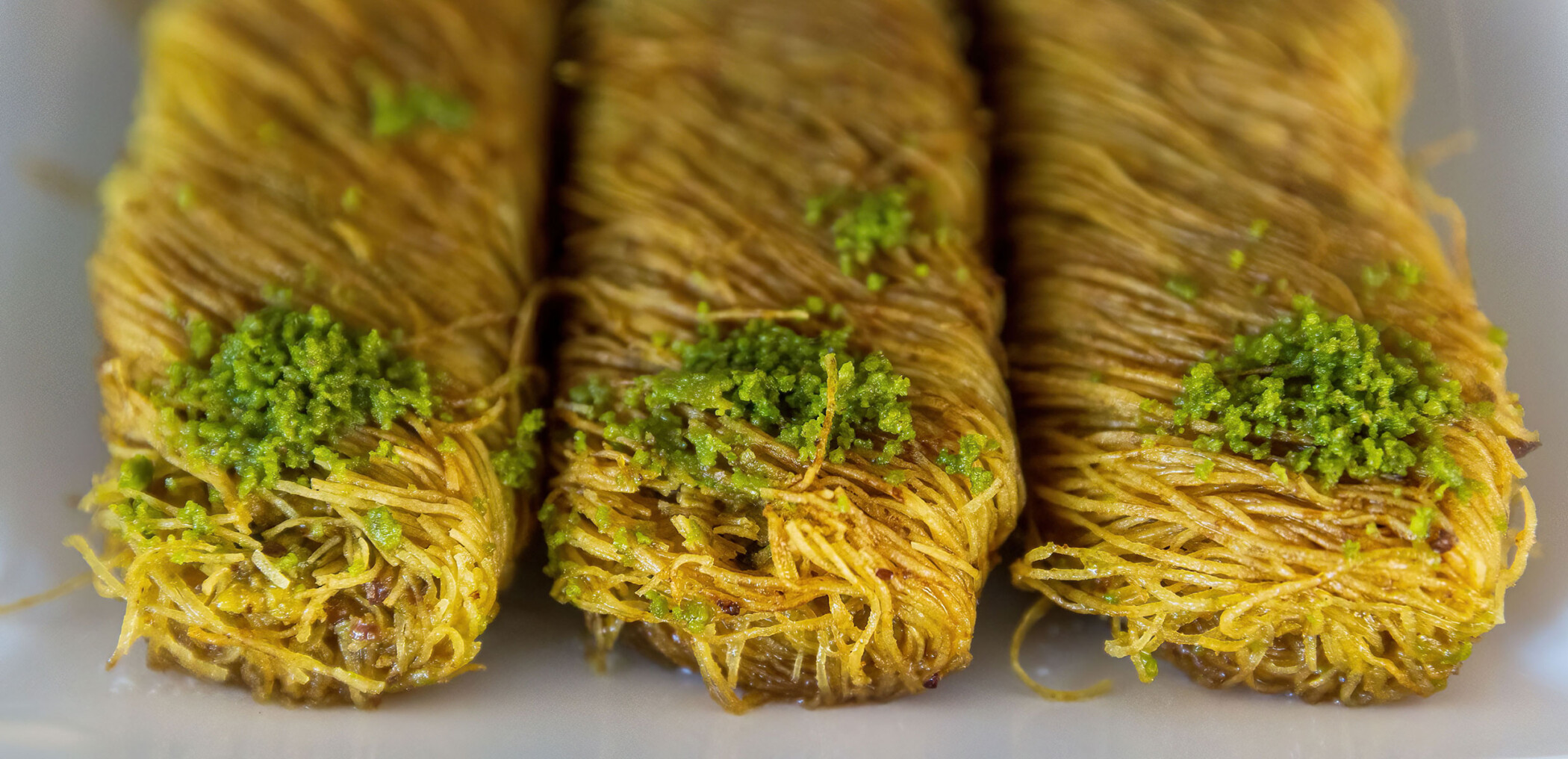
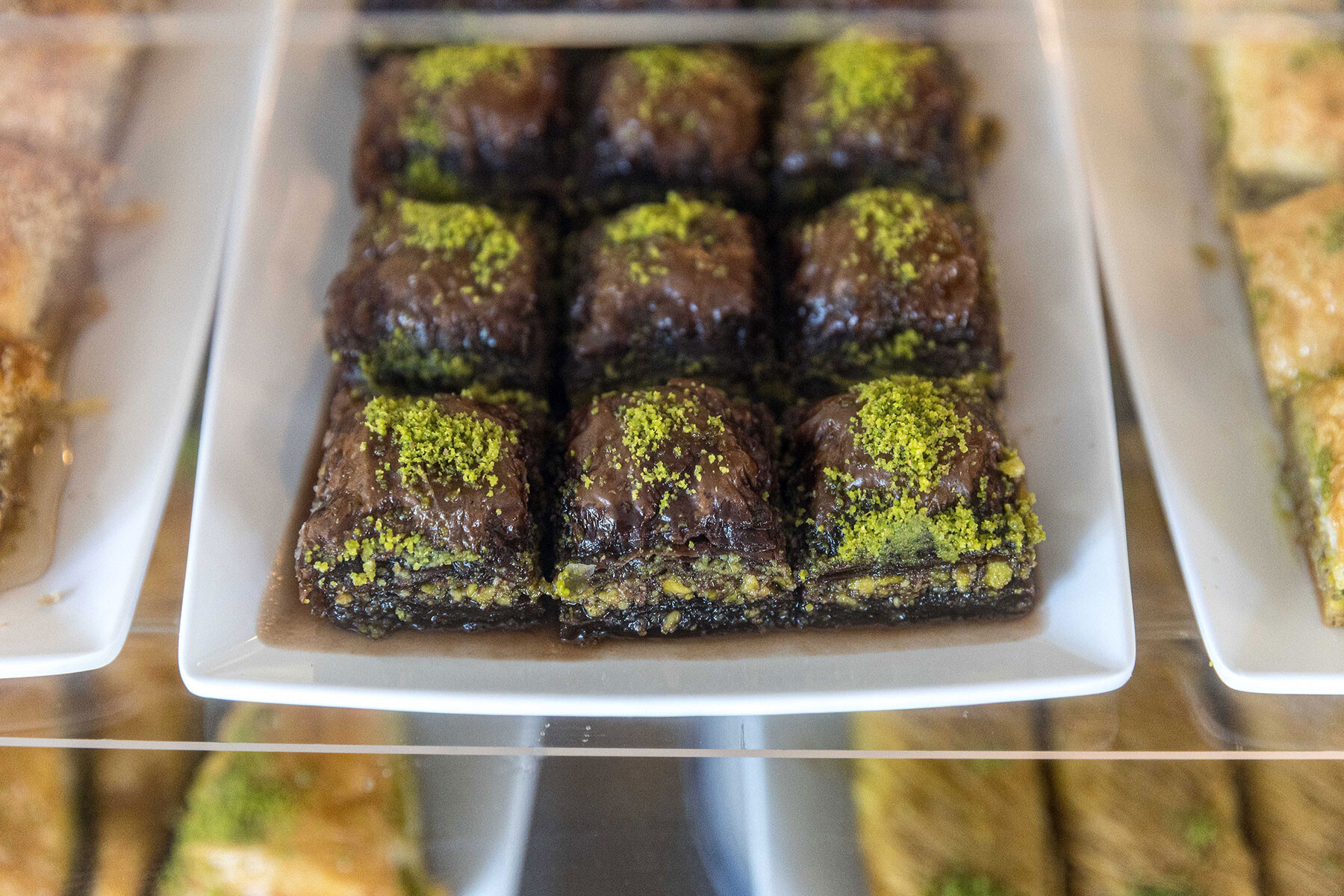
The vast majority of what The Turkish Coffee Lady serves is sourced directly from Türkiye. This is because, as the owners explain, some things simply cannot be replicated. Pistachio baklava is the clearest example. “We didn’t want to mess up with the pistachio,” Elif says, noting that California-grown pistachios taste and look noticeably different from Turkish ones. “Our baklava has to have very good pistachios. … They come from Türkiye.” Even the feta cheese and olives used in the café’s traditional Turkish breakfast spread are imported.
The bestsellers tend to surprise people. “The baklavas do sell,” Elif says, “but the savories sell more.” Among the favorites are fillo dough pastries stuffed with feta cheese and spinach or seasoned beef, which are flaky, hand-folded, and clearly designed for someone who wants a real bite and not just a snack; and simit, the sesame-crusted Turkish bread often described as a cousin to the bagel, though this comparison undersells it.
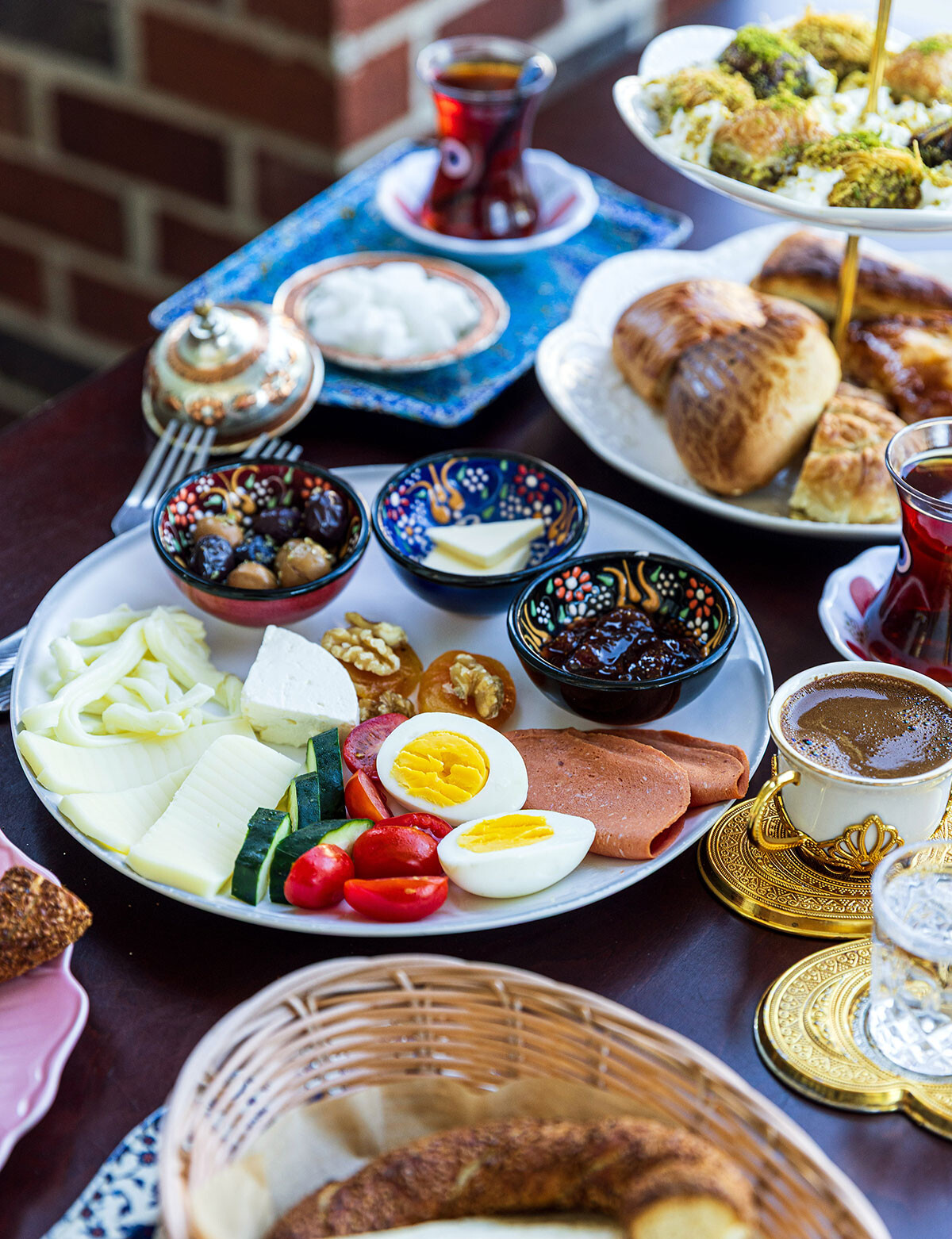
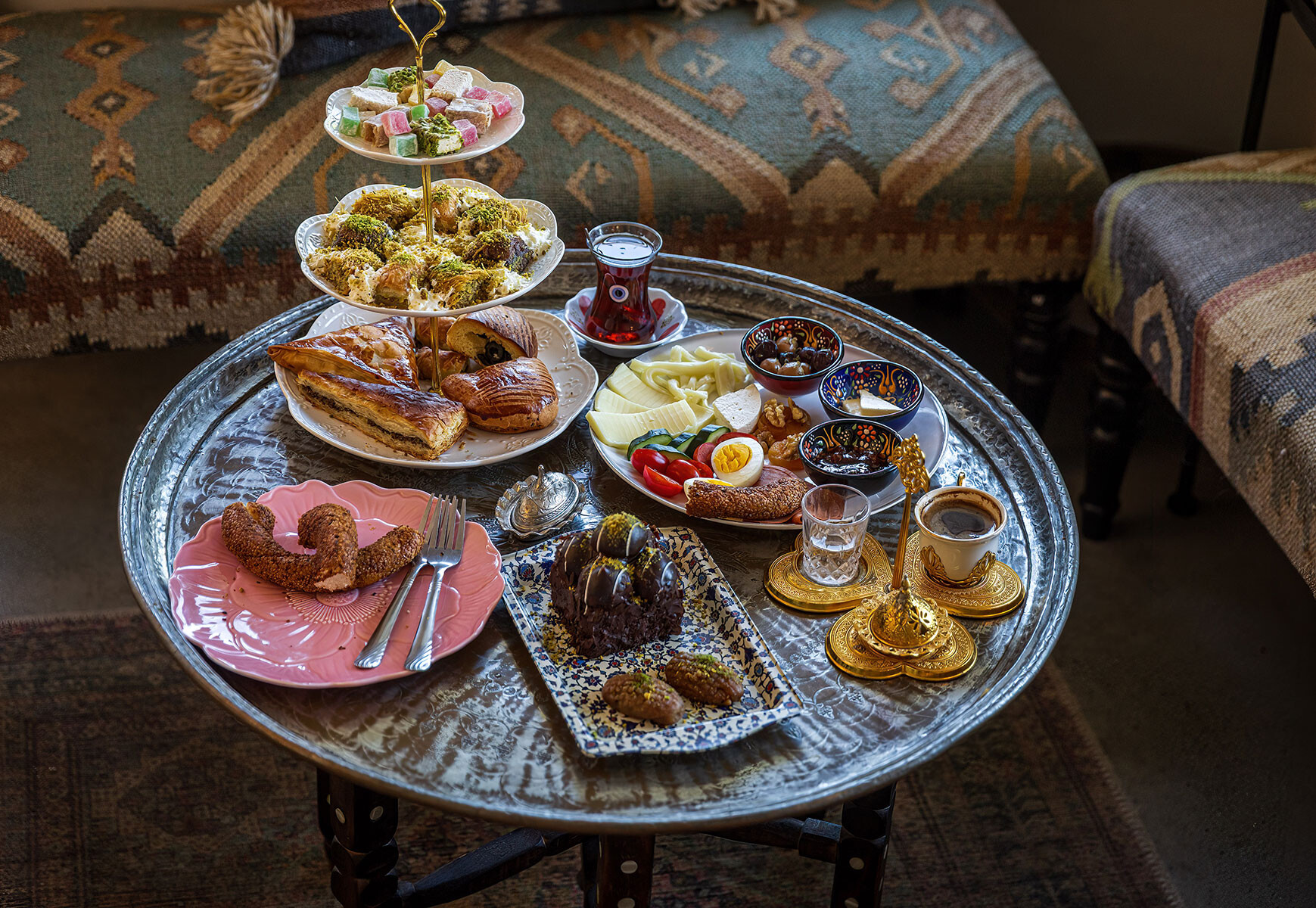
Unlike a boiled bagel, simit is dipped in molasses water before being rolled in sesame seeds and baked, giving it a darker color and a distinct flavor profile. It’s served in the café as a sandwich loaded with cheese, salami, and tomato, or alongside the bagel-style Turkish rolls filled with mozzarella, cream cheese, or a heartier combination of feta and salami. For anyone wanting the full experience in one sitting, the Traditional Turkish Breakfast lays it all out as the kind of spread Elif describes as a near-requirement of Turkish hospitality, where one course is never enough.
Nuriye insists on simit (for every meal!) whenever she visits Türkiye, where street vendors known as “simit boys” sell them by the dozens from trays balanced on their backs starting as early as 7 a.m.
Despite the warm memories evoked by thoughts of home, Nuriye says, “Honestly, after our coffee,” while gesturing toward the counter where sample coffees are positioned to help guests make ordering decisions, “I don’t miss a lot” about moving away.
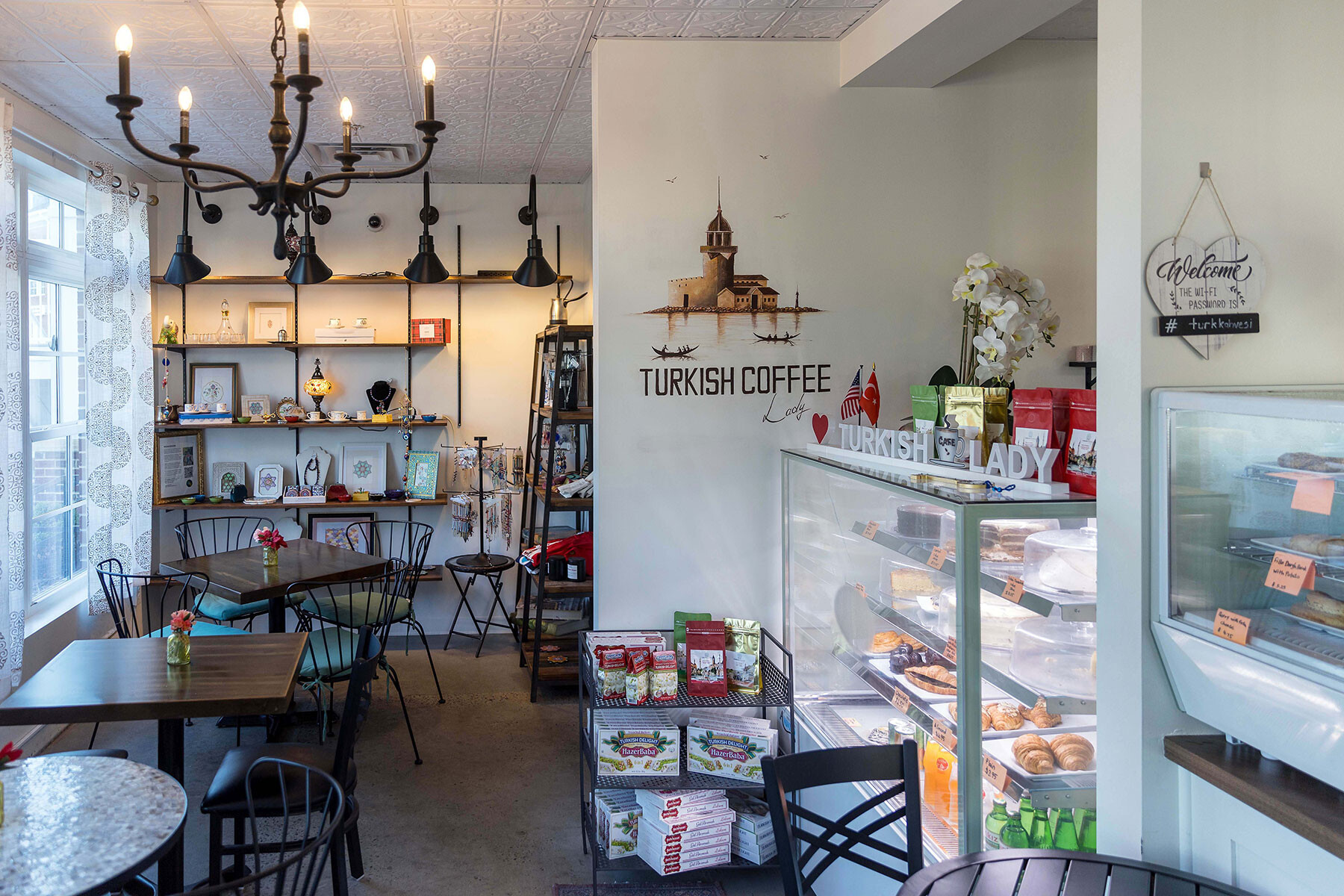
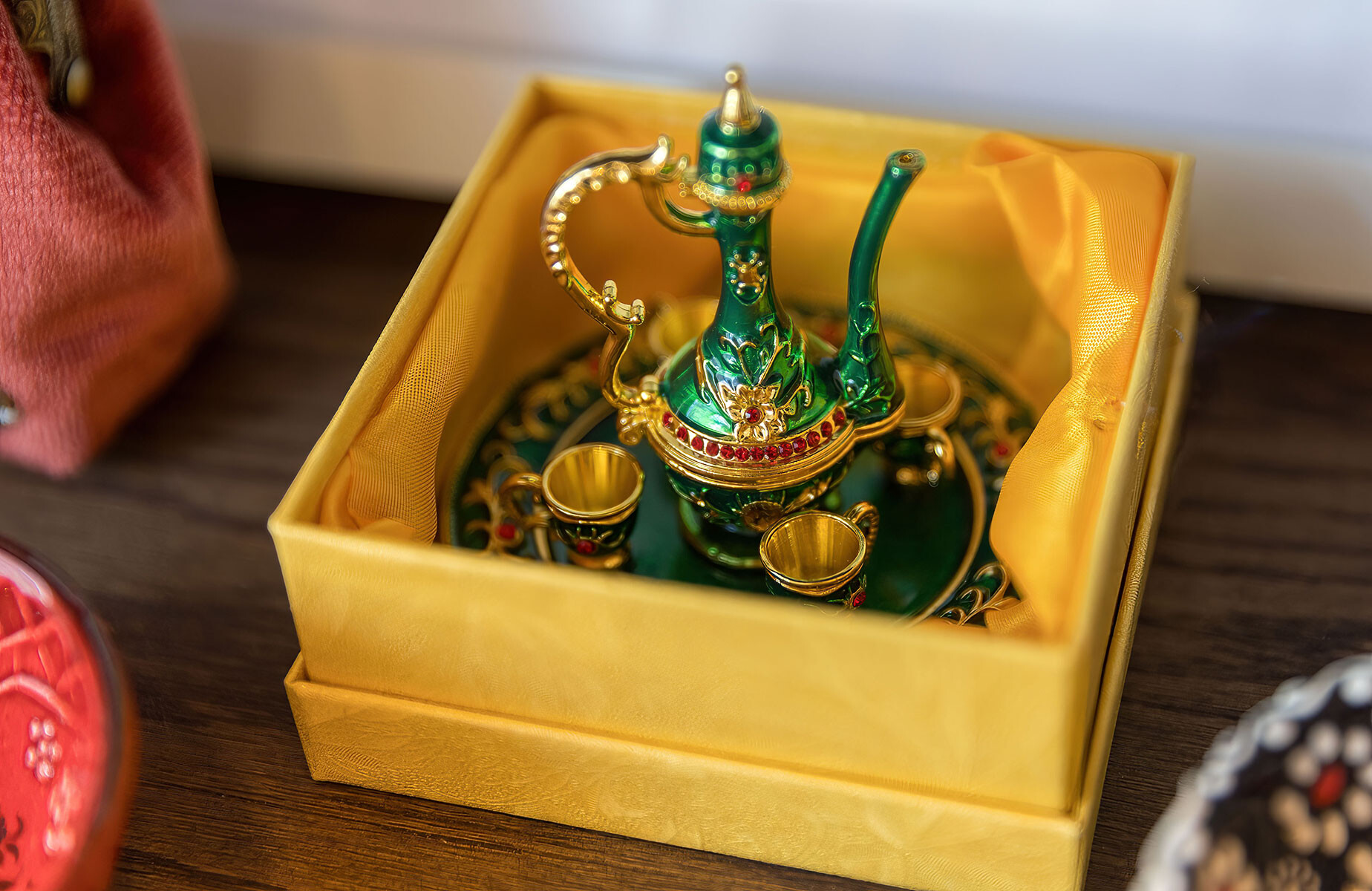
A Turkish bazaar offers decorative items available for purchase.
Running a cultural business in a new country means constant negotiations between authenticity and accessibility. Nuriye and Elif have clearly thought hard about where those lines lie. Iced apple tea, for instance, doesn’t exist in Türkiye. But American guests enjoy it, so they make it. Likewise, an iced Turkish coffee — a new product, only just being developed back in Türkiye itself — has found its way onto the menu and pleases American tastes.
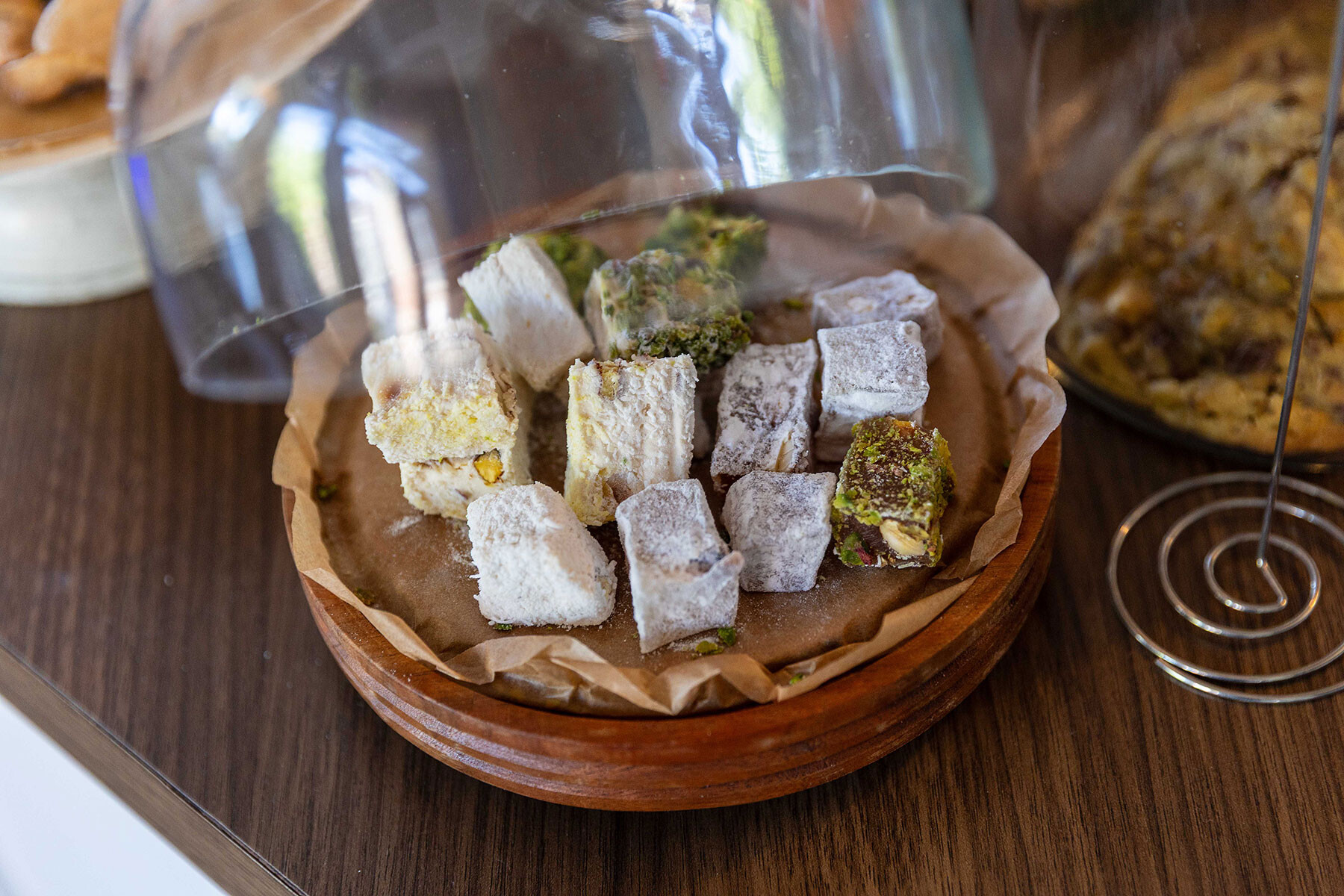
In Türkiye, coffee isn’t traditionally served alongside a meal and would be enjoyed after breakfast. While café guests (Nuriye and Elif intentionally avoid the word “customer”) visit from opening time and purchase coffee before breakfast, or enjoy it with their breakfast, the coffee itself hasn’t changed and is served the traditional way, with lokum (a chewy treat also called Turkish delight) and water alongside it, exactly as it would be in Türkiye. “We are not adjusting it here,” Elif says, though she and Nuriye relish the opportunity to educate first-timers.
The underlying philosophy is simple: meet people where they are without abandoning the tradition that makes the experience meaningful in the first place. “I don’t want to push them,” Nuriye explains. “This is not our style. This is not our hospitality.” Forcing rigid authenticity on guests, she says, would defeat the purpose.
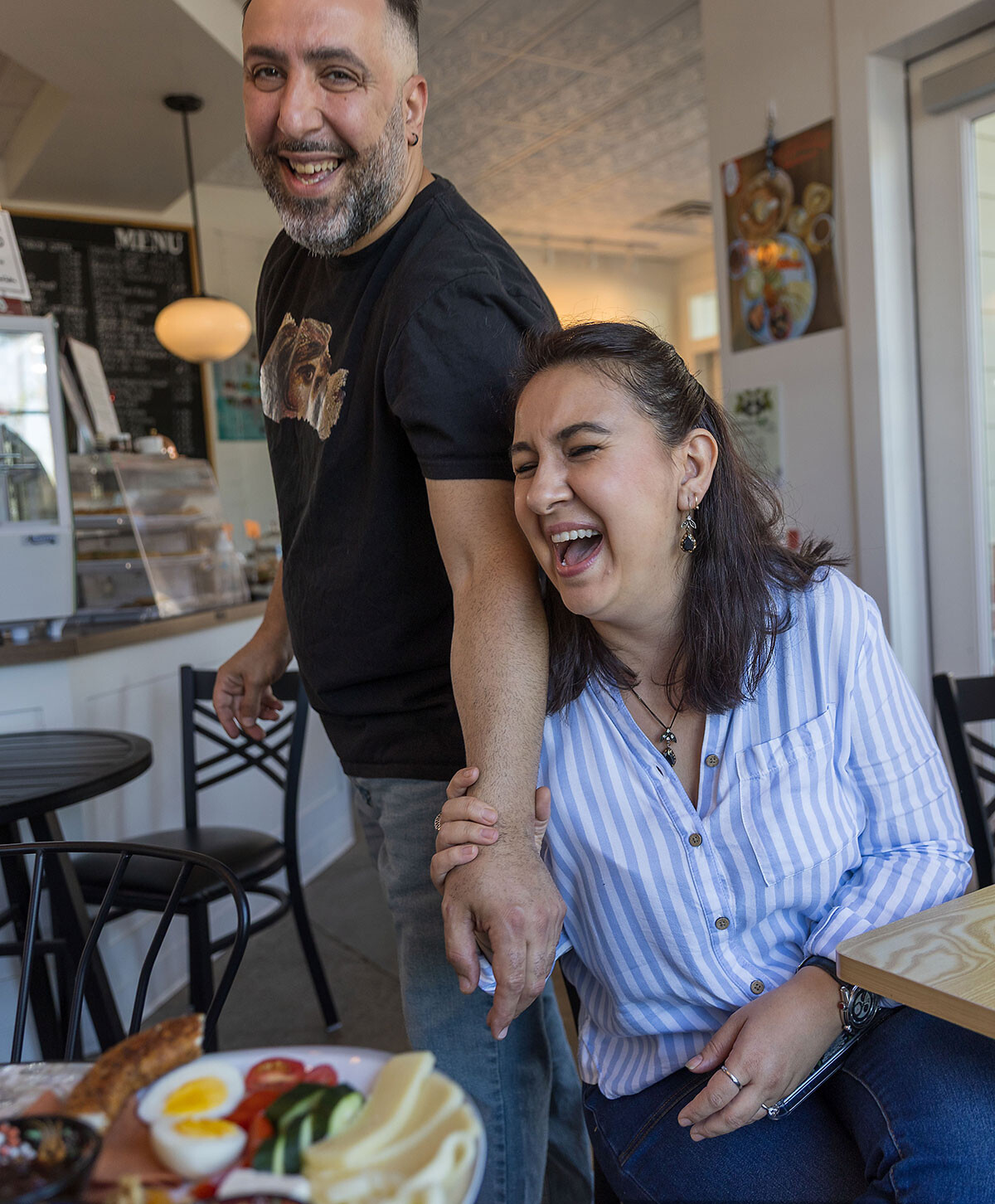
Elif and husband Onur have a long history in hospitality and a natural
warmth that makes any visit a rewarding experience.
Though there seems to be no danger of that, as regulars have become something closer to family. “Our guests, they’re hugging us,” Nuriye says. “They want to check on us. They want us to sit with them.” That closeness — kissing on both cheeks, embracing warmly, refusing to let anyone leave hungry — reflects a broader Turkish social custom the women have brought fully intact into their daily operations. “We want them to feel like they’re at home,” Elif says. “You feel comfortable.” Nuriye adds: “That you feel loved here.”
The café recently hosted its first Turkish Night — a celebration featuring a tapas-style spread of Turkish dishes, tea, music, and folk dancing led by a friend from Gaziantep who teaches traditional dance. The event sold out before guests, the vast majority of whom aren’t Turkish, even saw the menu. “They already booked it,” Nuriye said, a little stunned, in advance of the event. “That tells you.”
Looking further ahead, the owners are considering a lunch combo menu and continuing to expand their savory offerings, while staying true to what defines Turkish cooking. As Nuriye explains, “You can never find prepared food in a Turkish house. We always make everything homemade.” That scratch-made standard hasn’t changed just because the café is thousands of miles from home.
Rising costs and import tariffs have made running the business harder, but the owners have kept prices steady and absorbed the difference rather than passing it along. “Everybody is having that struggle,” Elif says. That’s why support (for small businesses) is very important.”
Asked what they most want people to understand about their café, the answer comes easily. “For me, love is the most important thing,” Nuriye says. “All around the world, we need love. Love each other and respect each other.”
It is, in the end, a deliciously simple offer: Come in, sit down, and let The Turkish Coffee Lady feed you. You’ll leave fuller in stomach and spirit than when you arrived — and very likely already planning your next visit.
turkishcoffeeladync.com
@turkishcoffeelady_nc

- Erica Chats: Special Occasion Spots
- Defined by No Definition: Shijiri Sushi Bar
- Familiar Faces: Patrick Stapleton
- Pay It Forward: Read and Feed
- Small Business Spotlight: Vino & Tap
- Noodle Blvd
- Garden Adventurer: The Riddle of Swiss Chard
- Liquid Assets: Sicilian Sun Martini
- Grounds for Connection: The Turkish Coffee Lady
- All In
- Things to Do: August 2026
I loved this story. I didn’t know if this restaurant before and. I just had the most fantastic trip to Turkey! I fell in love with the country and people. Now I can’t wait to visit this restaurant!