



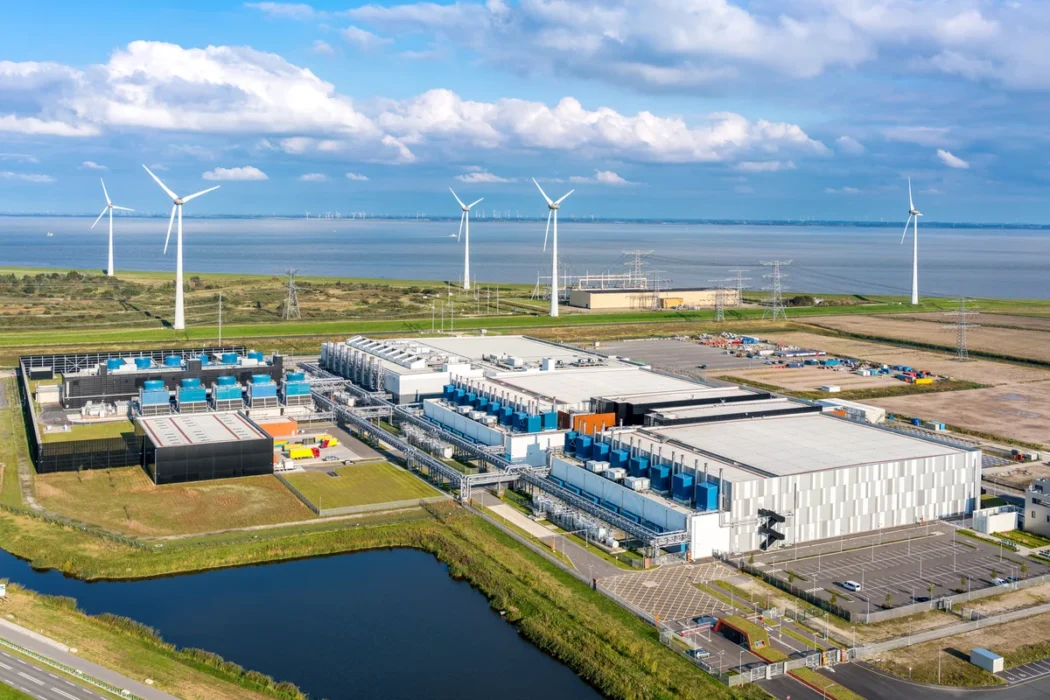
It seems like every day there’s a new state or municipality that has put a pause on the construction of data centers. Cary is one of the most recent, with the town council voting last month to put an 18-month moratorium on data center projects. Apex, Durham, and Holly Springs also have moratoriums in place; Raleigh does not (editor’s note: since publication, Raleigh imposed a six-month moratorium).
So why is this necessary? What’s the problem with data centers? Or if they’re so undesirable, why not block them altogether? The answer, as it so often happens, is “it’s complicated.”
Coming soon to a town near you
If you’ve been reading my columns, or any media anywhere, you may have heard about this popular new technology: AI. It turns out this is pretty useful, both for business and personal use. It also turns out this technology uses a lot of resources.
AI requires data, and lots of it. And the process of training takes a lot of computing power. The people using AI are generating huge amounts of data themselves in the form of responses in text, image, and video formats. All these must be saved and stored, shared and backed up. In short, the volume of online content is increasing tremendously, with the total volume of data expected to be nearly 400 zettabytes by 2028, up from 149 zettabytes in 2024. To put that in perspective, one zettabyte equals the data on 250 billion DVDs.
Storage, computing power, and the tools to deliver these services all need data centers. So we need data centers.
There are currently around 2,200 data centers in the US, with more than 620 under construction — a 28% increase. And these new data centers are not necessarily the same as what we have. Many new data centers will be breaking records in capacity and energy consumption.
And while the bulk of data centers are currently based in Virginia, Texas, and California, new data centers are planned in 47 states.
The downsides of data centers
In the past, the boom of an industry expanding in 47 states would be a cause for celebration. Unfortunately, the data center expansion is missing many of the usual perks of business growth.
While large, data centers don’t need much in the way of human oversight to run. While there are still trades like electricians that may be needed routinely over time, day-to-day staffing of these centers will be relatively sparse and won’t create many new jobs for the region.
While they don’t need humans, data centers do need energy. A lot. According to the International Energy Agency (IEA) data centers were responsible for 4% of all energy usage in the US in 2024. That total will be at least 6% by the end of this year. Where this energy comes from is a sore point for locals who will likely see new strain on energy grids. Data centers that bring their own power often resort to lower-cost, high-carbon solutions like natural gas or diesel-powered generators.
A surprisingly high portion of this energy actually goes to cooling. Most data centers spend 40% or more of their energy usage on regulating temperature. This is also related to the amount of water data centers use, which can be significant. According to Google, the average data center used 450,000 gallons of water per day in 2021. This water may be reused, but can be a massive strain on the local ecosystem, particularly in hot or dry regions.
And all these downsides come with extra downsides like noise, pollution from new power sources, and lost land use.
Where there are wins
With all these downsides, it’s easy to imagine that we should just ban data centers and call it a day. But there can be wins.
First, data center construction does bring jobs, as well as generating tax revenue. It’s also a way to bring in tech companies that might expand their footprint with additional investment. Rural and underserved areas can be strong targets for data centers as they can help develop infrastructure and expand digital resources in those regions.
For regions short on power, data centers can supplement a region’s power supply with investment in renewable energy. While many companies are leaning toward quicker and lower cost power solutions, cities and counties can negotiate for renewable investments that can improve area pollution and expand green energy solutions.
In fact, the data center itself can be “green.” Europe is leading the way in innovating data centers built with efficient cooling systems, designed to minimize or reuse the heat generated by the servers. States and counties in the US have the opportunity to seek similar commitments from companies looking for new data center sites.
The bottom line is that AI is here to stay and the massive increase in data centers is coming with it. Rather than ignore these data centers or hope they go somewhere else, residents and politicians will need to consider how they can potentially extract value from the situation. New tax revenue and advancing green energy solutions can be huge perks, but will require strong negotiation with technology companies far too accustomed to limited oversight. These moratoriums can allow North Carolina’s cities to set up strong regulations and ensure transparency in the process so they approach future development clear eyed and with pre-defined standards.



Thank you for sharing this information.
Aloma