


At a moment when sustainability, fast fashion, and our relationship with the natural world are part of almost every conversation, Floating Worlds offers art that doesn’t just comment on those ideas but is built entirely out of them — turning discarded paper, maps, and sheet music into large-scale studies of the plants and animals that share this landscape with us.”
We had to know more about the artist behind the exhibition after reading those words, so we went straight to the source: artist Adam Cooley, whose Boro Land: Floating Worlds exhibition is on display at the Cary Arts Center through August 23.
Introduce yourself!
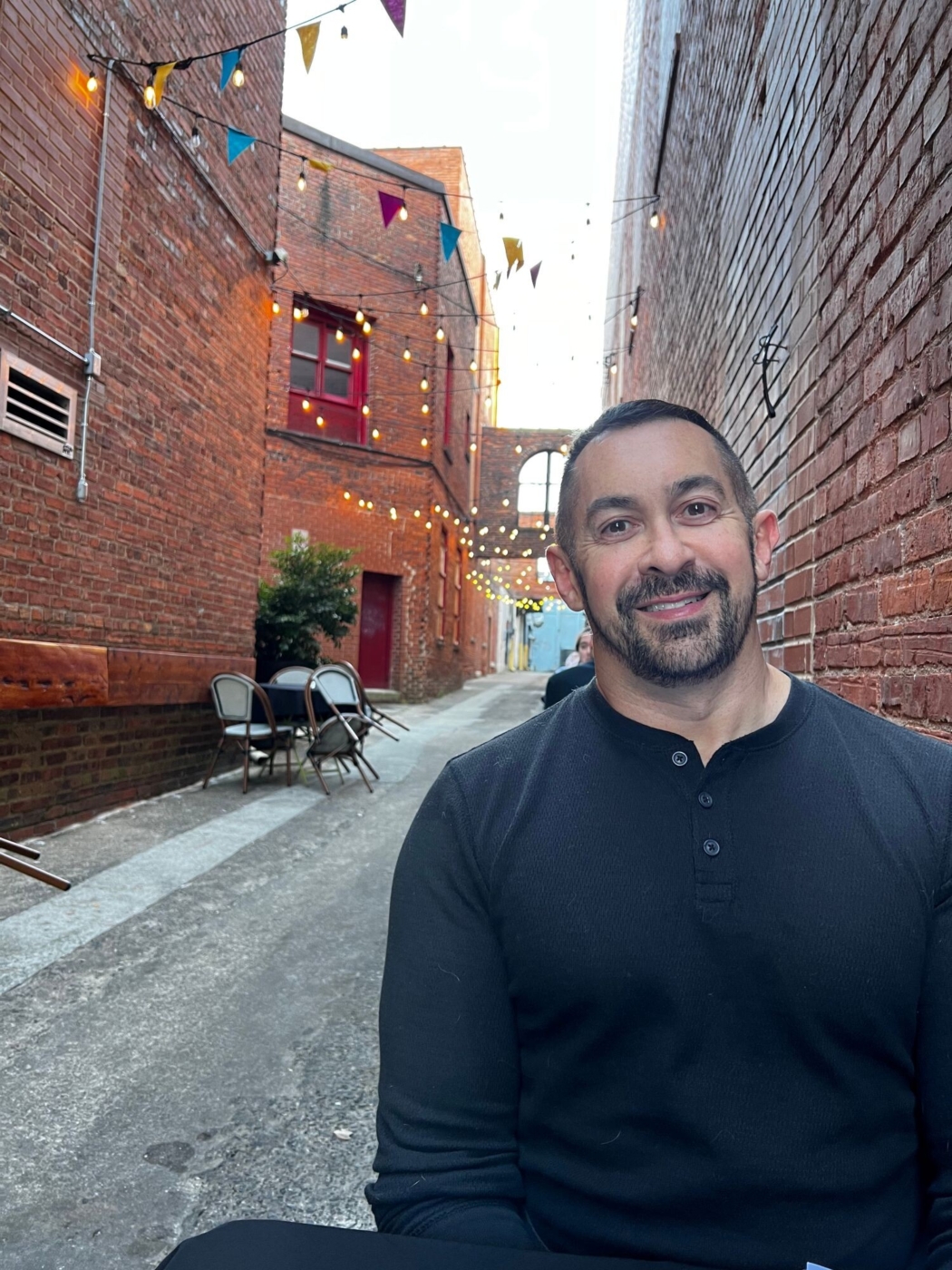
I’m Adam Cooley, a self-taught visual artist working in painting, sculpture, and textile art. I was born in Rochester, New York, and spent 30 years living and working in Japan before returning to the US. I’m now based in Durham.
How would you describe the Boro Land: Floating Worlds exhibition in a nutshell?
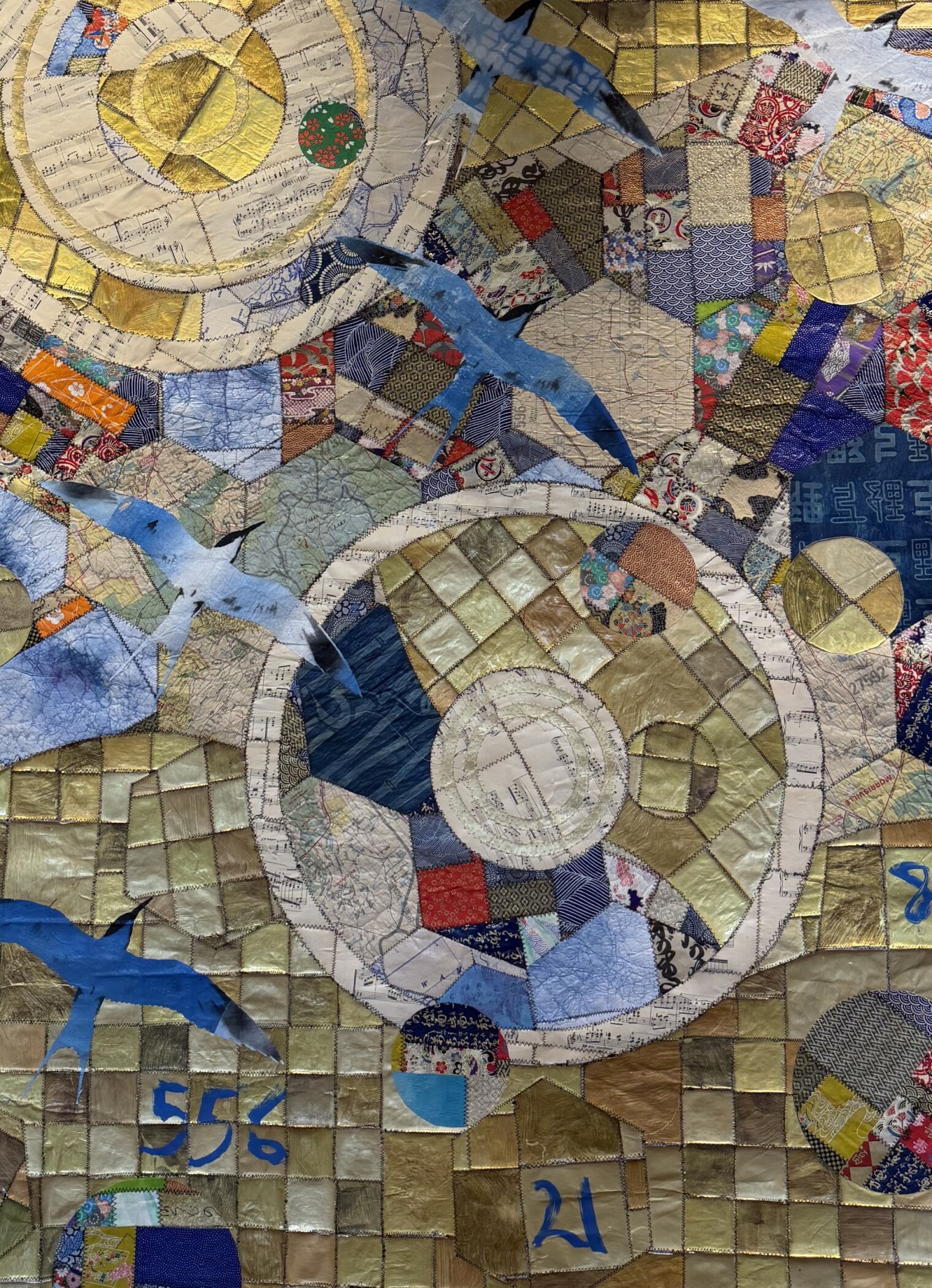
Floating Worlds is built entirely from reclaimed materials, vintage Japanese paper, antique sheet music, and old Bureau of Land Management maps of North Carolina, fused to textile and stitched together with what now adds up to about 40 miles of thread across the whole Boro Land project. For the first time in this series, the natural world of this area enters directly. The plants and animals native to the Piedmont and the Carolina coast are rendered in those same reclaimed materials and stitched right into the surfaces alongside the maps.
The North Carolina Piedmont and coast are represented in the works in this exhibition. Can you tell us a bit about the significance of bringing your home state into your art?
North Carolina isn’t my birth state, but it’s home now, and this show is the first time I’ve turned that lens on the place I actually live. The maps running through these pieces are maps of this land, the ground Cary itself sits on. Stitching them into portraits of the plants and animals that share this landscape with us felt like a way of paying attention to a place rather than passing through it. Every piece starts as something somebody else discarded, and putting those materials to use in service of the local landscape connects the idea of reclaiming and mending to the actual ground under our feet.
As a self-taught artist, did any particular artists or movements inspire your style?
Honestly, I’ve never been drawn to the idea of a signature style or a single movement. People aren’t insects; we don’t need to specialize, so I’ve always preferred to experiment across bodies of work rather than settle into one. As a kid I loved reading encyclopedias, and I think that shaped me more than any particular artist did. I was fascinated by the sheer variety of cultures and the countless ways people have made art across the centuries. And of course, Mother Nature is probably my favorite creator of all.
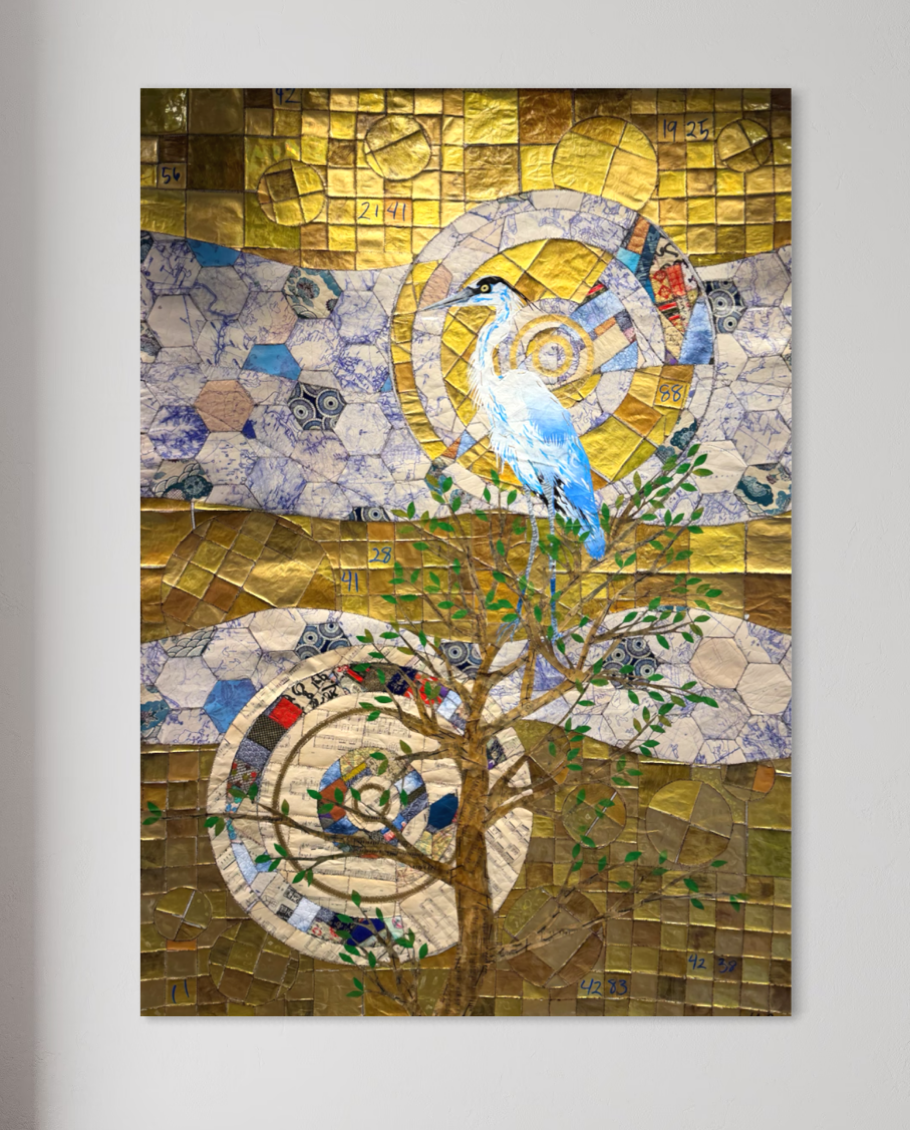
Blue Heron
Care to give us a peek into your artistic process? How do documents and reclaimed items go from inspiration to your stunning works?
It starts with the material itself. An old map, a page of sheet music, a bit of fabric that has seen wear, paper that already had a life before it reached me. I don’t cover up what’s already on the page. The original markings, text, and imagery stay visible in the finished piece, so the history of the object becomes part of the artwork. From there it’s a process of layering, fusing to textile, and stitching, building up a mosaic-like surface until an image, in this case a map giving way to a plant or an animal, emerges from the materials. Boro Land itself has grown into an internationally traveling project, with earlier chapters shown in Kyoto and Osaka, then Buffalo, NY, and Warren, PA, before arriving here in Cary.
You spent 30 years in Japan before returning to the United States and settling in the Triangle. What differences have you observed between the two cultures’ perspectives on art?
I think art tends to be valued a bit differently in Japan than in the US. In Japan, art has often served as a way for the culture to record its own history, so it carries that weight. The US, on the other hand, seems a bit obsessed with the “artist statement.” In Japan that exists too, but artists there more often let the work speak for itself. If you feel like you need to explain the meaning behind a piece, that usually tells me the piece didn’t quite do its job. Beyond that, the art worlds in each country are honestly pretty different from one another altogether.
Is there a specific idea or message you would like people to take away from your exhibition?
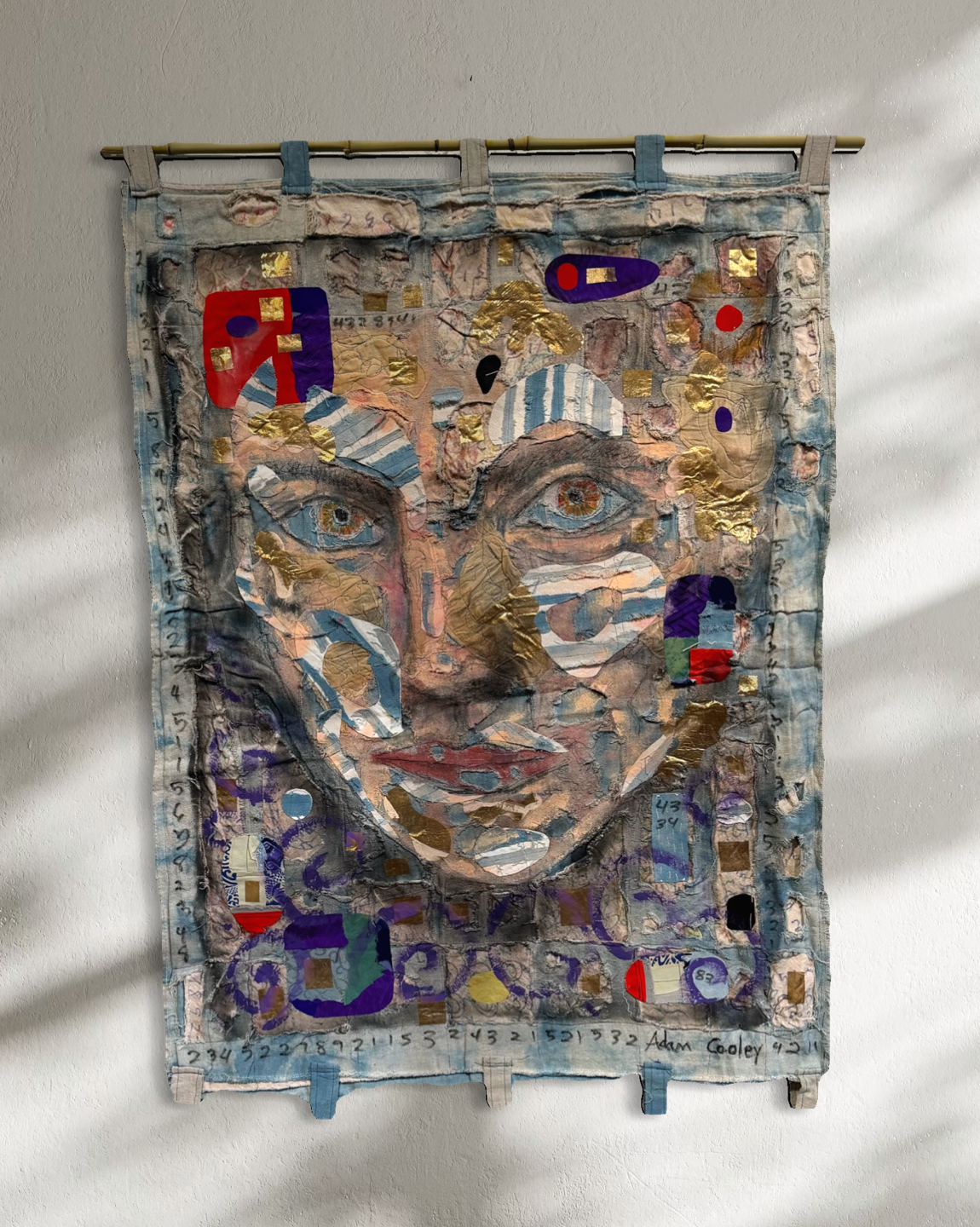
Every stitch in this work is an argument against throwing things away. At a moment when sustainability and our relationship with the natural world come up in almost every conversation, I wanted to make something that doesn’t just comment on those ideas but is built entirely out of them.
Anything else you’d like to add?
There’s a free public reception on July 31 from 6 to 8 p.m., coinciding with Cary’s Final Fridays Art Crawl, and I’d love to meet people there and talk about the work in person. Readers can see more of my work at adamcooley.com or on Instagram at @iamadamcooley. I will also be teaching a boro textile class at RTP September 19 for anyone looking to give it a try.