


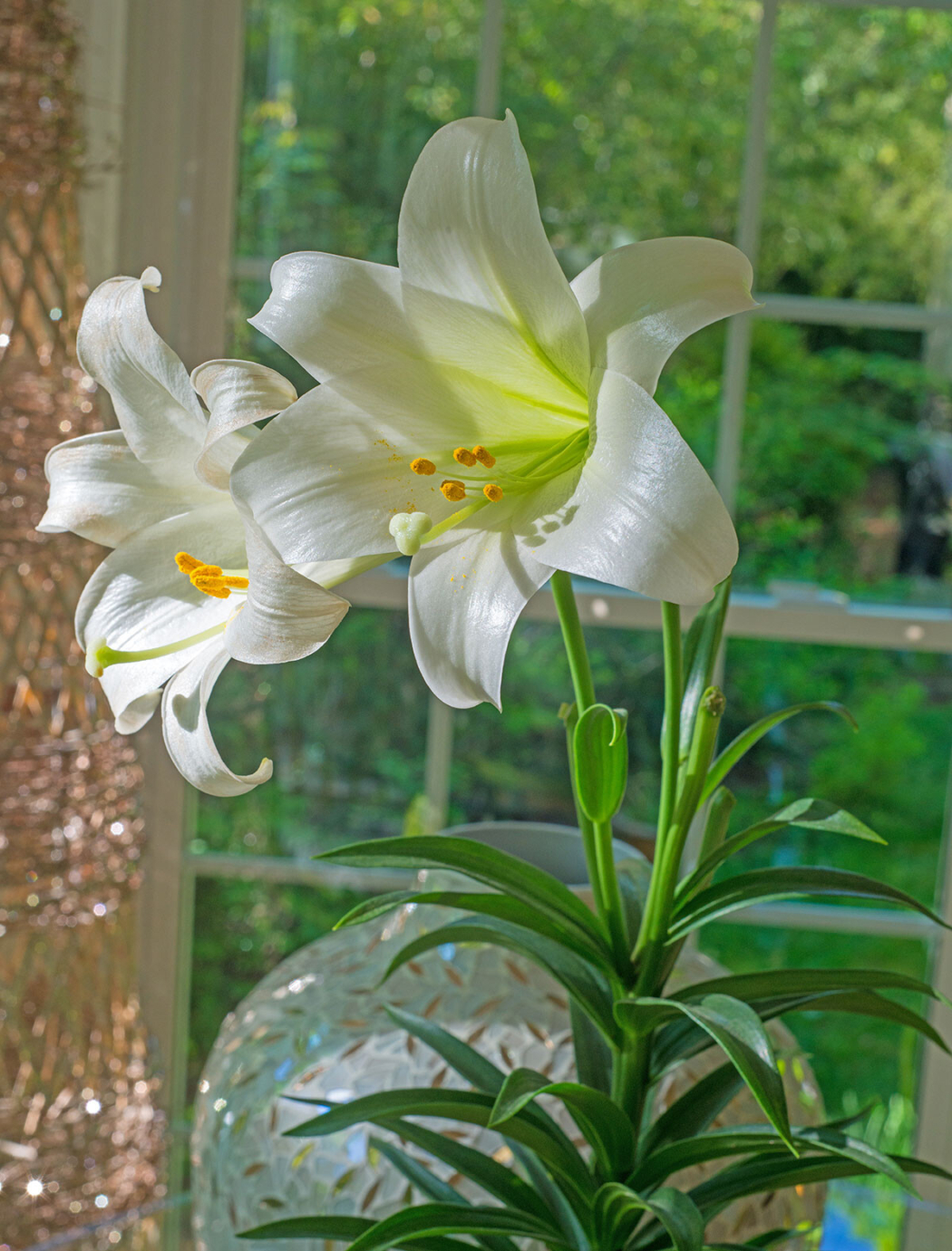
Psst! Did you know Easter lilies aren’t just for Easter? While they are ubiquitous offerings in stores everywhere this time of year as holiday houseplants, Easter lilies (Lilium longiflorum) are actually perennials that can be saved and transitioned this spring to outdoor gardens, where they have the hardiness to not only survive but thrive. And here are a few pointers to help make that happen:
- First, two notes of caution: (1) While your Easter lily is showing off inside, keep it away from cats, as munching on the leaves can be harmful to your feline friends; and (2) place the plant in a location where it won’t be brushed up against because the flowers’ golden yellow anthers are instant stain makers on both skin and clothes.
- Drainage, please. If your Easter lily came in a pot with fancy foil or plastic wrap, remove it to prevent the container from turning into a bulb-killing bog.
- The best place for an Easter lily while it is waiting to head outdoors is in a bright room but out of direct sunlight. Snip off the flowers as they fade, and water the pot only when the soil surface feels dry to the touch.
- After the threat of frost has passed, condition your Easter lily to the outside in an area of filtered sun for a week or two. Then it can be transitioned to the garden. Pick a sunny site that has good drainage and, if possible, some light afternoon shade to shield these beauties from the worst of the summer scorch and prolong their flower displays.
- When planting, remove the pot and set the root ball to a depth that has its top even with the surrounding soil. If the growing site contains dense, stubborn dirt, fluff it up first by mixing in gobs of compost or other organic amendment. Also, mulch and keep these garden newbies on a regular watering schedule.
- During its first year in the garden, an Easter lily will simply be 1- to 3-foot spikes of green foliage after its original flowers wither away and are picked off. As these leafy spires turn yellow, snip them even to the ground.
- The following spring, for better flower displays, add a dusting of low-nitrogen, time-release fertilizer when new shoots begin to pop from the soil.
- And finally, Easter lilies blooming during the Easter season is the result of a bit of greenhouse magic called “forced flowering,” so don’t expect your pretty to blissfully bloom at Easter next year. In the garden, it will naturally start flowering in the summer.
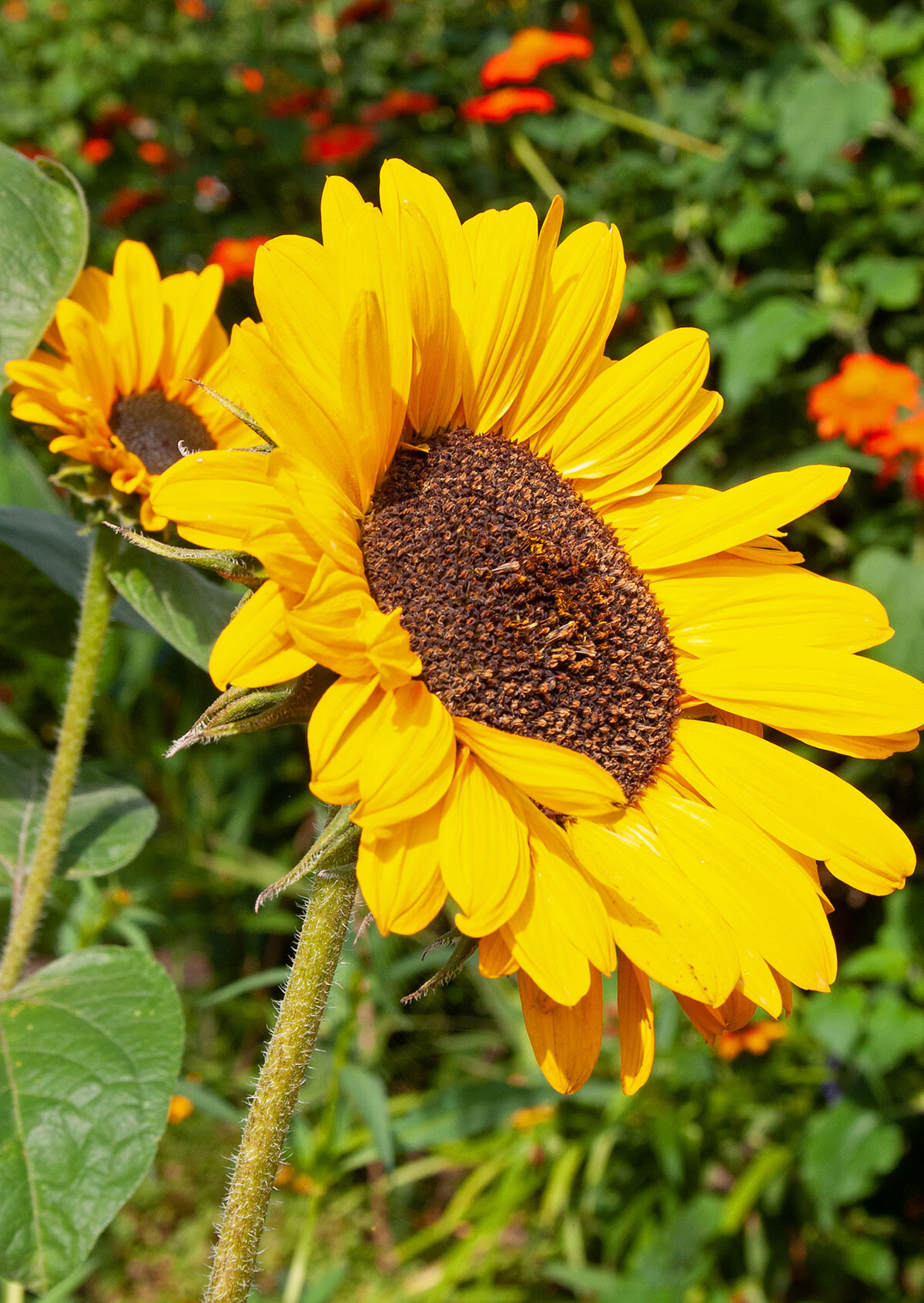
Sunflowers. Heliotropism — who knew?
Need a neat plant to help introduce youngsters to the fun of gardening this spring? Annual sunflowers are my choice because they develop rapidly from seeds or starter plants. And then there is the mysterious matter of heliotropism. While annual gardens typically evolve slowly into their splendor over the growing season, which to some youthful minds translates into “boring,” young sunflower blooms pull off a neat trick every day by turning toward the sun, following as it arches westward across the sky, then rotating back to the east overnight to greet the next day’s sunrise, and starting their diurnal dance all over again. After the sunflower blossoms mature and fully open, this motion stops, but until then: “Mom, Dad! Wanna see something cool?”
To Do in the Garden
April
- Prepare the soil in your veggie patch at the beginning of this month, but hold off adding mulch until May so the strengthening springtime sun can heat up the growing ground to make it comfy for such warm-season edibles as lima beans, cucumbers, peppers (sweet and hot), watermelons, tomatoes, green beans, eggplant, squash, and pumpkins — all of which you can start planting by the middle of April if your green thumb has a serious itch that needs to be scratched early.
- Cool-season veggies such as carrots, collard greens, radishes, spinach, parsnips, and lettuce that were started from seed in the garden last month should now be thinned to their proper spacing requirements.
- Dahlia tubers can be set in ornamental beds as soon as the threat of frost has passed. For taller cultivars, add a support stake in each planting hole to avoid damaging the root systems and (especially) tubers later.

- Pay It Forward: United Arts Wake County
- Recipes from Readers: Anne’s Way Kentucky Derby Panzanella Salad
- Liquid Assets: Larry The Cucumber
- Caffeinated Canvases
- Getting Frank About Pimento Cheese
- Garden Adventurer: Easter Lily-ology
- Small Business Spotlight: Carolina Clay Studio
- A Stage for Youth
- Light the Way
- Women’s Work
- Things to Do: April 2026