

Two area artists are exhibiting this spring. Using mixed media to explore themes of gender, culture, power, and belonging — both locally and in remote regions — Dr. Sara Koenig and Susu Hauser represent the conscious, collaborative, and creative spirit of our community.
Past Present: Dr. Sara Koenig
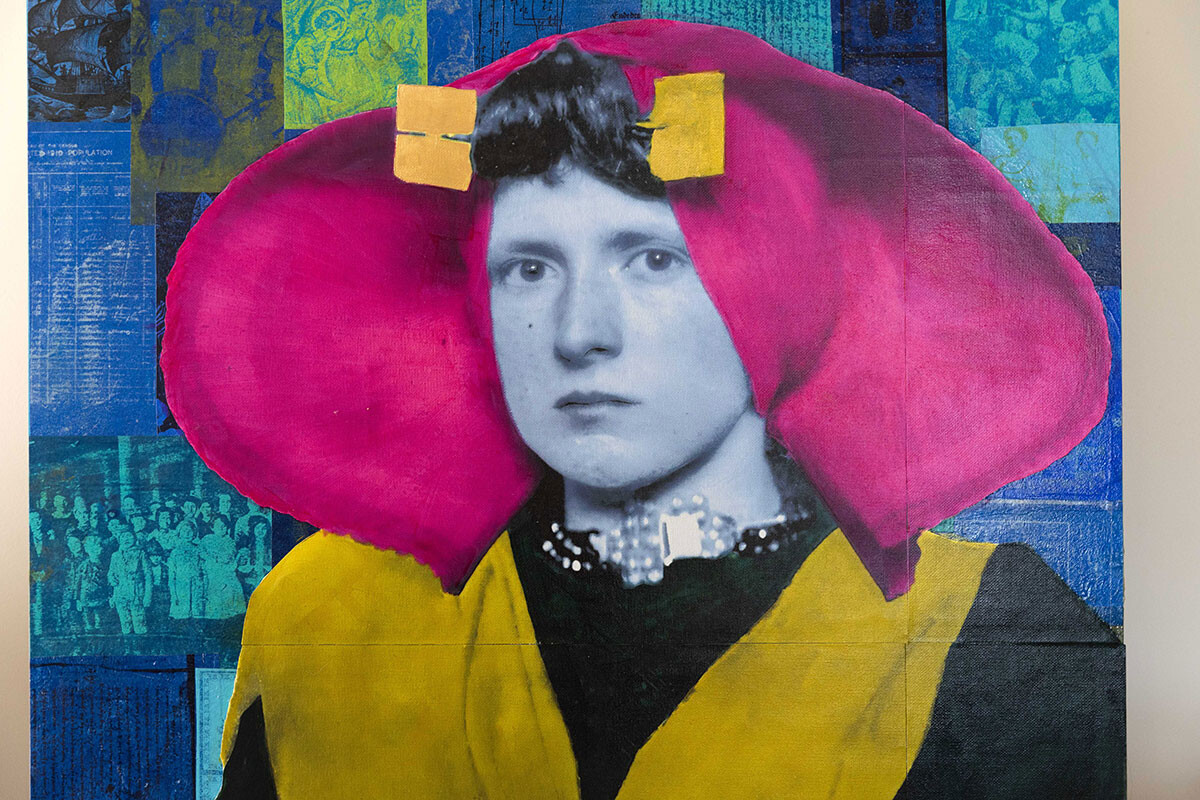
“It’s a woman who looks as though she carries the weight of a story,” says Dr. Sara Koenig about how she chooses the subjects she’s interested in working with. “I’m looking for signs of life.”
It is perhaps ironic, then, that Sara relies on archival sources like the New York Public Library and the Library of Congress to locate the photographs she uses in her mixed media portraiture series.
“I don’t know what that story is,” she says. “And I don’t pretend to know.” But Sara senses that there is a story.
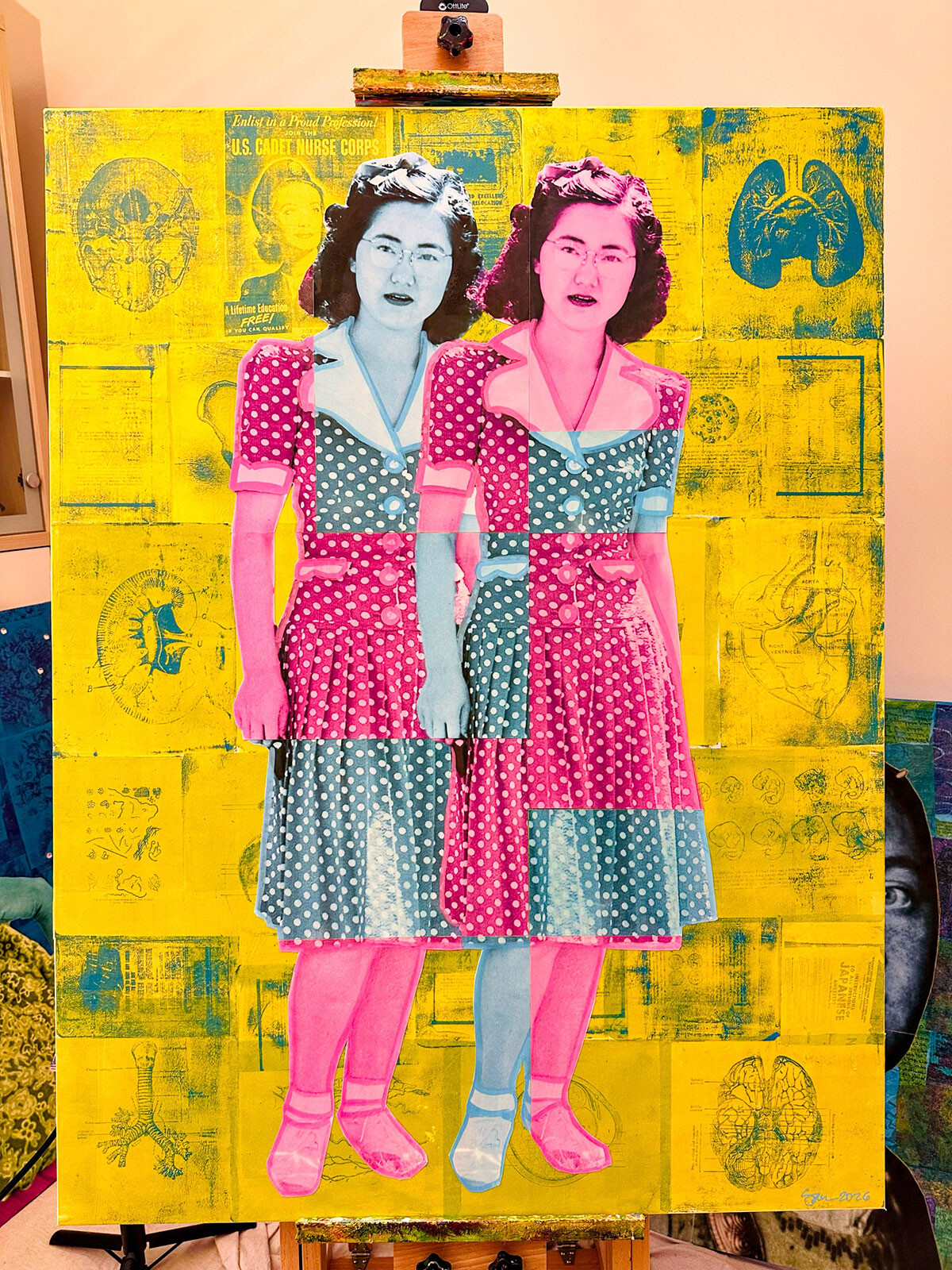
“America, interrupted” (36 x 48 on canvas) is based on the photo of a second-year nursing student in Fresno, California, who had to leave her studies to be relocated with her family to a Japanese internment camp when the United States entered World War II.
Through a process that combines digital editing, image transfer onto paper, saturated acrylic pigments, and dimensional collage, Sara shares her subjects’ stories in layered, textural portrait compositions. Vivid contemporary color disrupts the authority of the archival photographs, while raised surface text elevates Sara’s subjects from a past that has defined them.
Like her subjects, Sara’s life has been heavily influenced by history. Growing up in Cape Cod as the daughter of a history teacher father meant that she was raised alongside, as she describes it, “towers of books … bookcases everywhere … collected artifacts …”
“We had pieces of ancient Persian armor and all of these amazing things. History was everywhere, but it was to be revered. It was ancient. And it was not alive.”
Although influences of magical realism and contemporary fiber practices — as well as the use of products and technology that didn’t even exist when her subjects lived — imbue a sense of suspension between dream and documentation that remains evident in the finished piece, the latter is where Sara’s father’s daughter begins her work.
“What I can know is their context, so I do a lot of research around what was happening at the time and in the region,” she says about locating sources that speak to what her subjects could have experienced and what may have been happening globally.
Although the source materials are historical, the themes are distinctly contemporary: gender, culture, power, and belonging. By isolating her subjects from their original contexts and reframing them visually, Sara collapses temporal distance and invites viewers to encounter these women not as relics but instead, as she describes them, “living collaborators.”
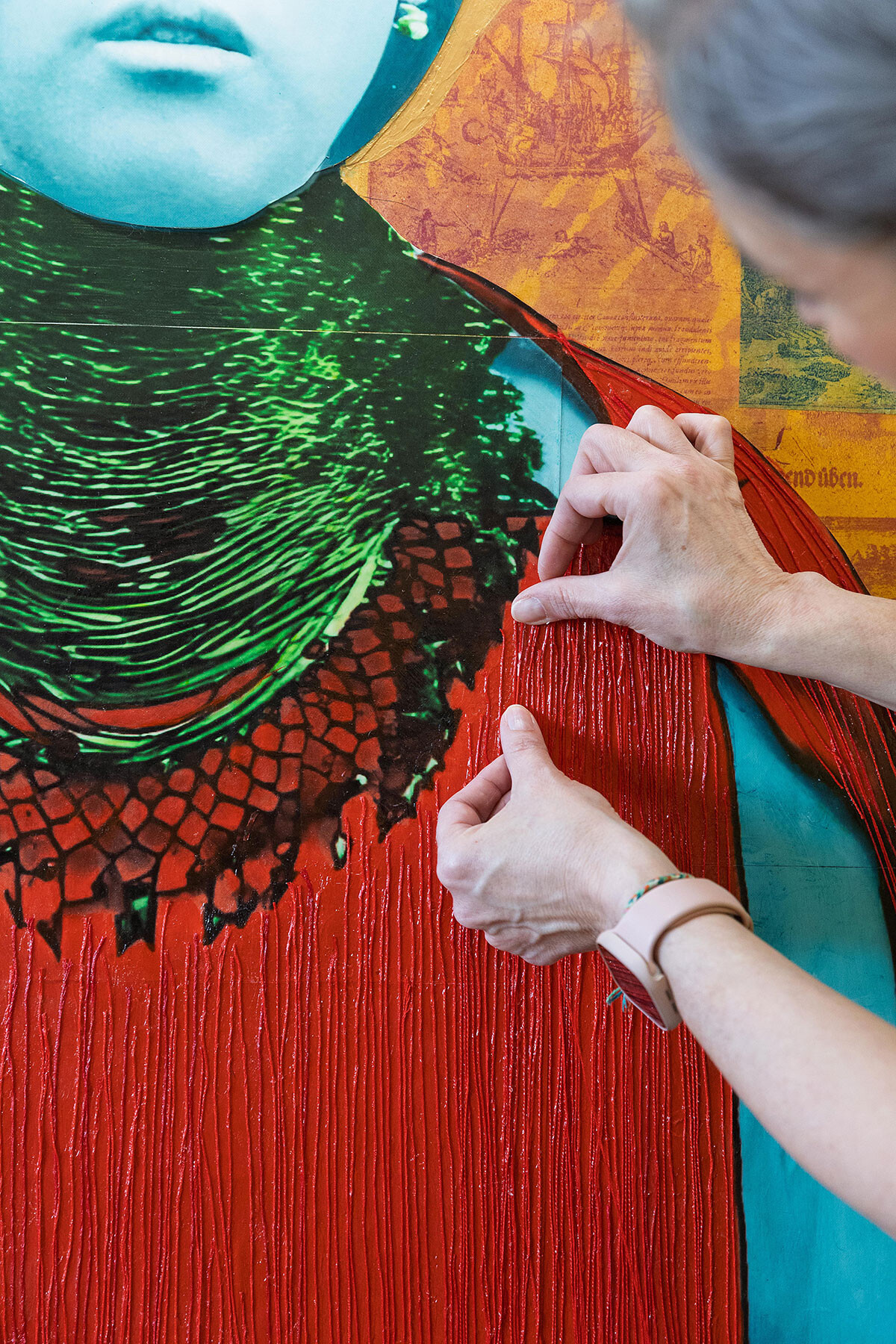
Combining digitally manipulated photographic
imagery with acrylic paint, collage, and paper transfer processes, Sara constructs richly textured compositions that situate figures within symbolic landscapes of past and present.
But Sara also acknowledges that she can’t ever “really know this individual’s stories.” The same is true when a client comes to Triangle Wellness and Recovery, which Sara founded in 2019 and is expanding for a second time: “I don’t really know their story.” But she can honor their individuality. She can honor that there is a story there.
After a medical career as a pathologist, its visual appeal a draw for the lifelong artist, Sara’s second act is in the addiction and mental health field. Working with people, mostly women, who have experienced significant trauma has allowed her “this amazing privilege” of being allowed “into these intimate parts of their inner life.”
While she was living in New Mexico, a place rich in history and artistic tradition, Sara started to work with people in and out of prisons and gangs and cartels. The experience of hearing their stories — largely, stories of suffering — eventually led her back to North Carolina and into work that Sara considers “the most gratifying I’ve ever done.”
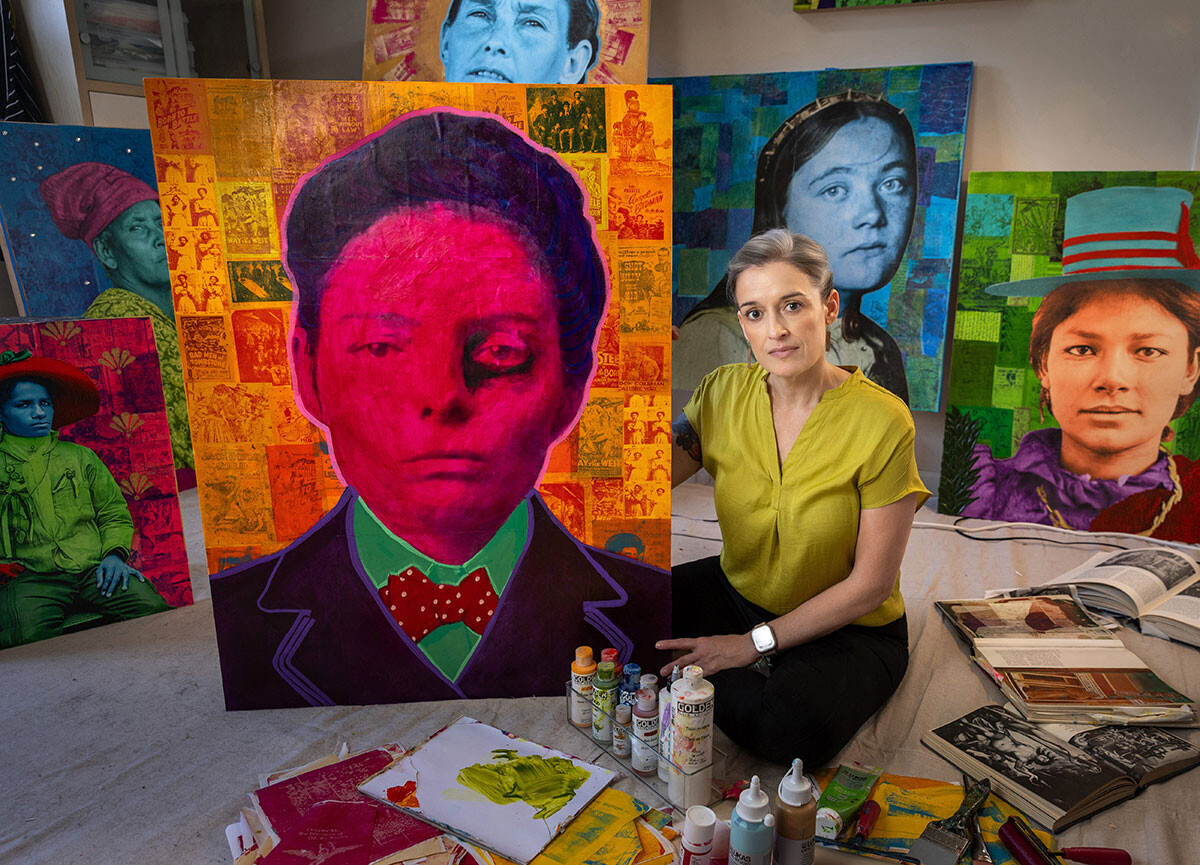
Sara’s work draws on archival photographs, textural
documentation, and historical iconography to examine how personal and collective histories continue to shape contemporary narratives of identity and belonging.
Although it’s her portrait subjects that she’s referring to when she says, “You recognize them as a person, not just an artifact,” the same sentiment applies to how Sara views her clients. They are more than symbols of their suffering, but the honor of learning their stories has meant that some have been seared into Sara’s memory.
That’s because unlike in other lines of work, Sara herself is the instrument: her brain; her senses. This means that she must find a way to “metabolize” the stories. Her art is how she does that.
“It’s something that helps me to show up as the best person that I can be,” she says, “for the rest of the people in my life … and my patients. I need to make sure that I take care of myself so that I can pick up on things. Because if I’m preoccupied, if I’m not really present in conversation, I’m not really there in the way that I need to be there to be the kind of provider that I want to be.”
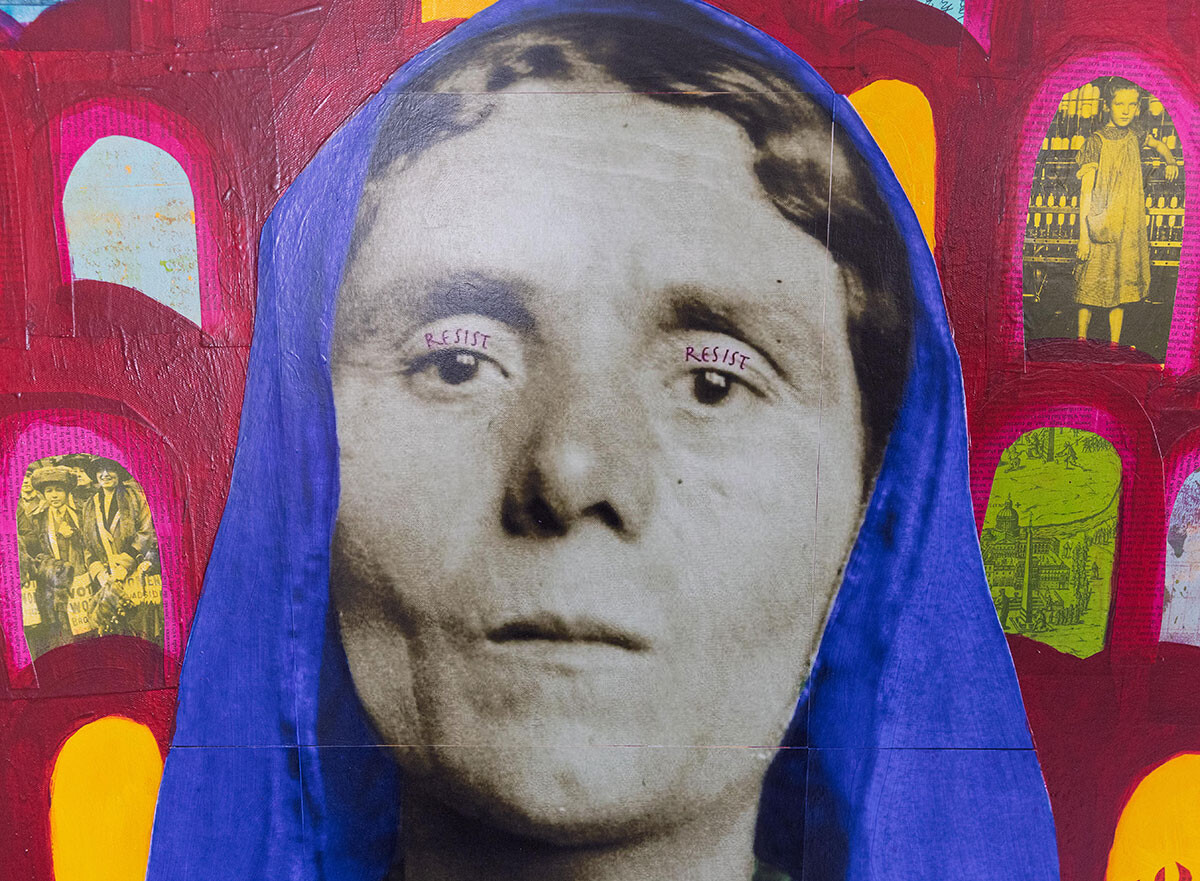
Apart from during medical school, when her energy was split between learning, patient care, and her family (she started with a 9-month-old baby), the “grounding” experience of making art has always kept Sara in touch with herself.
Twenty years after graduating, she reflects on her own history and recognizes: “The periods of time where I haven’t shown up for myself artistically have been periods of time where I’ve struggled personally.”
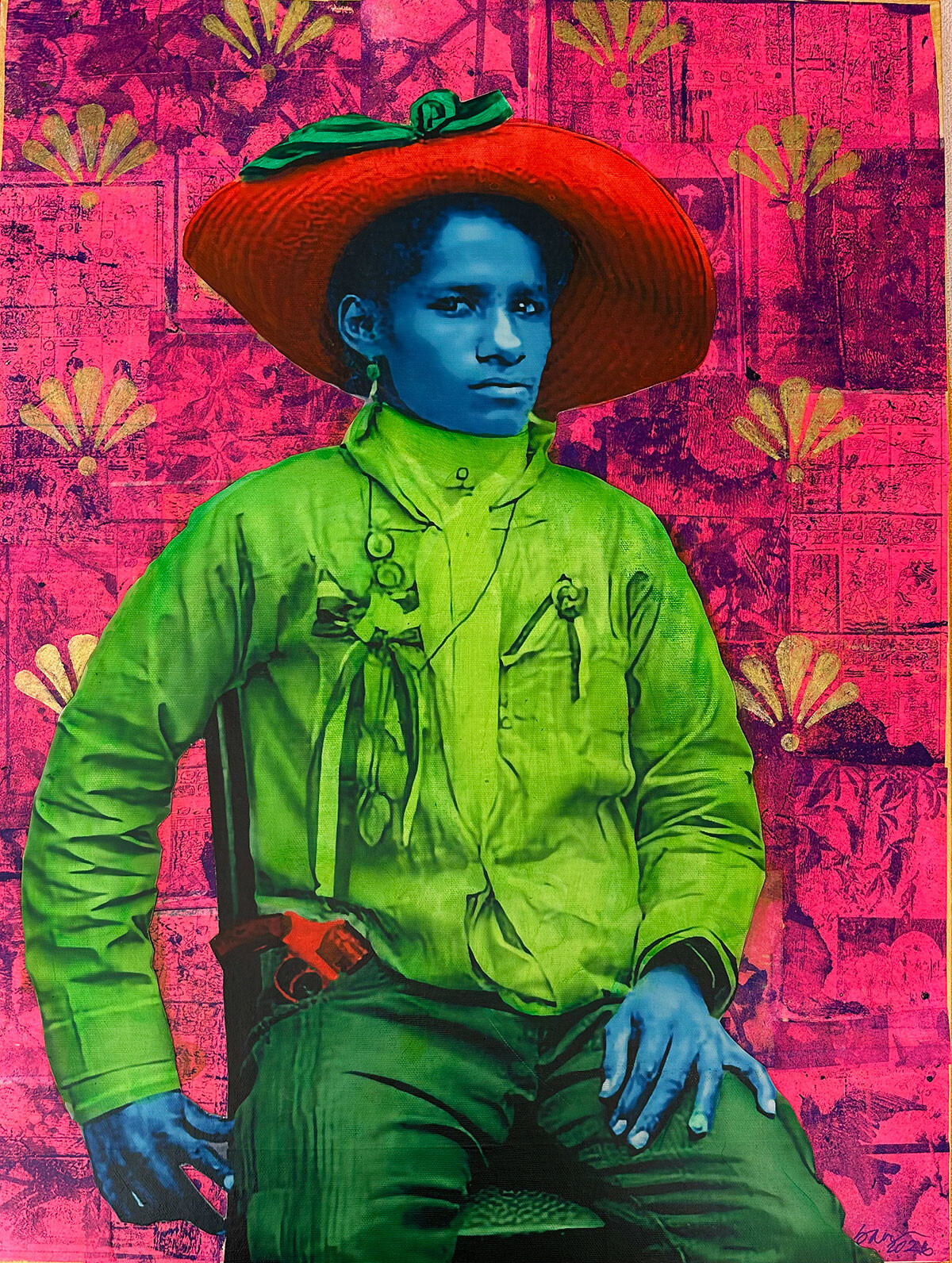
“Proximity to Power” (30 x 40) speaks to the pattern Sara has witnessed of women gaining political power by their proximity to powerful men, something she has seen a lot in the medical field.
Which is why her artistic practice is now a “non-negotiable — it’s something that I show up for just as I show up for my clients.” Yet while other artists may await the day when they can quit their day job, Sara is focused on how she can continue to allow the two parts of her life to “inform and best reflect each other.”
A few years from now, her goal is to work three days a week and make art the other two. “Being a physician and serving the amazing individuals that I have the privilege to work with makes me a better artist,” she acknowledges. “And being an artist actually makes me a better provider as well.”
This year Sara did something she doesn’t usually do and made a New Year’s resolution. She committed to “come out” more as an artist: for third Fridays, to see other people’s exhibits, to museums, and for networking events. She admits that it’s been less than a year since she has started to use the word “artist” to refer to herself — the same amount of time she has been submitting her artwork.
So to have been included in national juried shows and to have a solo show this spring is “super exciting.” Women Past, in Present Tense: Explorations of Ancestry, Identity, Belonging, and Power Through Mixed Media Portraiture will be on display from April 7 through June 30 in the grand hall at Golden Belt campus in Durham. Sara feels “very honored” to have been chosen after applying to the open call, but she also admits that the prospect of her first solo show is both “exciting and intimidating.”
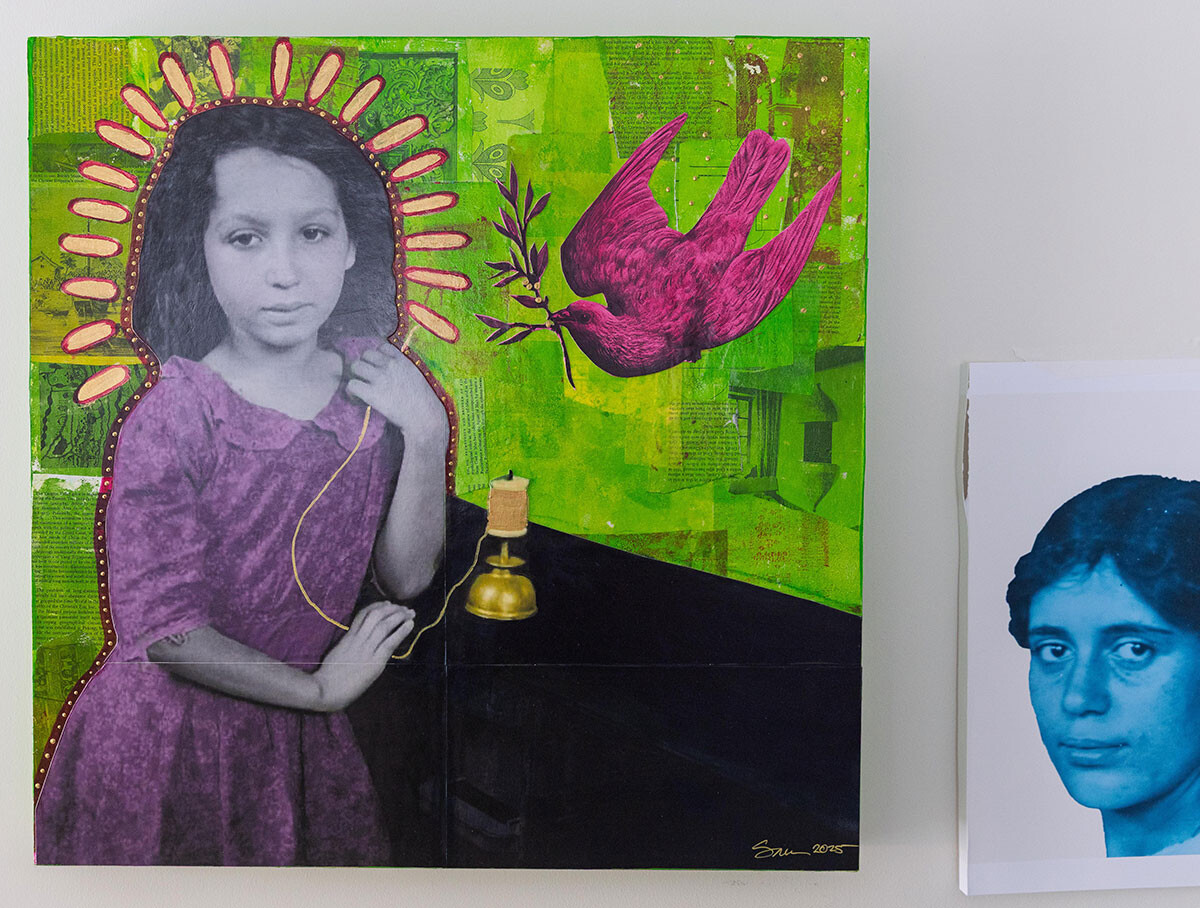
The inspiration for all of Sara’s pieces begins with a photo. She searches online digital archives for faces that hold stories behind their eyes, or figures that seem heavy with the weight of the lives they have lived.
It’s fitting that the women Sara selected for her richly layered portraits suggest strength and histories she wanted to know. Searching for those stories by transporting her subjects into the present has helped “everything come together in this really beautiful way” for Sara, as she feels she has both found her artistic home and never been professionally happier or more satisfied.
“I am aware of how blessed I am to somehow have figured out this magical balance of things,” she says.
sarakoenigart.com
@sarakoenigartist
To Be Transported: Susu Hauser
Contributed photo
“I’ve got the windows rolled down so I can feel the air,” says Susu Hauser about driving across the Kalahari Desert — alone.
When she declares that the “magic happens when you take the leap and then you find your way,” Susu is speaking from experience.
Many experiences. Each one profound. Every single time.
As she was headed to Donkerbos, a remote settlement in eastern Namibia that’s home to the San community, she drew on the grit that has always inspired her. The resilience embodied by her “North Star” mother, who was a Hungarian refugee at the age of 10 and who later would fight a challenging undiagnosed illness yet continue to show grace.
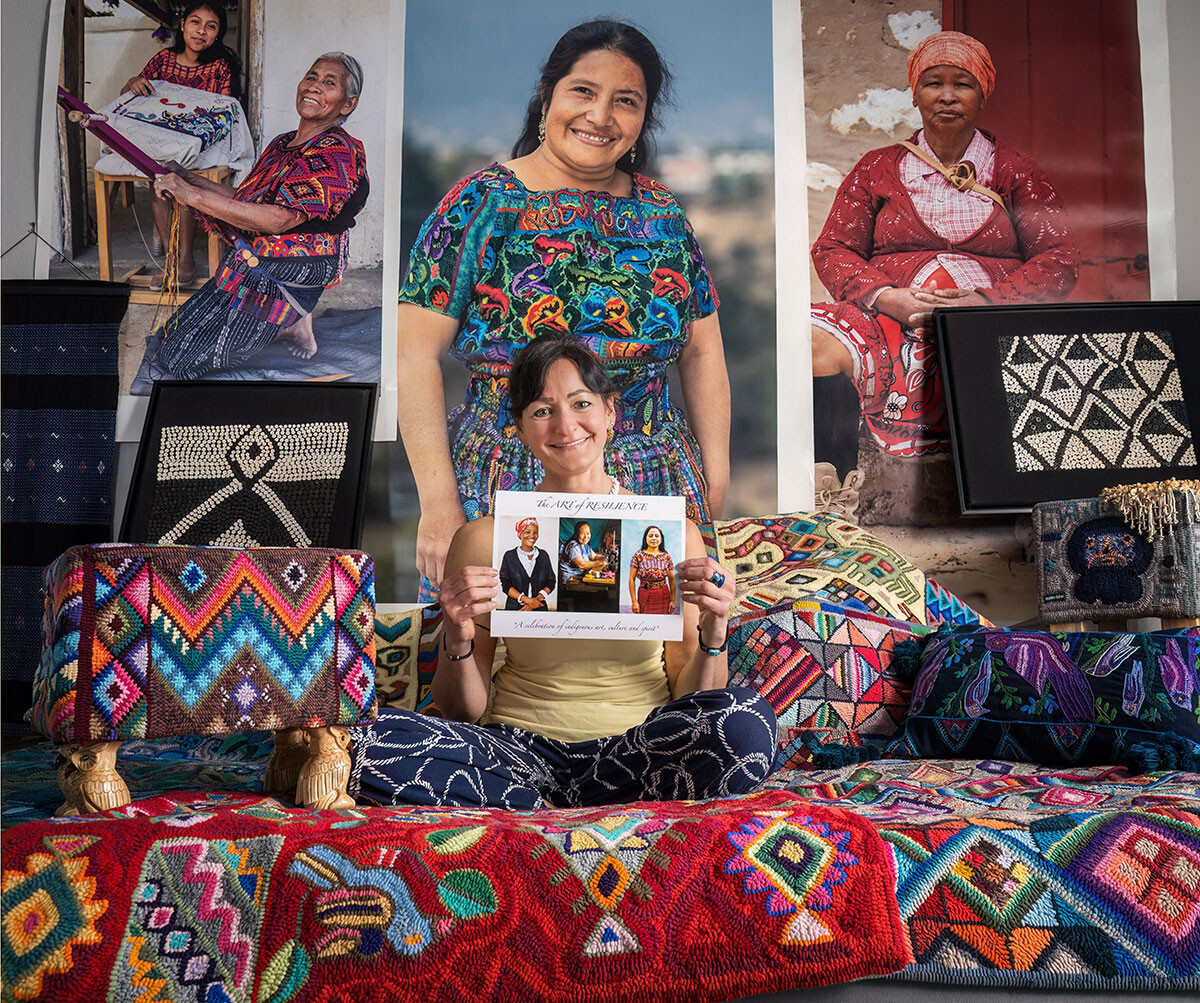
Visual storyteller Susu Hauser visits some of the most remote parts of the world and documents the art processes of Indigenous women who sustain their communities.
The women Susu was about to meet in Africa would, despite their marginalization, “reflect the same grit, the same grace, the smiles, the warmth, the transportation of suffering and what do you do with your grief” that her mother had modeled for her.
The 476 million Indigenous people in the world spanning 90 countries inspired visual storyteller Susu’s newest project. They belong to 5,000 cultures, speak 4,000 of the world’s 7,000 languages, and protect 80% of our global diversity. While these facts, in her words, “blew me away,” the following are “just heart-wrenching” to Susu and compelled her to pick up her lens.
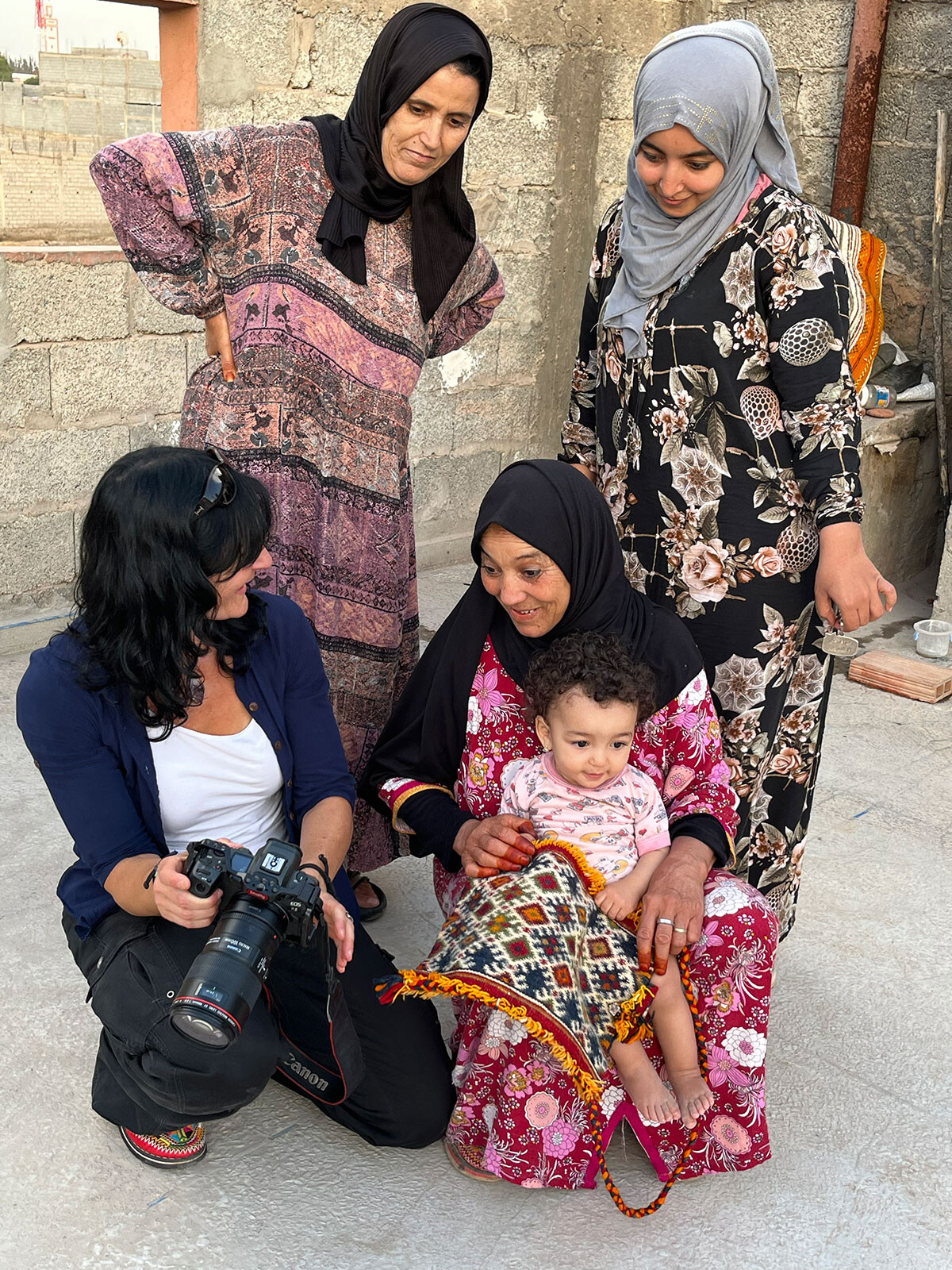
In Morocco, Susu shares her photos with artisan Fadma.
Indigenous people represent just 6% of the world’s population, yet they account for 20% of the world’s extreme poor. Despite being the backbone of their communities, Indigenous women are always at the epicenter of this poverty and marginalization. “So, to me,” she says, “I wanted to work with — I don’t want to say the most marginalized, because that’s not how I see them — their circumstances are … land dispossession and resources taken away, no healthcare, no education … but I don’t focus on the marginalization. I focus on how they’ve transformed their suffering and hardship.”
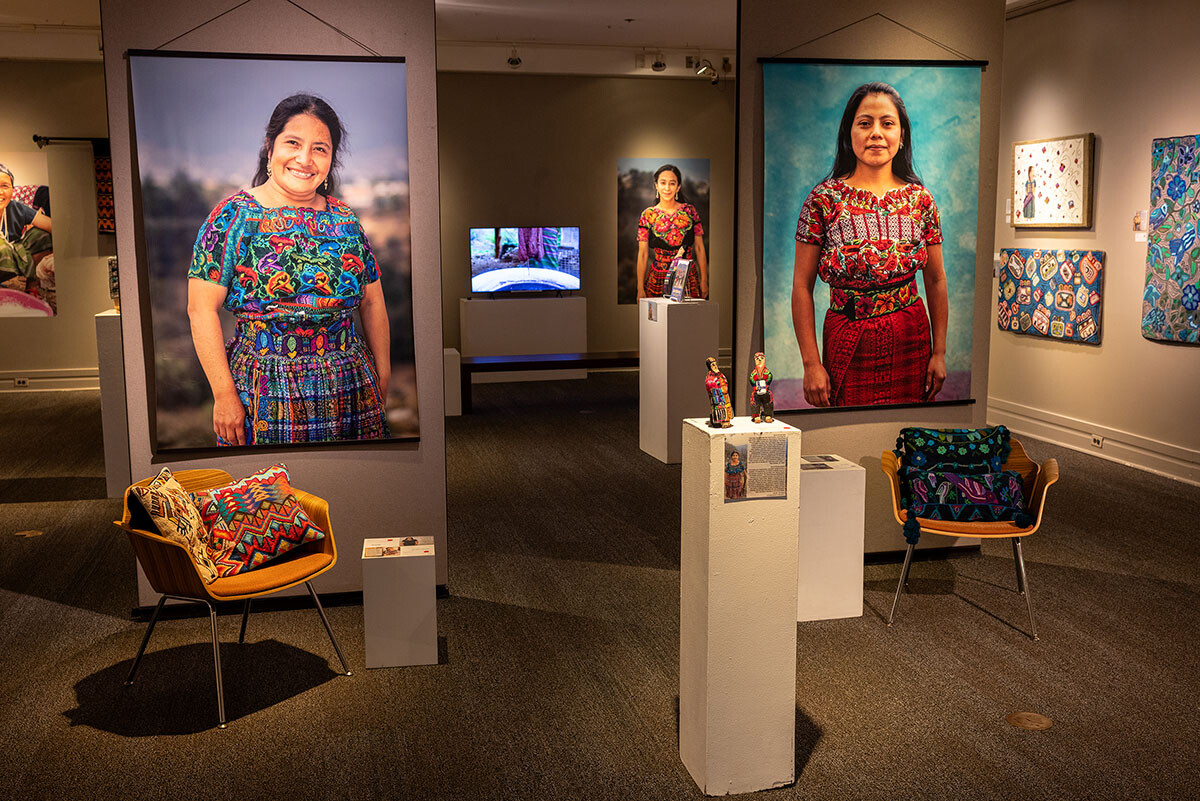
That focus came into view at Susu’s The Art of Resilience, which premiered at the Durham Art Guild’s Truist Gallery in the fall of 2024. Filling 3,000 square feet of space, her show doubled record sales for the gallery, which has existed since 1970, in just 1 month of exhibiting. Over 65% of the artisan pieces sold, and all proceeds went to the nonprofits and artisans featured in the exhibit.
The fruition of the project comes four years after Susu was first profiled by Cary Magazine. At the time, she shared her work with Maya women in the Guatemalan highlands. “It hit all of the elements: transformation through art, empowerment of women through art, and empowerment of Indigenous cultures,” she said of her experience at the time.
The August 2022 article included the statement: “Hauser now hopes to find a venue for a fully immersive multimedia exhibit, featuring embroidery, video, photos, and even sound effects from the area.”
Today, Susu picks up the thread to share how “in the last article that we did, at the end I said, ‘I’m just looking for a space.’” When you are on the right track, she has learned, things will fall into place.
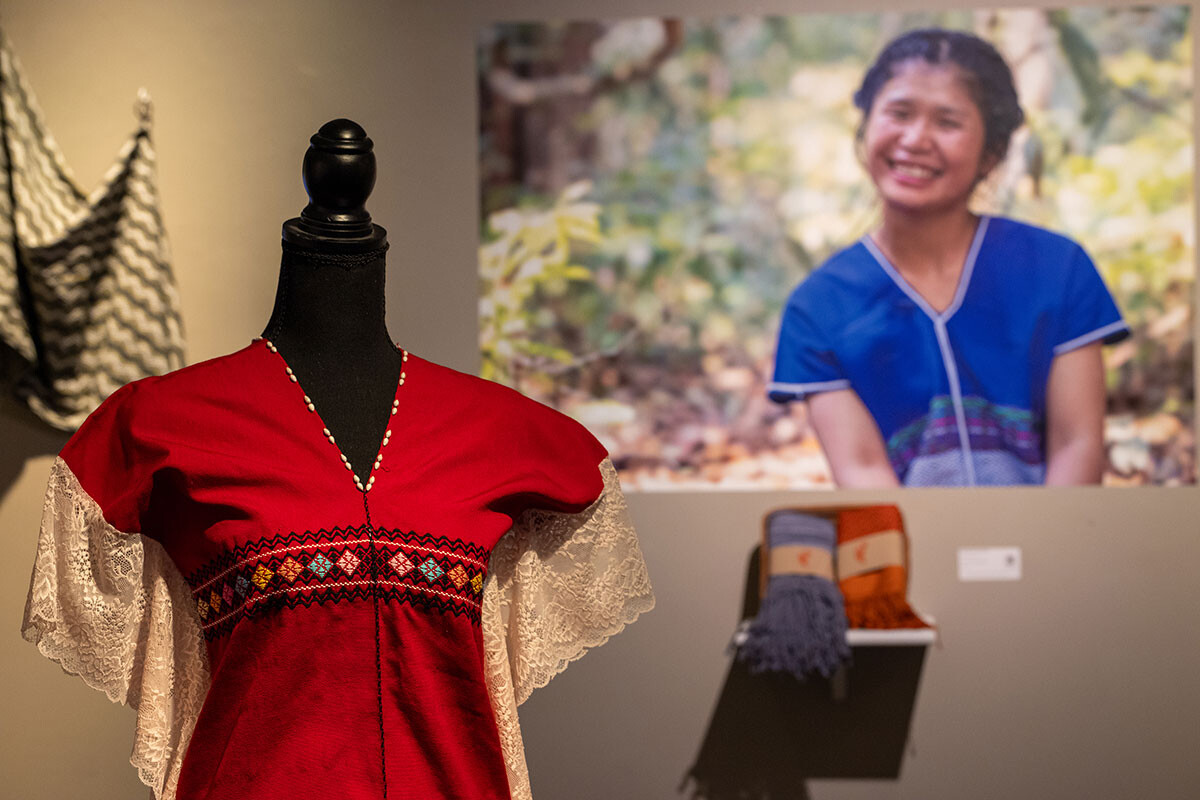
The Art of Resilience exhibit premiered at the Durham Art Guild’s Truist Gallery in the fall of 2024.
One week before Susu left for Southeast Asia to meet Karen, Karenni backstrap weavers, the Durham Art Guild asked for her proposal.
The Art of Resilience started as a full documentary separated into three acts, three countries, and three completely different communities, cultures, and artistic processes. While she was in Guatemala filming with Multicolores, a nonprofit that supports the artistic development of Maya women, Susu was forced to confront her own artistic process and some of the industry’s realities.
A full-length documentary would take too long to distribute, and Susu says she realized, “I just need a face. Then I can make a multimedia exhibit out of this. I can show the video; I can show life-size portraits of the women so that you can be blanketed in their beauty, in their essence, in their dignity.”
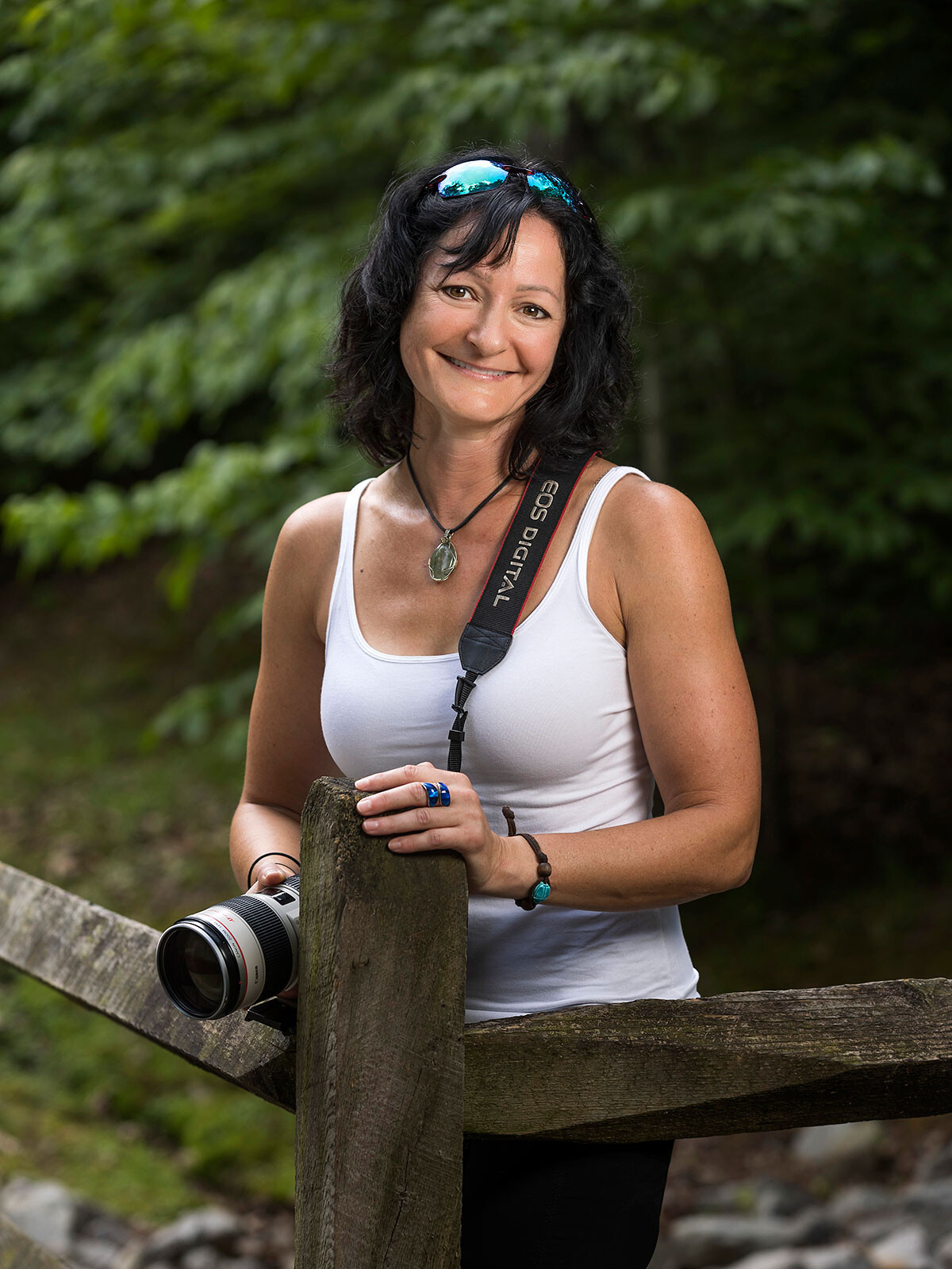
Award-winning photographer and cinematographer Susu Hauser, seen here at Fred G. Bond Metro Park in 2022, has made her home in the “green and vibrant” Town of Cary.
This immersive experience came to life in the Truist Gallery. Through life-size portraits, artisan interviews, cinematic glimpses of local traditions, and 3D samples of artisan pieces, visitors were transported to the highlands of Guatemala, the Thai-Burma border, and the Kalahari Desert in Namibia.
Though she’d only ever filled 500 square feet of gallery space before, Susu knew she could celebrate the artistry, culture, and unwavering spirit of Maya, Karen, Karenni, and San women in the location. Her goal, after all, is to transport people to countries they will probably never see in their lifetime.
She also wanted to inspire, as these artisans don’t “marinate in their suffering,” as she describes, but instead transform it. Susu also believes that through education comes awareness, which leads to understanding and, ultimately, empathy.
The project also brought a lot of personal firsts for Susu. In addition to being the first time she drove solo in unforgiving regions for 2,300 miles, it was her first experience editing a full-length documentary, her first time filming overseas by herself, her first visits to refugee camps, her first multimedia exhibit. But if she hadn’t done all these things alone, she wouldn’t have developed the self-trust that now makes her feel like she can do anything.
Susu shares a story of how one month before she left for Namibia she had a flat tire here in Cary. Realizing that it was a great opportunity for her to learn how to change a tire, as she’d soon be driving across sand dunes without another vehicle in sight, she pulled up a YouTube video. Despite not having all the necessary tools, she was soon under her car and had managed to get the tire off.
The same self-trust and defying of the odds that her beloved artisans exhibit will surely prove invaluable once again this spring when Susu films with silk weavers in Laos and Hmong weavers in Vietnam.
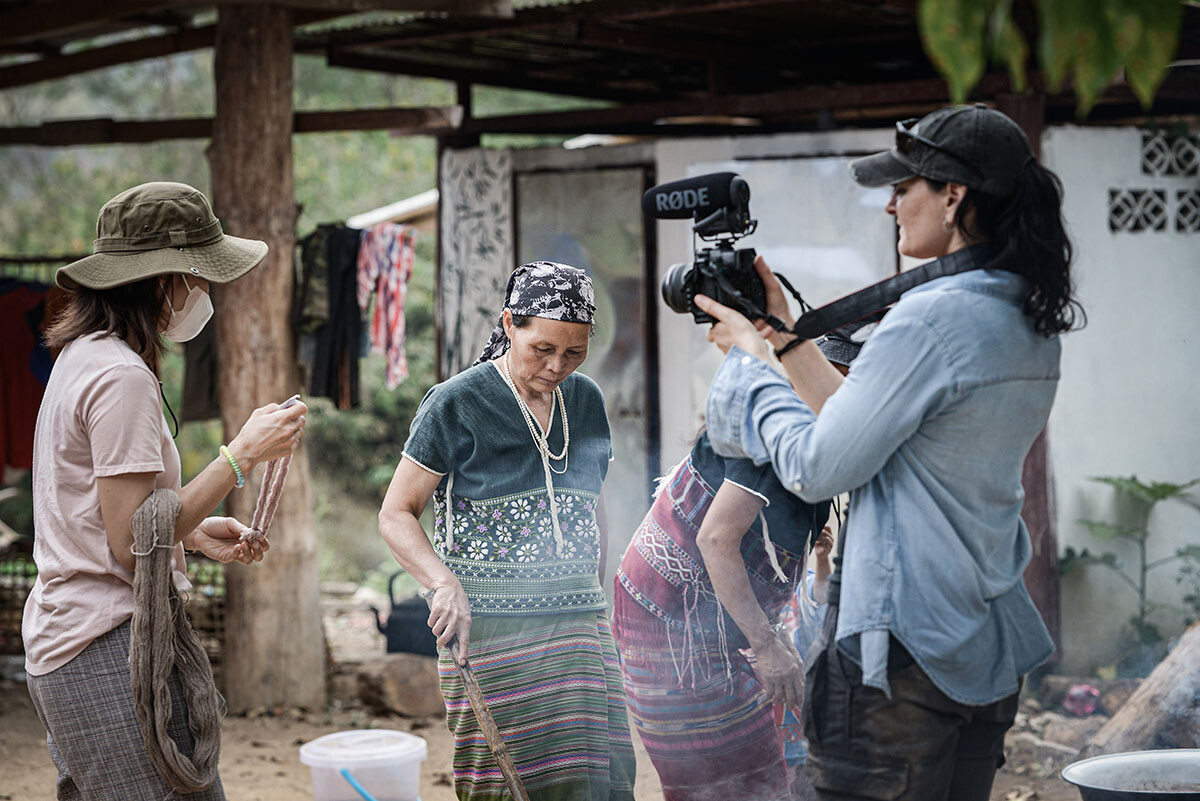
Susu documents, with the WEAVE organization, a natural dyeing process in a refugee camp at the Thai-Burma border.
“You need a creative act to find your resilience,” Susu shares. Her own journey to resilience will find a home at Raleigh’s Artspace beginning May 16. The Art of Resilience will again honor Indigenous artistry with a powerful multimedia exhibition described by Durham artist, professor, and author Pamela George as “one of those rare art experiences where one’s senses vibrate.”
There, visitors will gain rare insight into centuries-old processes by seeing samples of rug hooking, embroidery, backstrap weaving, the natural dye process, and ostrich eggshell jewelry and wall art. They can engage in a walk-through documentary featuring over 30 minutes of dynamic footage across three continents. And they will surely come away with Susu’s desired appreciation that these artists are “not as far away as we think they are.”
susuhauser.com
@susuhauserphotography
- Pay It Forward: United Arts Wake County
- Recipes from Readers: Anne’s Way Kentucky Derby Panzanella Salad
- Liquid Assets: Larry The Cucumber
- Caffeinated Canvases
- Getting Frank About Pimento Cheese
- Garden Adventurer: Easter Lily-ology
- Small Business Spotlight: Carolina Clay Studio
- A Stage for Youth
- Light the Way
- Women’s Work
- Things to Do: April 2026