



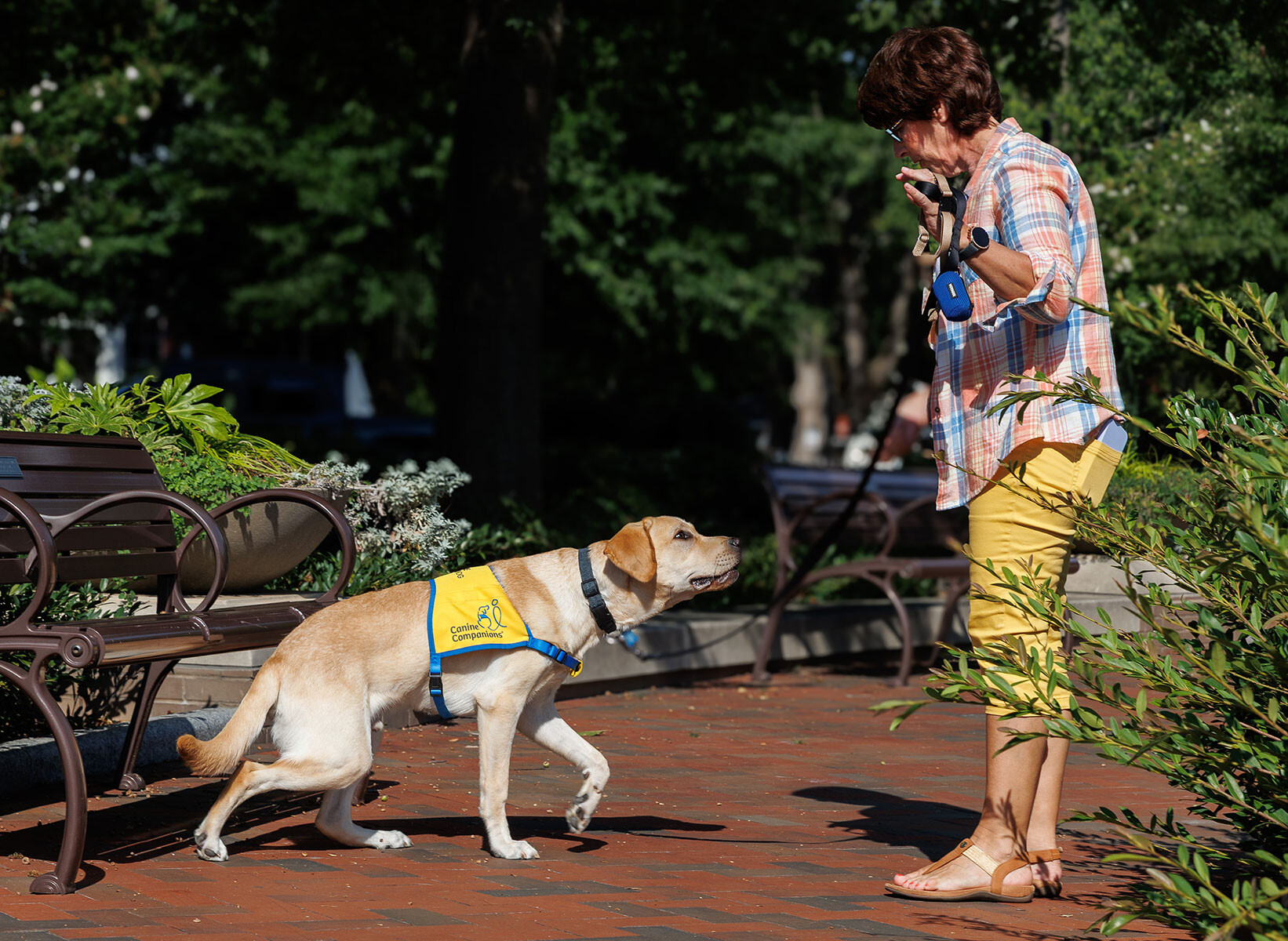
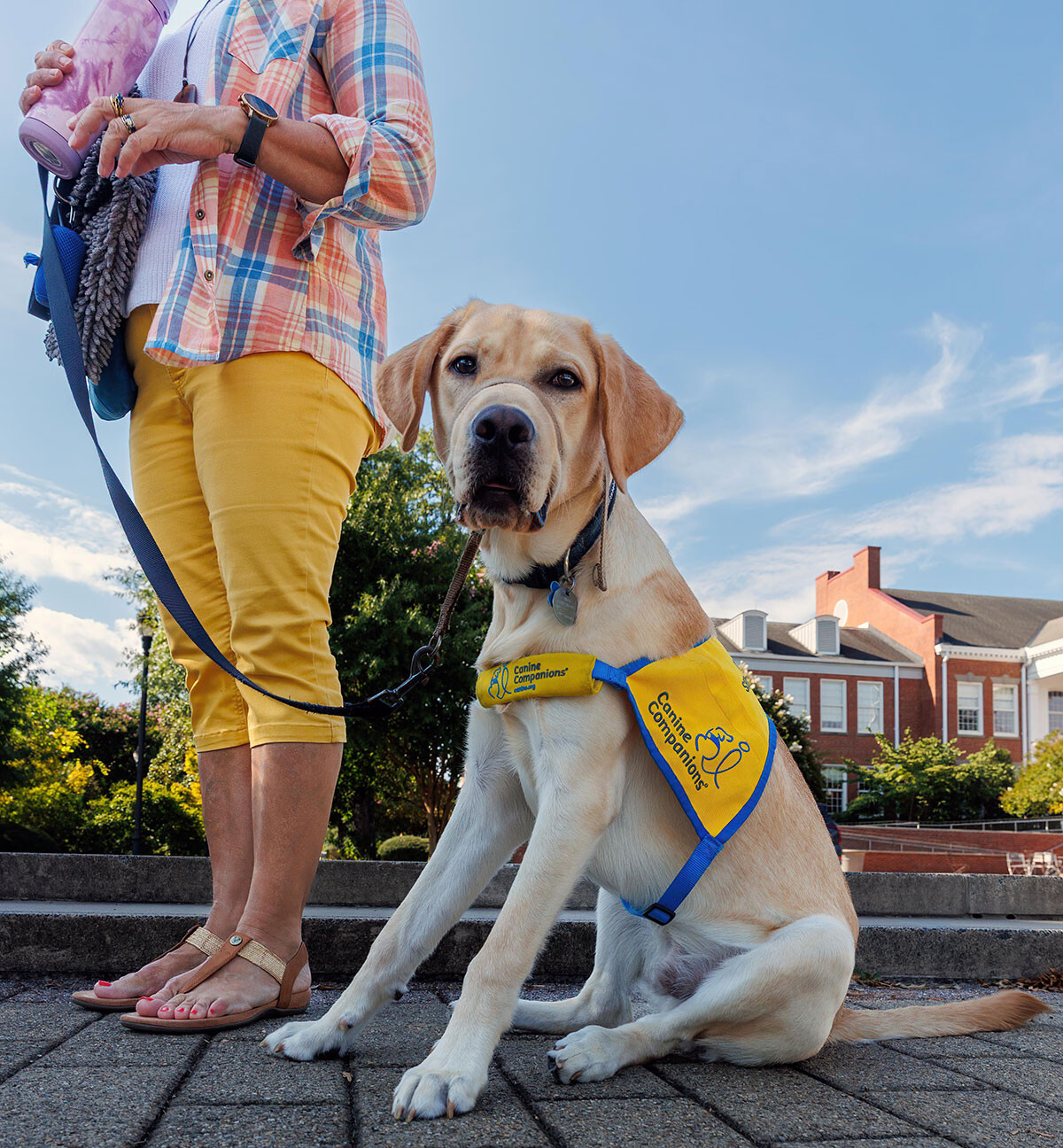
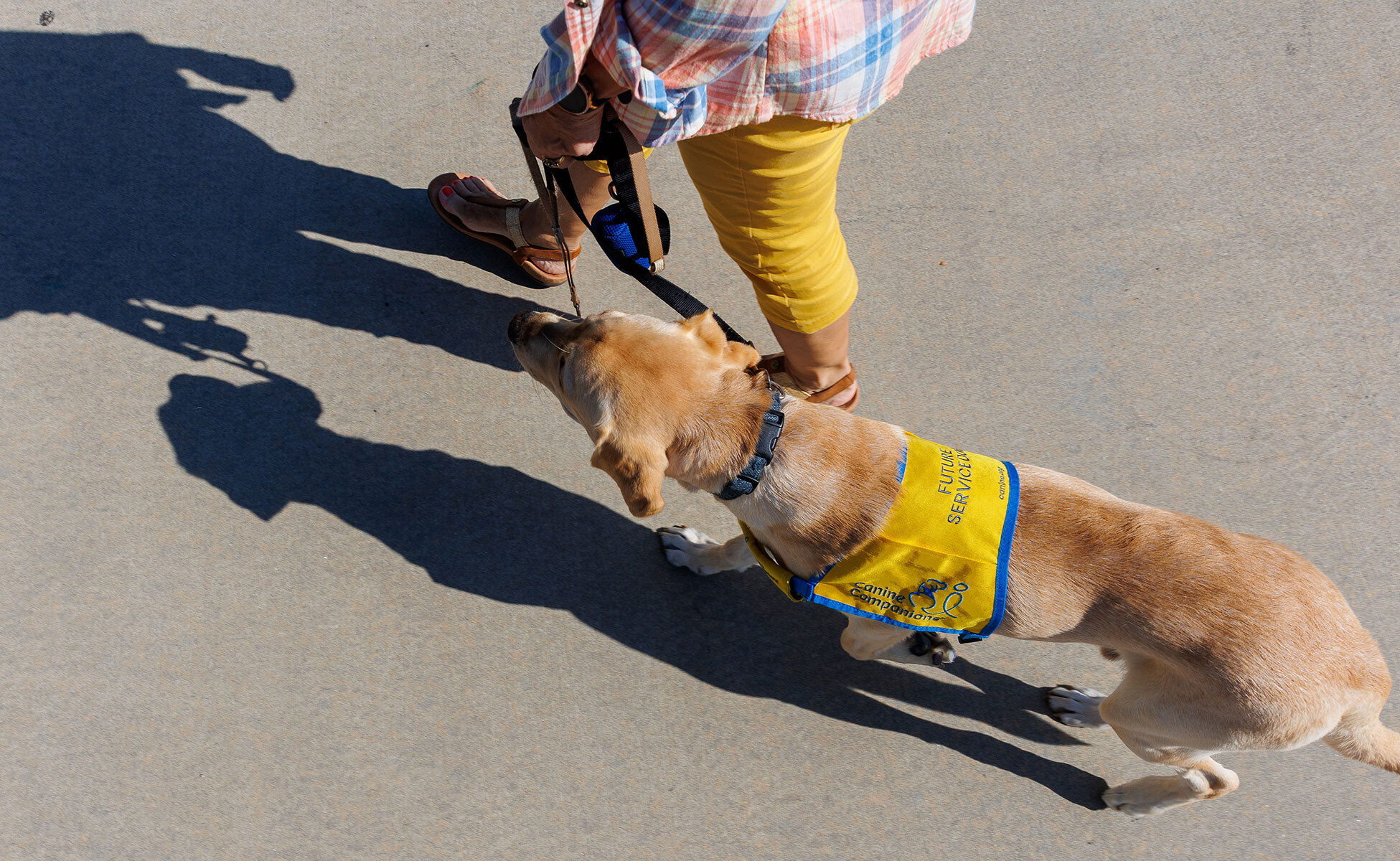
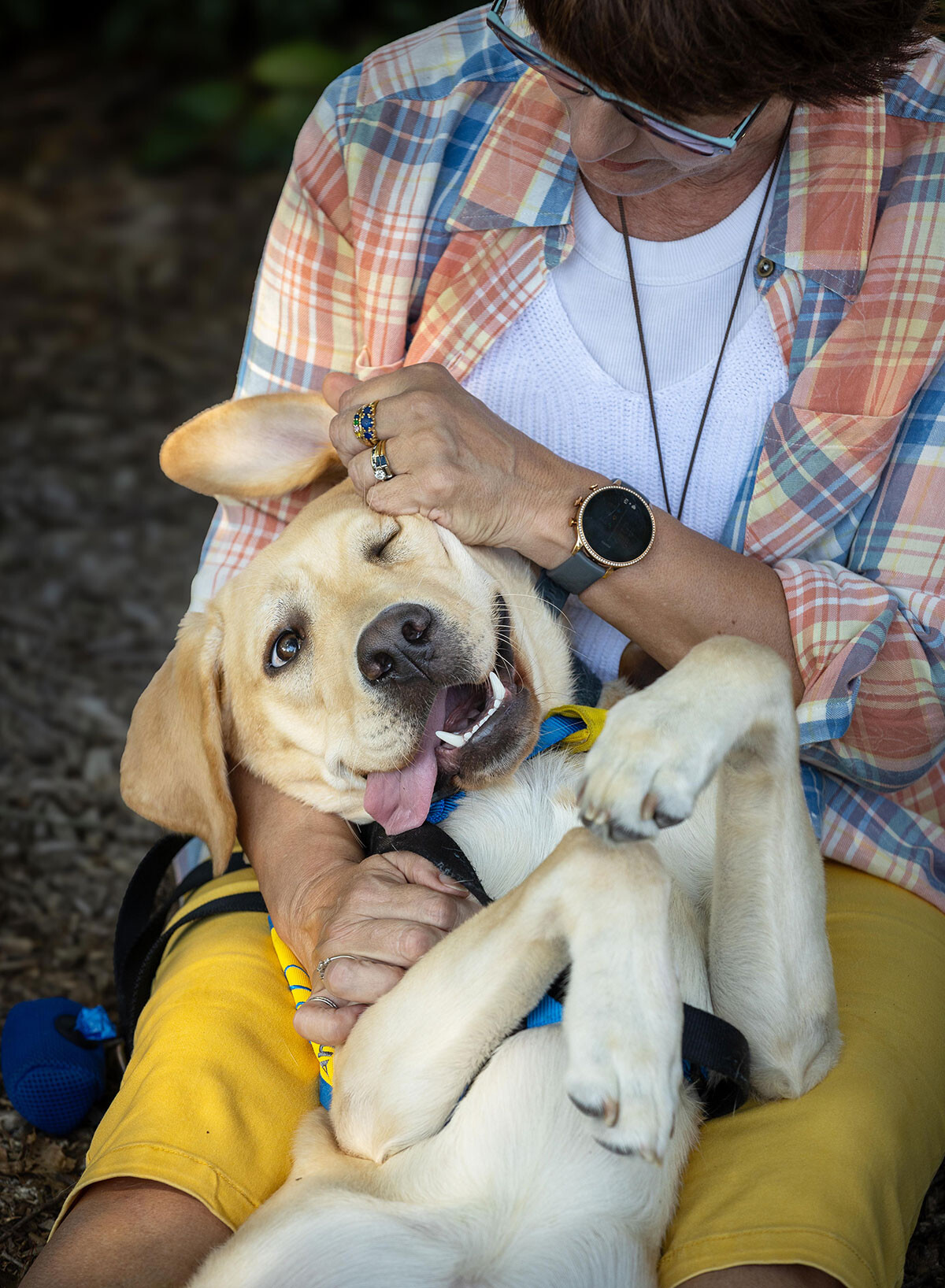

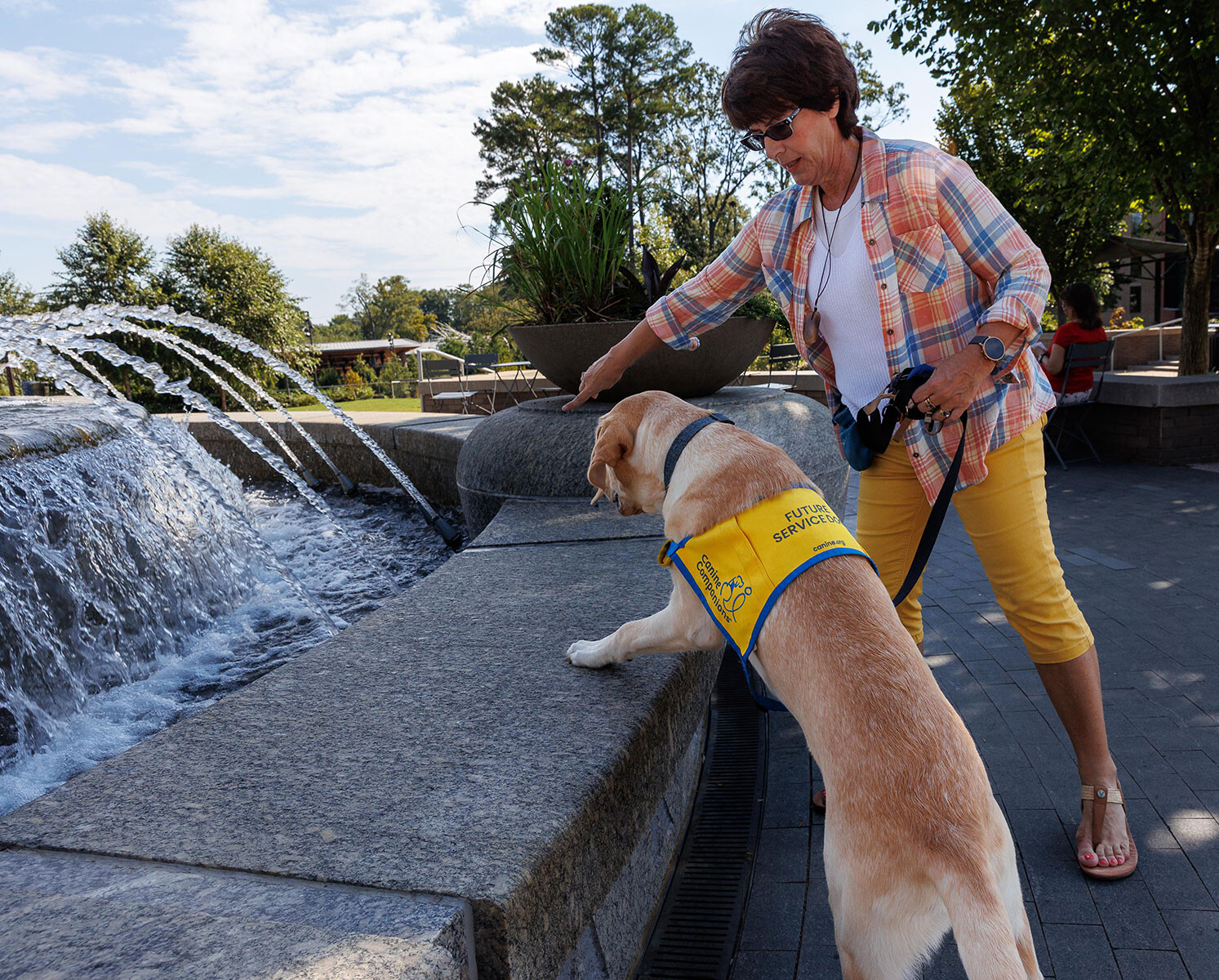
“Always a leash away” is how Margot Bennett describes puppy Morrison V’s proximity to her.
Considering that the 9-month-old yellow lab/golden cross is the 13th puppy she’ll have raised in preparation for a life of service, and the process requires her to open her home and her heart to a dog for 16–18 months, Margot knows all too well what it means to have four paws in tow.
Indeed, the woman who became known as “that dog lady” for always having a dog at her side has dedicated more than three decades of her life to raising puppies who become service dogs for people in need, transforming countless lives — both human and canine — in the process.
The cycle first took hold in Margot’s life in 1992, when she raised Decker the yellow lab as a guide dog for Guiding Eyes for the Blind. Then she and her husband had a baby. Then she raised another service dog. Had another baby … raised another service dog … had another baby … raised another service dog … and had another baby.
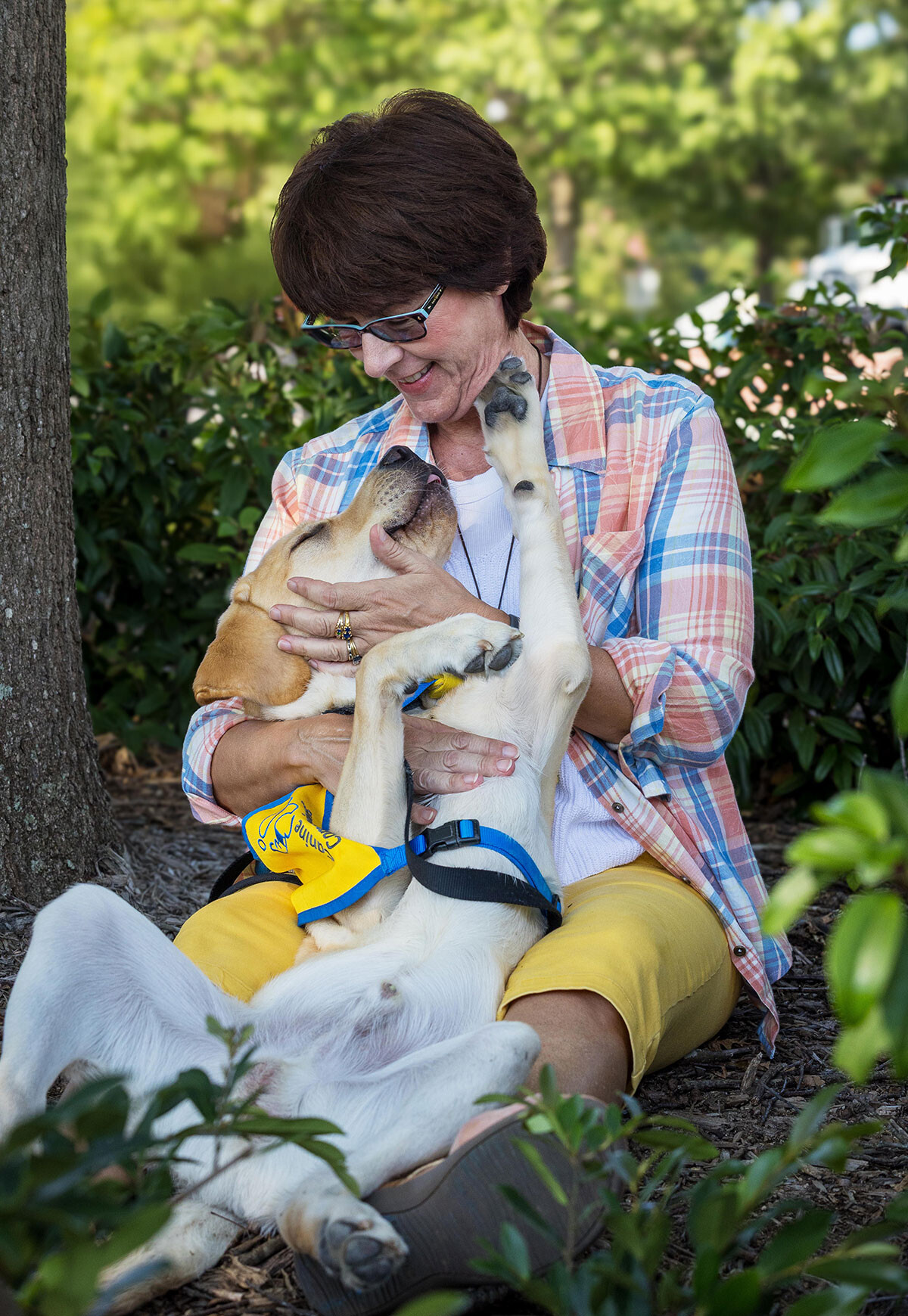
For all of Margot’s effort training Morrison, there’s an equal amount of love. Adam Goldman, who handles PR for Canine Companions Southeast region, describes volunteer puppy raisers as “selfless, giving, kind, determined, hardworking, eager to learn, and having the biggest hearts.”
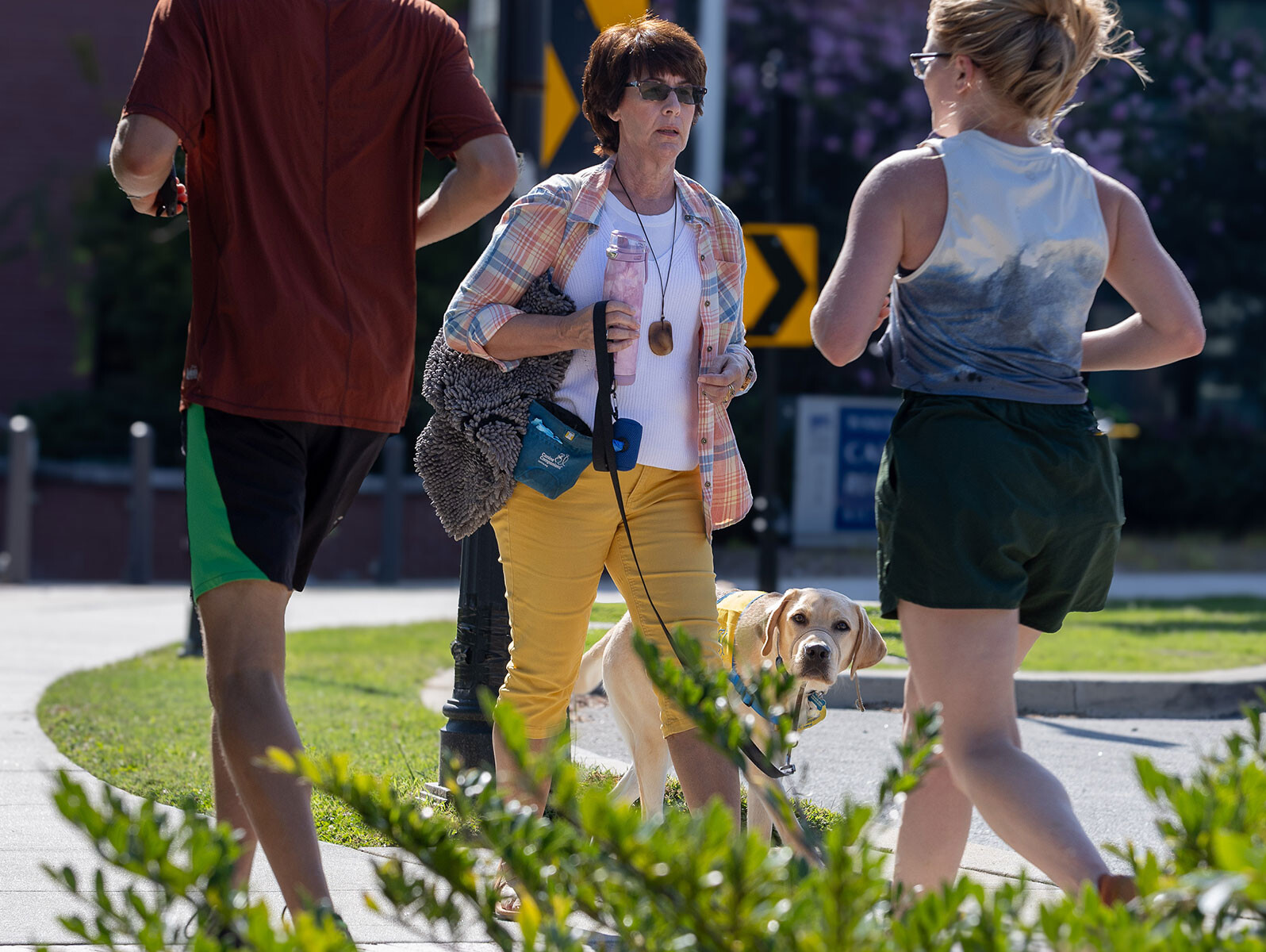
While her youngest child is now a high school senior, Margot’s work with dogs in training continues in the form of Morrison, who will remain with her until May of 2026. As a puppy raiser for service dog industry–leading Canine Companions, Margot is responsible for all of Morrison’s medical needs throughout the first year and a half of his life and will teach him 30 commands, and, most importantly, socialize him. This means exposing him to a variety of settings like grocery stores, malls, churches, libraries, medical appointments, and just about every other imaginable environment to help desensitize him to the sights and sounds of life.
The training process, which begins when puppies arrive at 8 weeks old, is rigorous yet rewarding, with Margot describing how the puppy becomes “an extension of her person.” Although service dogs lead exceptional lives, their first month with the puppy raiser is much like any other puppy’s. Margot’s focus is on teaching Morrison his name and how to use the bathroom. As she explains: “I try to ensure he responds to his name, and then I introduce the command H-E-R-E (spelled out in Morrison’s company, so as not to confuse him) so he knows to come and sit right in front of me.”
Morrison is still learning the 30 commands he will need to master with Margot. When her time as his puppy raiser ends, she will hand over his leash to his trainer, who will spend the next six months teaching Morrison another 10 commands and how to string them together. This advanced training prepares dogs to perform complex tasks, such as retrieving dropped items. “If someone drops a phone, the dog will go through four or five commands to retrieve it and bring it back,” Margot explains.
But for now, Morrison is mastering more basic requirements. For example, when Margot volunteers weekly at Dorcas, she brings him … and his bed. Pointing toward the folded mat, she explains, “He has a place to stay while I volunteer, and it’s a great opportunity for him to learn how to be calm in public settings.”
Of the many commands service dogs learn, being calm may be among the most challenging. And it’s not solely about being calm; it’s also about learning to do nothing. “It’s important for the dogs to learn to just be bored,” Margot says. “When you think about the people who will eventually receive these service dogs, they’ll have doctor appointments and hospital visits.”
Canine Companions — which celebrates its 50th anniversary this year — has been providing service dogs to adults, children, and veterans with disabilities, as well as facility dogs to professionals working in healthcare, criminal justice, and educational settings since 1975. It can cost up to $60,000 to provide a service dog to an individual in need, but Canine Companions has remained committed to doing so at no cost.
Although a puppy raiser shoulders the financial responsibility of raising the puppy for the first 16–18 months, Margot describes the emotional toll of turning a dog over to its training phase as one of the most challenging aspects of the job. “It is the hardest thing we learn to love to do,” she says.
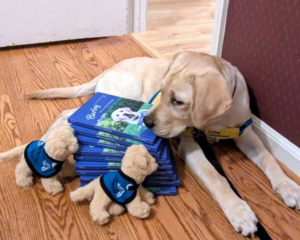
Apex was only 5 months old when he passed away. The proceeds from Margot’s children’s book series, Tails of Dogs Who Help, go into a fund started in the puppy’s honor. Contributed photo.
One of the dogs she raised is a service dog to a woman in Alabama. He detects her heart rate, and if it’s elevated, he nudges her so she can sit down before she faints. “He does her laundry, literally does her laundry,” Margot shares. “Goes in the washer, picks it out, puts it in the dryer, and then hands it to her when it’s done.”
Another serves as a facility dog in a courthouse, providing comfort to children who must testify. The dog is in the witness box with the child, but nobody knows of their presence. “He follows the child from the beginning of the process until they’re released from the system,” she explains. “That impact is incredible.”
In the final two weeks of professional training, dogs are matched with their partners. Puppy raisers are invited to attend the dog’s graduation, where they meet the person who receives the dog as a partner. About the experience, Margot says, “I can’t explain the feeling of meeting the person that the dog is going to and the impact it makes on their life.”
Of course, puppy raisers also get to reunite with the dog they raised. “When you see them walk across the stage at graduation,” Margot says about the profound bond that played a role in the significant occasion, “it’s a moment of pride and joy.”
As she looks to the future, she remains committed to her mission. “I want to continue raising service dogs and sharing their stories,” she says. Margot tells these stories through children’s books that center on the different types of dogs — therapy, guide, service, and facility — she has raised. Her latest is from the perspective of her own rescue dog, Aspen, who has witnessed these puppies move through their home.
Margot initially donated book proceeds to the various schools where the dogs are trained, but they are now funneled into a fund created in honor of Apex, a service dog puppy she was raising who passed away at just 5 months old.
In addition to her book series, Margot started a service dog puppy club at Cary High School. “We meet once a month, and the kids learn about different commands,” she explains. “Their confidence builds as they see the dog responding to them. It’s amazing to watch their growth.”
Come May, Margot will release Morrison’s leash and watch another dog she raised begin its impressive next chapter.
“These dogs are changing lives,” she says. “I’m honored to be a part of that journey.” Yet when asked if she also loves the puppies, she is emphatic: “You have to love them. You have to. We wouldn’t be successful without all the time and love that we put into it. Without it, the process wouldn’t work.”
dogswhohelp.com
@tailsofdogswhohelp

- Naōs Hellenic Cuisine
- Liquid Assets: Spice Ghouls
- Liquid Assets: Ginger Sage Paloma
- Garden Adventurer: Camassias: Blurple and More
- Small Business Spotlight: Decor Addict Interiors & Design
- Building Connection
- Pay It Forward: Dog Warriors Rescue
- Service with a Wag
- Erica Chats: Crisp Air & Clean Closets
- Things to Do: October 2025
- Meet Our Canine Cover Star: Baloo
- Pets on Parade 2025