



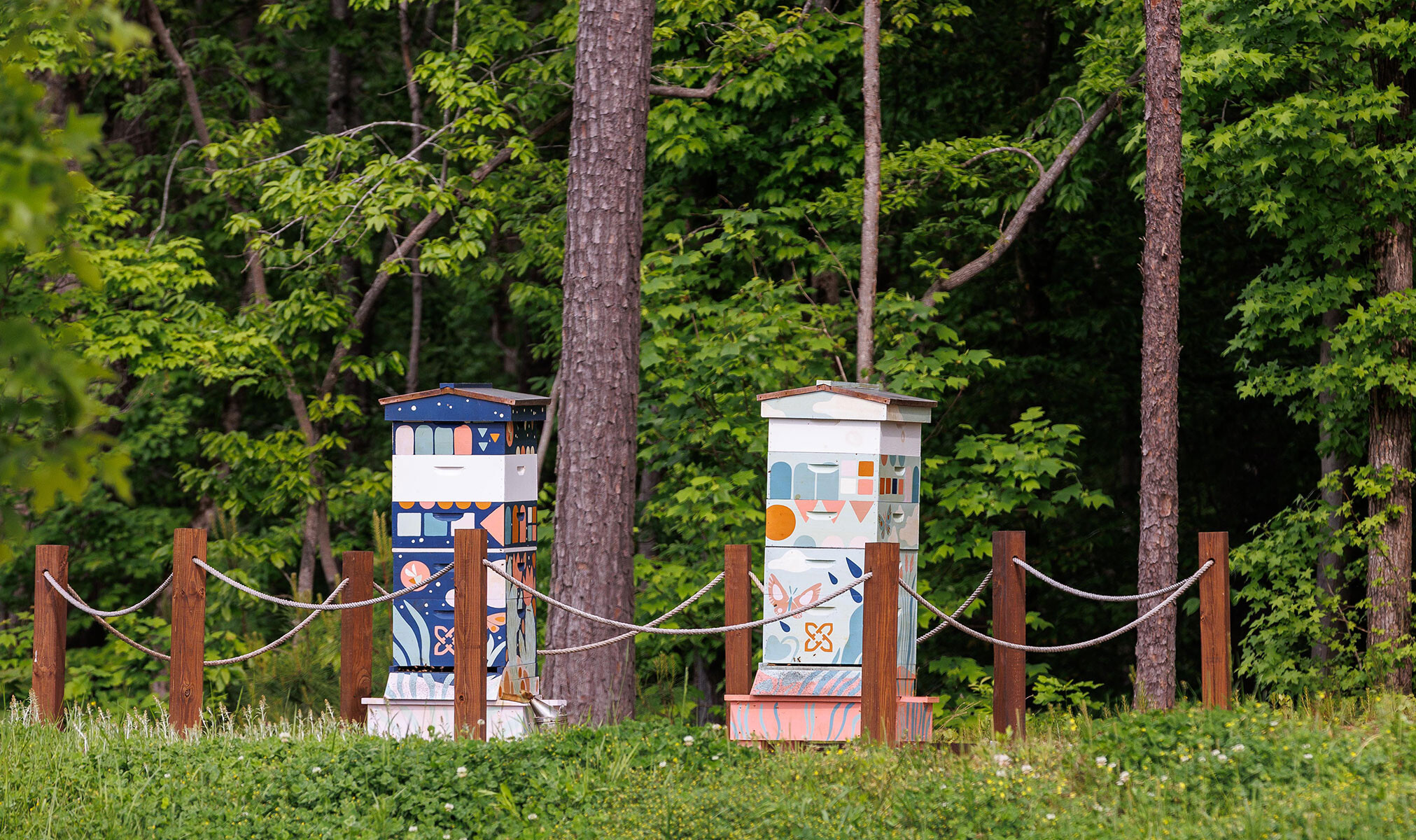
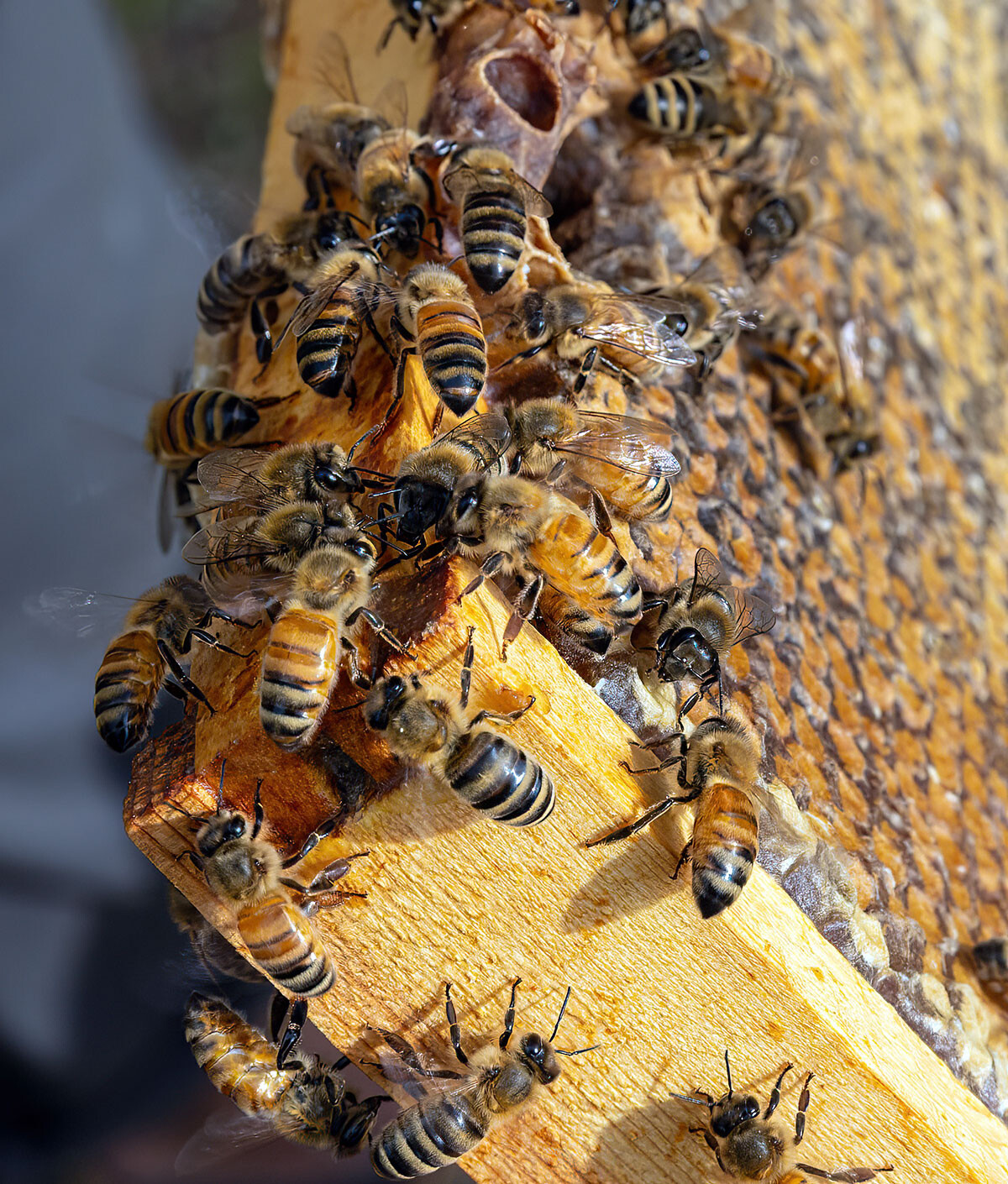
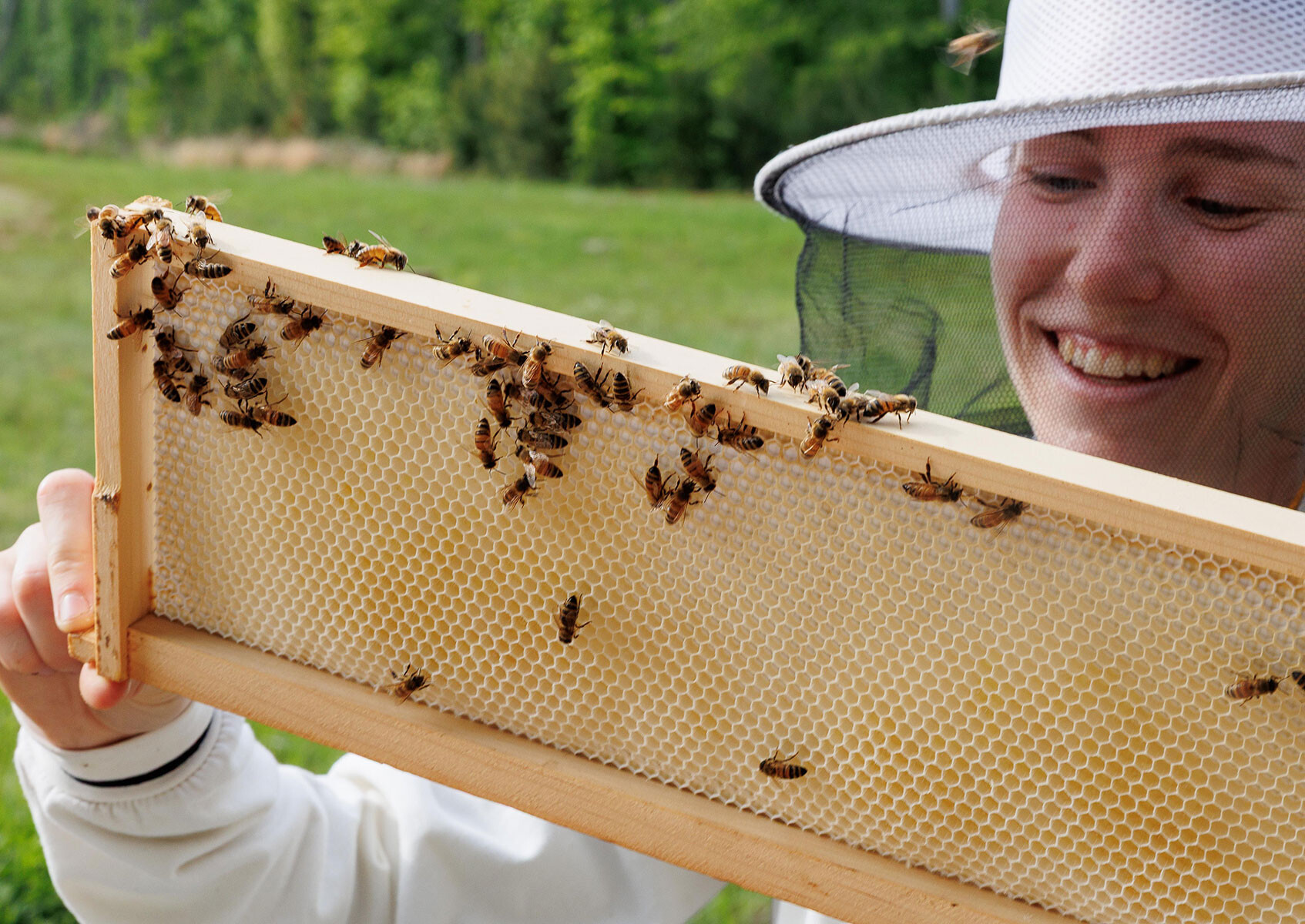
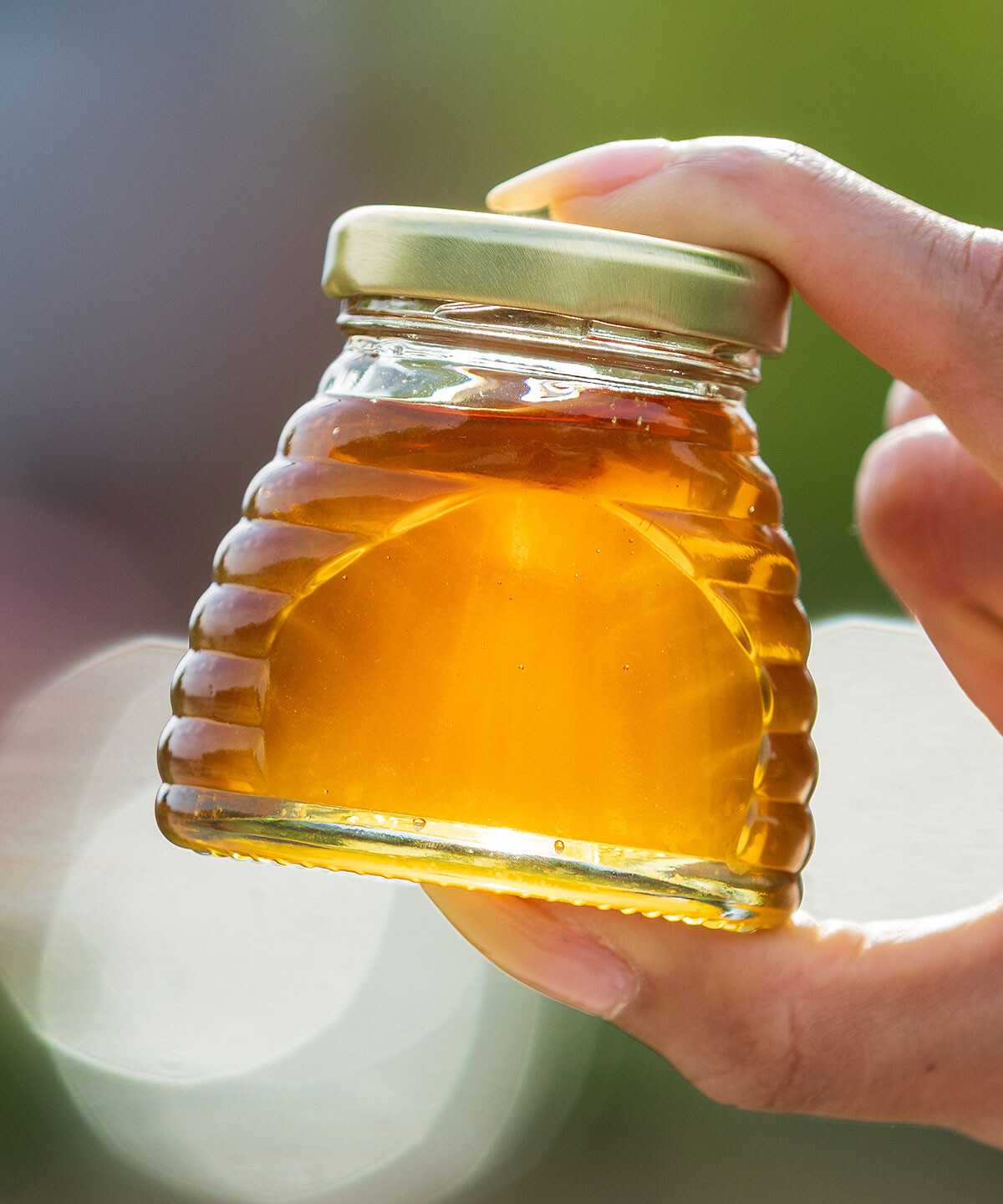
Nestled near the Fenton tree line are two small wooden structures that, despite the painted artwork adorning them, are easily missed. Even with all the activity happening inside them, passers-by couldn’t be blamed for not realizing that this unique site in fact contains working beehives.
Introduced at Fenton in the summer of 2023, these hives have now survived two winters — a feat, as 60% of bee colonies will perish in the colder months. Thanks to Fenton and Buddha Bee Apiary, however, these hives are thriving.
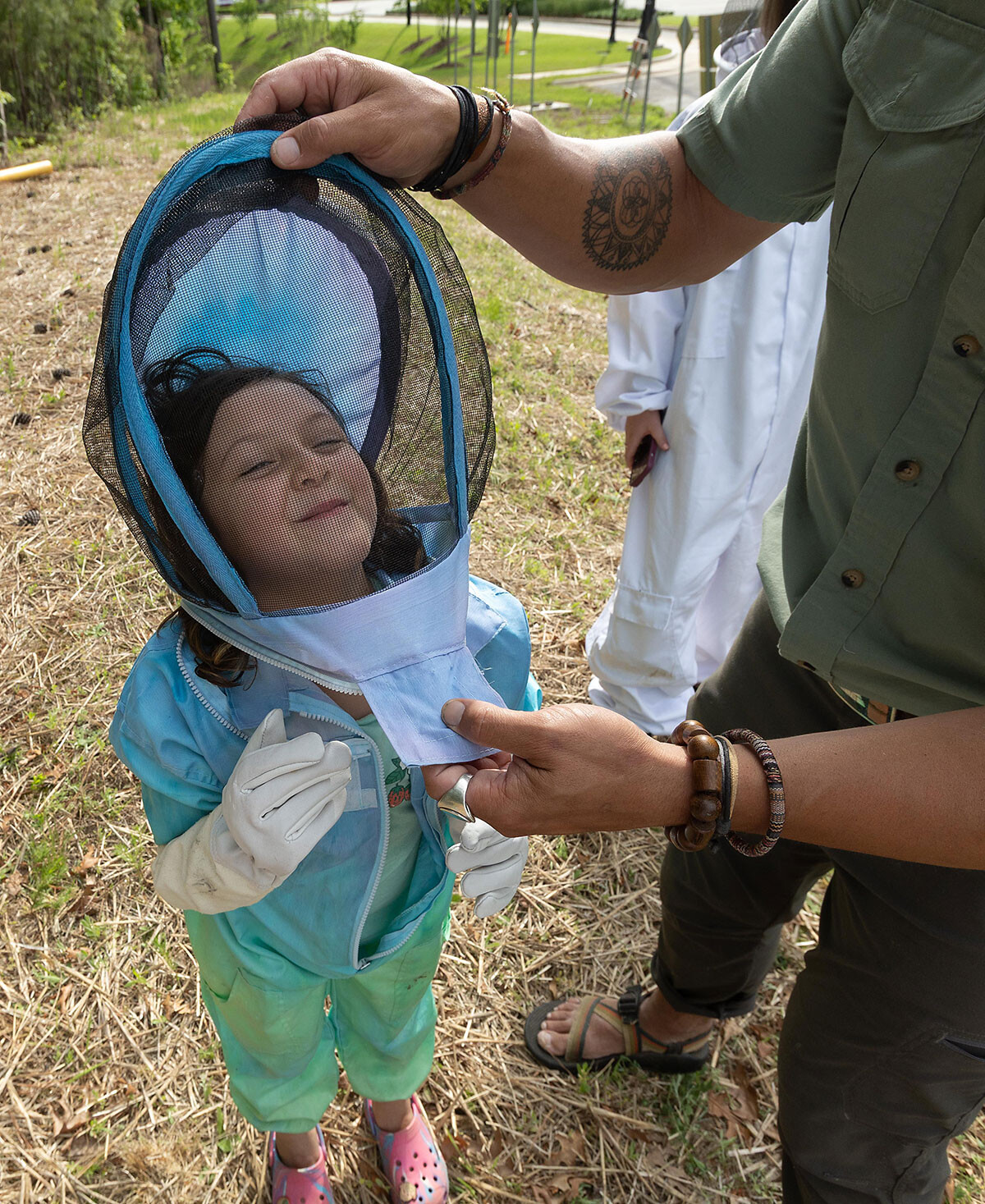
Buddha Bee Apiary founder Justin Maness helps his daughter Azalea suit up.
A Sweet Partnership
“We have some of the most beautiful landscaping you’ll find, not only in a mixed-use project, but in any kind of retail or mall site,” says Fenton’s general manager Robert Canepa about the vibrant dine, shop, work, play, live development in Cary. “Not to brag, but people say nice things, so we figured what’s better than bees?”
For Justin Maness, founder of Buddha Bee Apiary, there’s nothing better than these “freaking cute, amazing, elegant, awesome creatures.” Justin also says he had no idea as an NC State student pursuing a horticulture degree that offered electives in beekeeping that he would “fall in love with bees.”
But when he graduated and joined a research team studying bee colony losses, his focus was on pesticide impact on bees and coincided with the devastating rise of colony collapse disorder. “It was a chance to see, face-to-face, some of the many challenges they were facing in the environment,” he says.
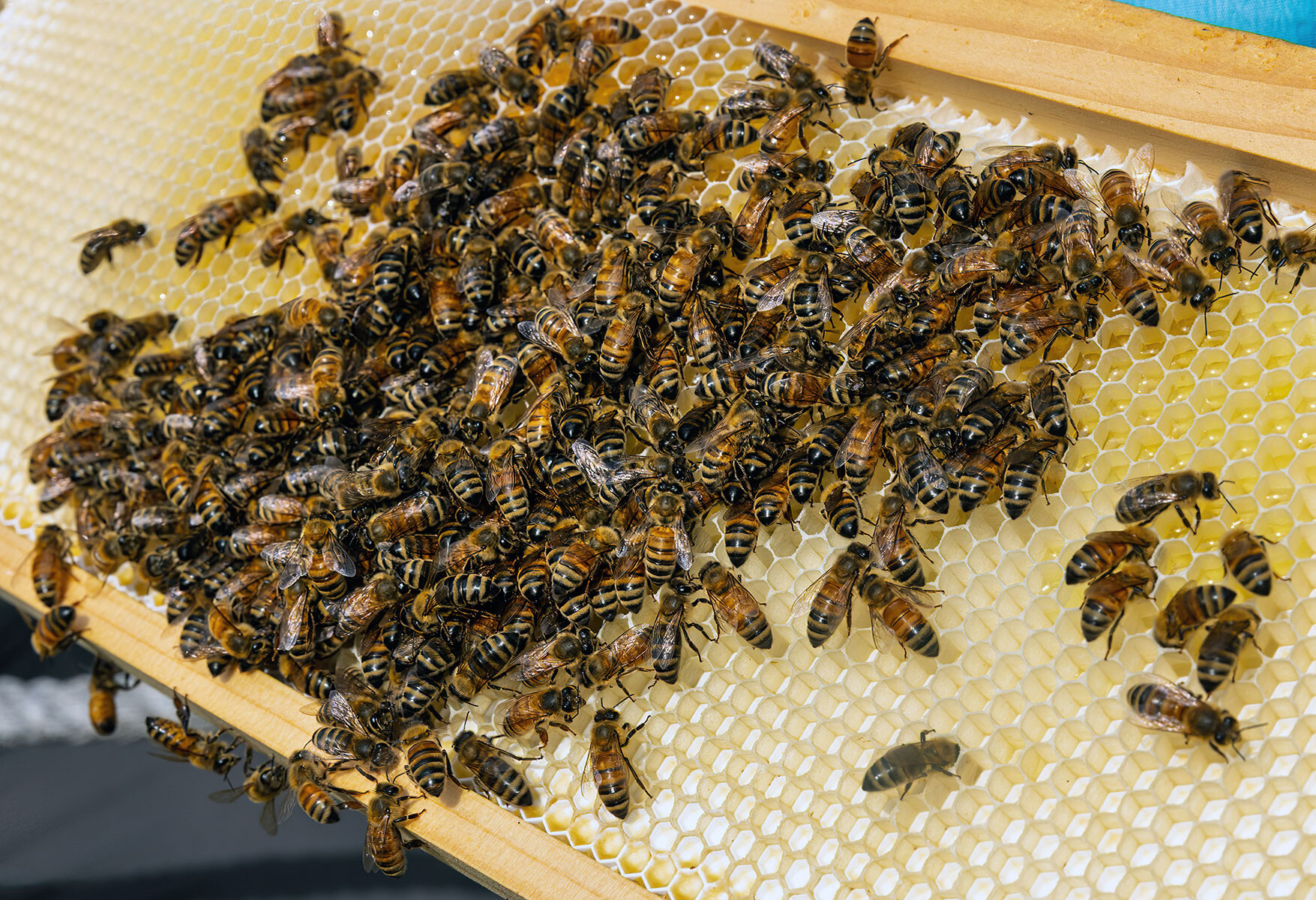
During a time in his life when he was searching for career direction, Justin realized: “I had a passion for two things ultimately, which is working with bees and working with people.” Concurrently, a few individuals reached out to Justin through the Durham County Beekeepers Association and asked if he would teach them how to put hives in their yards. From those three hives in 2019, Buddha Bee Apiary has now grown to managing more than 150 hives across the Triangle — Fenton included with an estimated combined population of 4 million honeybees.
The Buzz on Bees
As one of nature’s most important creatures, honeybees are essential to our food systems and responsible for pollinating a significant portion of the crops we rely on, including fruits, vegetables, and nuts. “A very big part of what we consume on a day-to-day basis in the grocery store” is impacted by bees, Justin says. The decline in bee populations due to habitat loss, pesticides, and climate change poses a serious threat to our food security.
Urban beekeeping addresses the issue by creating safe havens for bees. Bee-friendly environments — which can be found on rooftops, balconies, and other public spots like Fenton — contribute to the restoration of pollinator populations, which benefits the bees but also enhances the health of our ecosystem and community.
A Passion for Pollinators
Despite what Justin describes as the “wonderful work” honeybees do for us, he also acknowledges that “there’s a million things that you can get behind, whether it’s environment or food or poverty. Mine’s bees, and so this is the flag that I carry.”
Fortunately, in Fenton — and in Robert, who knows that bees are “essential for our overall healthy ecosystem” — Buddha Bee found a corporate partner looking specifically for a local group to manage the hives, which Robert assures the development takes seriously.
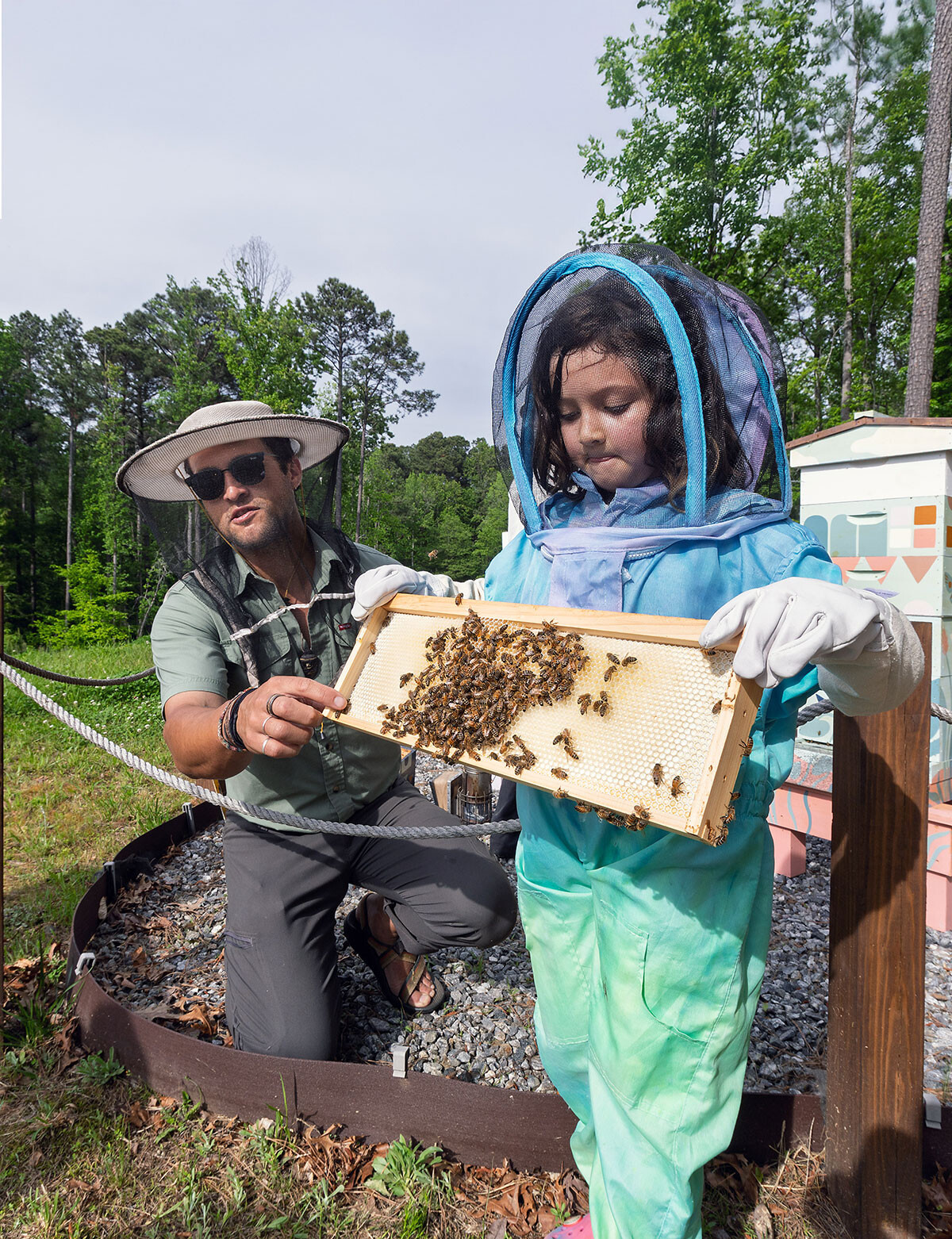
Buddha Bee Apiary offers an exciting and enlightening hands-on honeybee experience.
From Justin’s perspective and throughout the last six years with Buddha Bee, he’s discovered that there are many people looking to help the environment in a hands-on way and support a program such as his that promotes bee education and advocacy.
It’s no different with corporate partners, though these usually involve more than a single hive in a yard. Multiple bee colonies on these properties require an approach to environmental initiatives and goals that align with the professional management of beehives offered by Buddha Bee Apiary. Beehives have become popular for companies to champion, Justin says, so his goal is to bolster the hives and incorporate them into the corporate partner’s wider environmental program.
Hive tours, raw honey extracted from hives, classes, and other options are all available to corporate partners, which benefit from Buddha Bee Apiary’s 10-plus years of professional beekeeping experience; regenerative practices that focus on bee health and increase the state’s average industry winter survival rate from 70% to 97%; docile local bees that aren’t imported from other states or countries; and commitment to the local economy and small businesses.
Humming Fenton
“It’s been really successful,” says Robert about Fenton’s approximate 120,000 bees in the growing colony. Justin agrees that Fenton has been a “great location in terms of the bees’ health and their forage overall.” Last year, Buddha Bee had a DNA analysis conducted on the honey, which proved insightful and still yields results that impact the management of the hives. That honey harvest also made its way onto many of Fenton’s restaurant menus this summer.
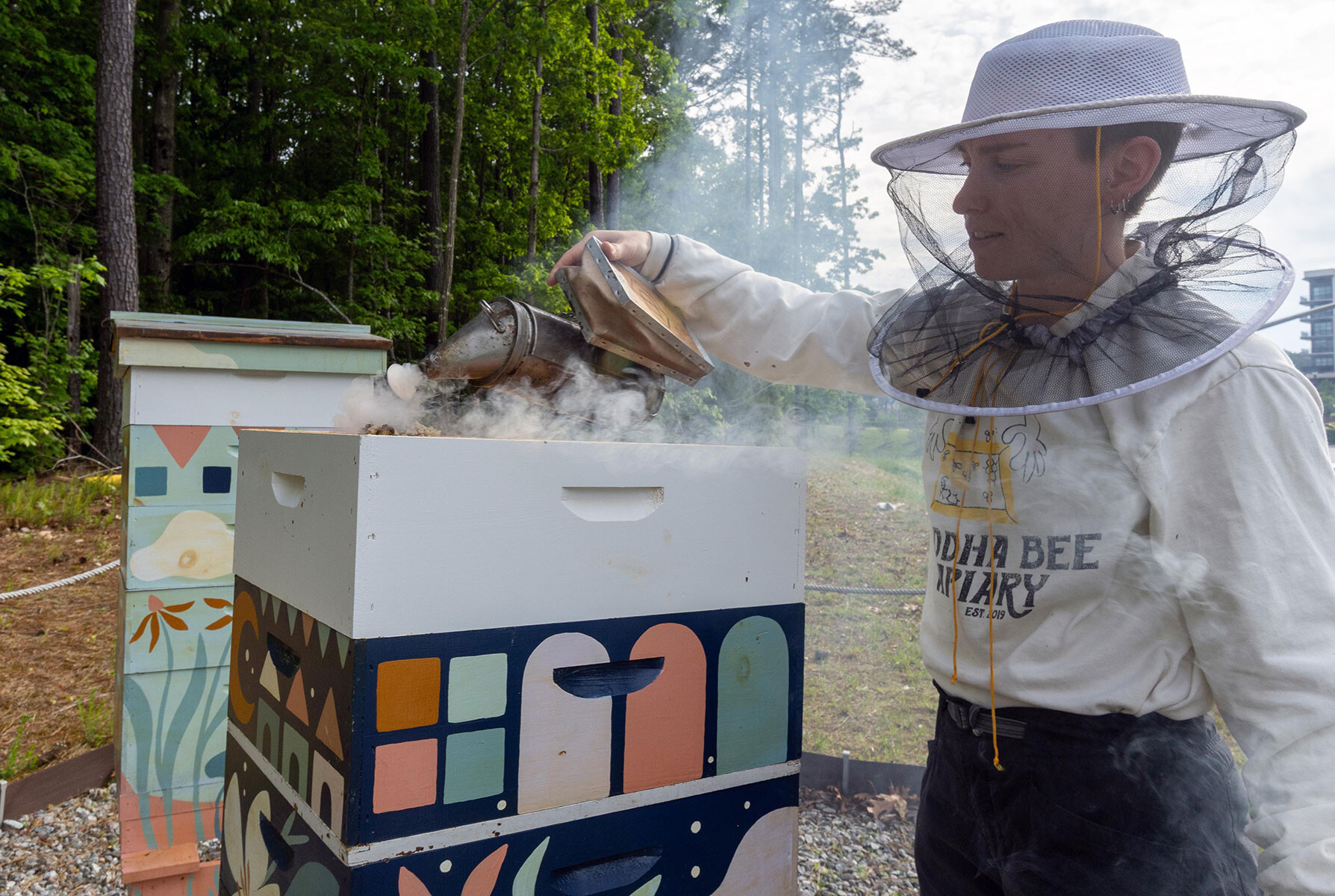
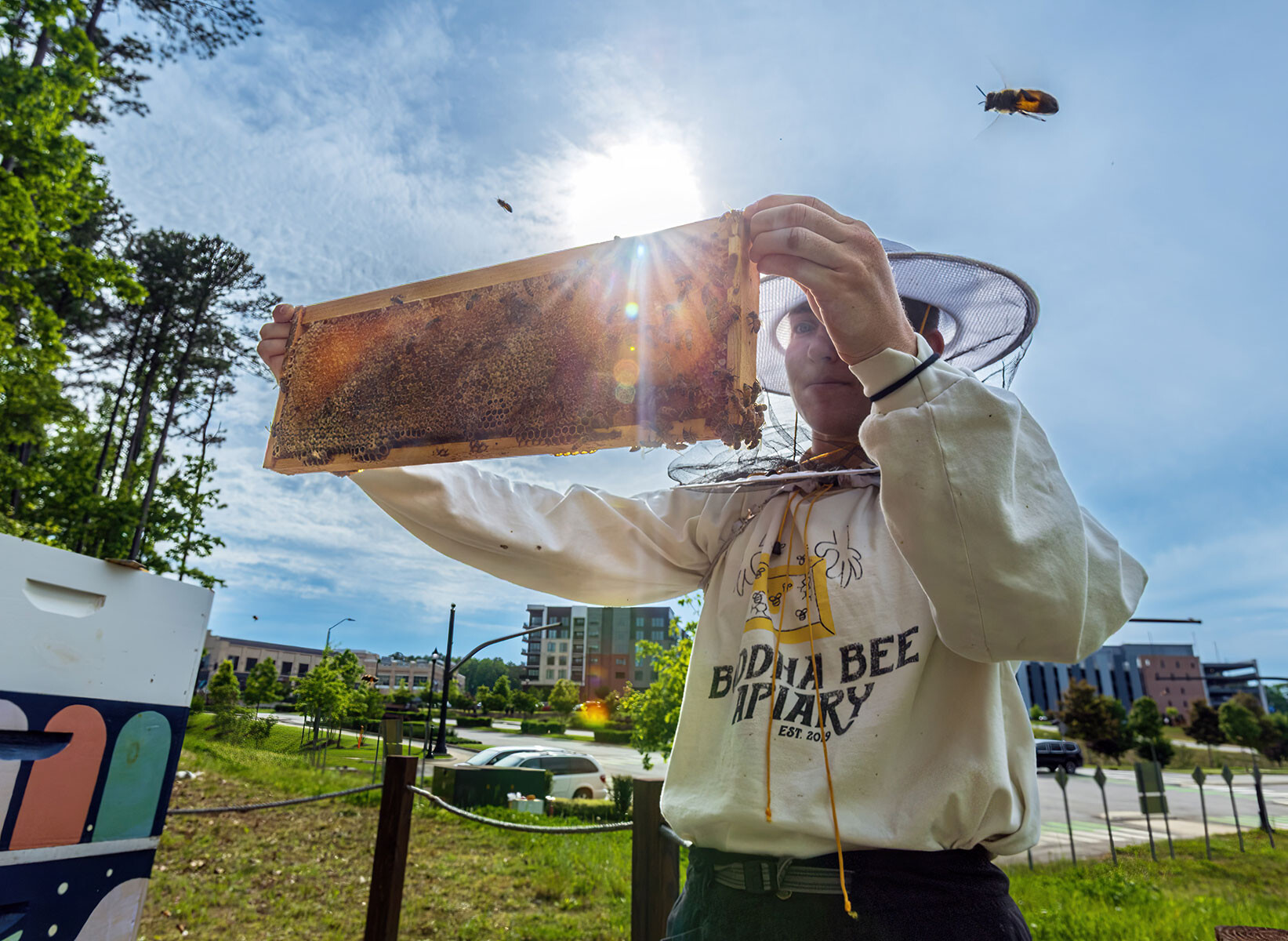
Each hive receives approximately 14 to 18 visits a year from the Buddha Bee team. Justin describes his team members as being “stewards for the bees” and present in a purely supportive role for colonies. “These bees have been doing this for thousands of years,” he says, “and so when we go into a hive our job is to figure out, Is everything okay? Are they struggling with something? Do they need something that we can help with? Is there a particular process that we need to intervene in and provide support for?”
The Buzz Gets Louder
Hive visits often coincide with opportunities to educate the public, something for which Justin is grateful. As the Buddha Bee Apiary website states: “We don’t want to lecture people into caring for the planet. That’s no fun. We’d much rather spark their curiosity.”
An impressed Robert shares that “the bees don’t really bother anyone” during the informational tours. And this comes from someone who is allergic to bees!
Now that the relationship with Fenton has taken flight, and such corporate partnerships advance Buddha Bee’s environmental and educational goals, Justin reflects on a growing appreciation for honeybees and other pollinators. “I’ve been really appreciative to see how many people have signed up and believed in us and trusted us … and who speak so highly of us and know that we’re doing stuff that we believe in that can make a small impact in our small community,” he says.
Tucked into the trees, Fenton’s two hives continue to do their work of preserving honeybee populations and fostering community engagement and environmental awareness. The humble honeybee and the wooden hives that house them are symbols of community resilience, environmental stewardship, and a growing awareness of the challenges facing our natural world.
So, the next time you’re out at Fenton, make a beeline for its hives.
fentonnc.com
buddhabeeapiary.com
Want more buzz? Catch Buddha Bee Apiary founder Justin Maness on episode 22 of the What’s Up, Wake podcast. He discusses roles and responsibilities within a beehive, challenges bees are facing, the benefits of local honey, and lots more.

- Garden Adventurer: Spinach Planting Time!
- Small Business Spotlight: Sweet Talk Cafe
- Irregardless of Time
- Liquid Assets: Beekeeper Honey Wheat Ale
- Liquid Assets: Mae Culpa
- Erica Chats: Rethinking Food
- Pay It Forward: Raleigh City Farm
- Her Garden Grows
- Burger Bonanza
- A Family Affair
- Buzzing with Purpose
- Buzz-Worthy Bites
- Things to Do: August 2025