


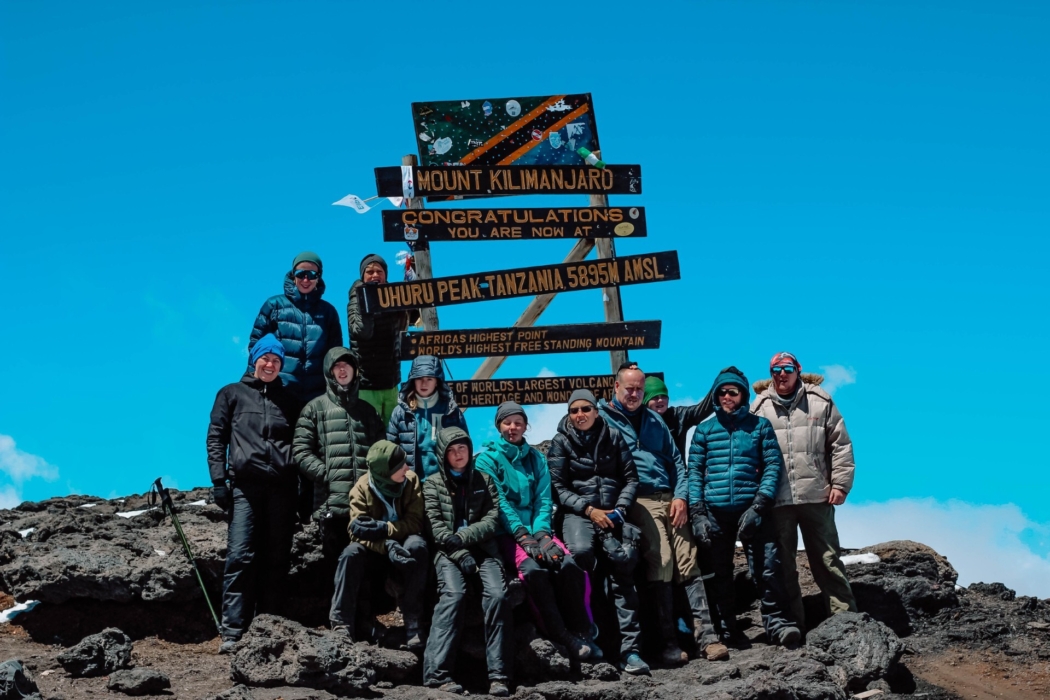
While many of us were recovering from welcoming the new year, the Duvall family was celebrating an incredible feat.
On January 1, after six days of climbing amid relentless rain and snow, they reached the summit of Mount Kilimanjaro, the highest freestanding mountain in the world at 19,341 feet.
As if that’s not impressive enough, their group of 16 climbers included 7 students between 11 and 15 years old. Lucky for us, they were kind enough to share their experience.
Please introduce yourselves!
We are the Duvalls — Ged, Danielle, and Aedan — a homeschooling and worldschooling family with a deep love for adventure, learning, and community. Like many families, covid reshaped our lives and priorities. In 2020, we began homeschooling, packed up our camper and spent nearly three years traveling across the United States, turning the road into our classroom and experiencing firsthand the value of experiential education. After returning for a time to our hometown of Myrtle Beach, South Carolina, we began searching for a place to put down roots as Aedan entered high school. We researched communities all across the continental US, and Cary stood out immediately. We were drawn to its incredible resources for homeschoolers, its vibrant and diverse culture, and its unique blend of innovation, education, and community connection. We moved to Cary last August and absolutely love it here. Ged is a retired public school teacher, Danielle is a semi-retired paralegal and yoga instructor, and Aedan is a science-loving, pickleball-playing, adventure-seeking teen always eager for the next challenge.
What is worldschooling, and how did you get involved with OTB Adventures?
Aedan Duvall
Worldschooling is the idea of making the world your classroom. Rather than learning solely from textbooks, kids learn through immersive, real-world experiences — living in different countries, engaging with different cultures, and building relationships with people from around the world. One of the things we value most is the confidence and perspective it has given Aedan. Through this lifestyle, he’s learned how to navigate international travel, adapt to unfamiliar environments, and interact comfortably with people from all walks of life. He’s been exposed to different languages, religions, foods, customs, and ways of living, while also realizing how much humanity shares in common regardless of culture or background.
It’s incredibly valuable for children — and honestly adults too — to experience firsthand how people in other countries live, learn, and grow up, because every culture and community contributes its own unique piece to a much larger global story. In many ways, worldschooling teaches empathy, adaptability, and resilience in a way no textbook really can. It’s also been incredibly meaningful watching Aedan build friendships with kids from around the world. He now regularly keeps in touch with friends in the UK, France, Ireland, Australia, and beyond.
OTB Adventures, the organization we’ve primarily traveled with over the last couple of years, is one of many groups that offers “hubs” around the world where families from all over the world gather to immerse themselves in a region’s culture and experiences together. We discovered OTB through a worldschooling Facebook group and have participated in several hubs since 2024, including the Maldives, South Africa, and the Tanzania hub where our Kilimanjaro trek took place.
Summiting Mount Kilimanjaro is a once-in-a-lifetime feat most of us could only dream of. How did the opportunity come up?
OTB Adventures was offering a six-week hub in Tanzania, and the Mount Kilimanjaro trek was an optional add-on at the beginning of the experience. While more than 40 people participated in the hub itself, only 16 of us were crazy enough to decide to climb the mountain first.
We were incredibly excited about the opportunity, but definitely intimidated too. Kilimanjaro stands over 19,300 feet tall — it’s an absolute beast. Thankfully, we’re a family that loves hiking and backpacking, so we weren’t starting from zero, and we had about nine months to prepare and train. That gave us enough confidence to say yes to the challenge, even knowing it would be physically and mentally grueling.
What kept motivating us was the idea of how unforgettable it would be to stand together as a family on the world’s tallest freestanding mountain and watch the sunrise on the very first day of the year. As a mom, I kept thinking about what an incredible life lesson this could be for Aedan. I’ve told him his entire life, “We can do hard things.” Over the years it’s become a bit of an eye-roll phrase in our family, but I can promise you that mantra got repeated more than a few times during this journey
What sort of training and preparation were involved?
We spent the summer hiking in Colorado to try to get used to altitude, as that was the thing we were the least accustomed to. Then we came back and hit the gym in the Amberly clubhouse several times a week working treadmill, stair climber, etc. Then we went back to Colorado in early December to get used to trekking at altitude in snow and cold and took all of our gear to try it out on the mountains there. Because we were backpacking on the mountain, we had to be very selective about packing. We had weight limits on what we could pack and did pretty extensive research on what to bring and how to prepare for the cold and the wind while on Kili. The route we took was an 8-day route, so we had to plan accordingly. Despite all this research and training — which I do think paid off — we were severely unprepared mentally for the brutality of the cold combined with the wet. That was definitely the hardest part, and despite our many types and layers of rain gear we pretty much remained soaking wet and freezing throughout.
Seven of the 16 climbers in your group were between 11 and 15 years old. Are youth climbers common, and what allowed climbers that young to take on a challenge like Kilimanjaro?
The stated minimum age to climb Kilimanjaro is 10, so it’s not unheard of, but statistically speaking less than 1% of all climbers are under the age of 20. There aren’t any published statistics for the 15 and under age range, but suffice to say it’s pretty rare. I believe what allowed our kids to take this on and be successful are the life experiences they had gained and shared up to this point. These are kids who’d already overcome a lot together in prior hubs, facing fears and challenges at various points in their journeys. They had learned to develop a trust in themselves and in each other. I think that was huge for this. Physically, the young ones honestly had an advantage. I think the most challenging for them was the mental maturity required to push through extreme discomfort, especially given our weather conditions.
Walk us through the journey. How long was your trip, and what was the daily experience like?
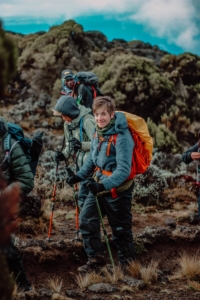
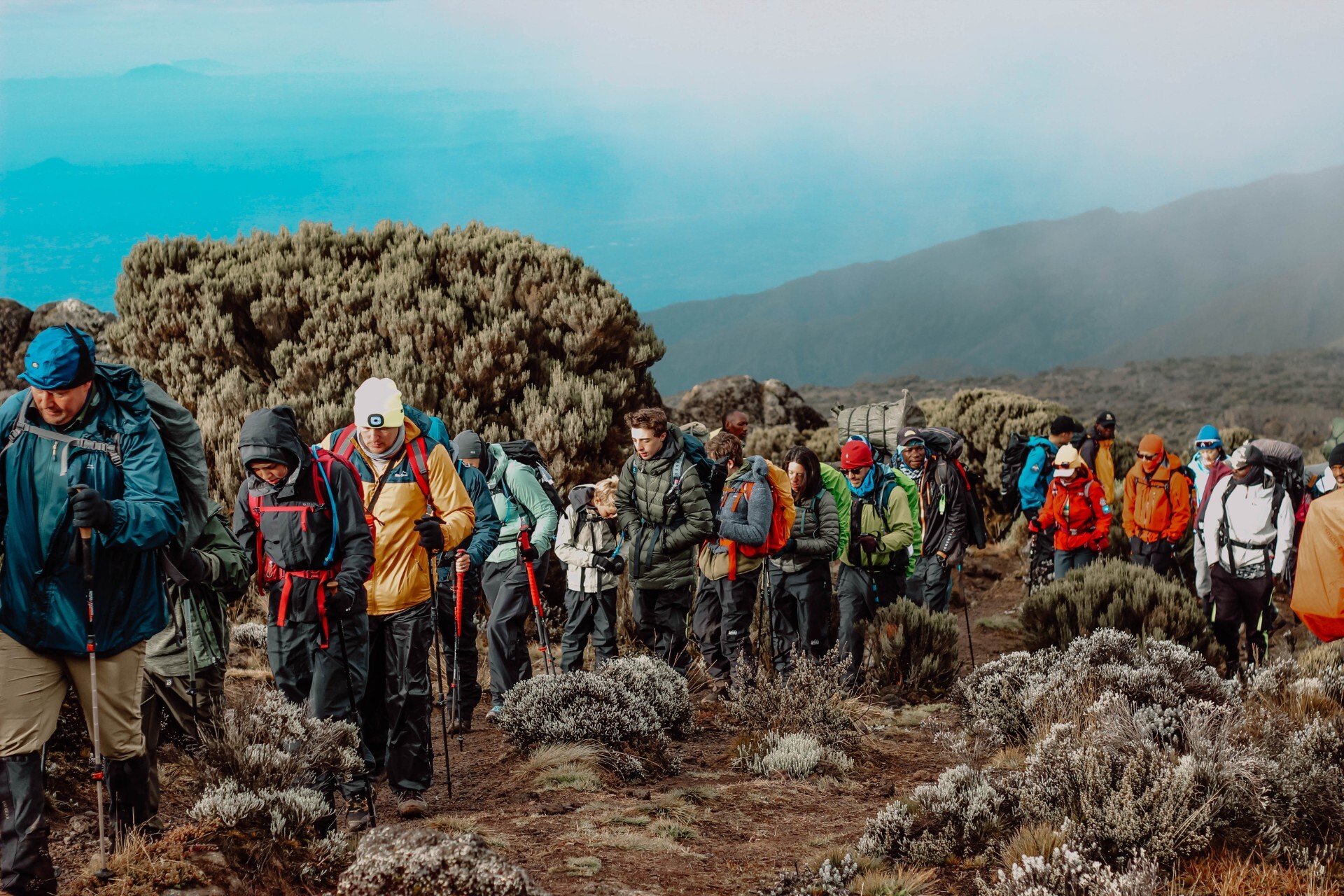
We took the Lemosho Route, which spans roughly 43 miles over 8 days, and one of the most incredible parts of the experience was the crew that made it all possible. We had around 43 people supporting the 16 of us on the mountain — porters carrying tents, food, propane tanks, kitchen supplies, and heavier gear, cooks preparing meals, and guides leading us safely every step of the way. Every day we would leave camp hiking, and somehow this amazing team would completely break camp down behind us, pass us on the trail carrying enormous loads, arrive at the next campsite ahead of us, and have everything fully set up by the time we arrived. It was unbelievable to witness.
Each family had its own sleeping tent, and then there was one large communal dining tent where we all gathered for meals and downtime together. Most days followed a similar rhythm. We’d wake around 6 a.m. for “washy washy,” where the guides brought bowls of hot water so we could clean up as best we could since there are no showers on the mountain. Then we’d eat breakfast, pack up our gear for the day, and spend the next 6–8 hours hiking through some pretty grueling conditions.
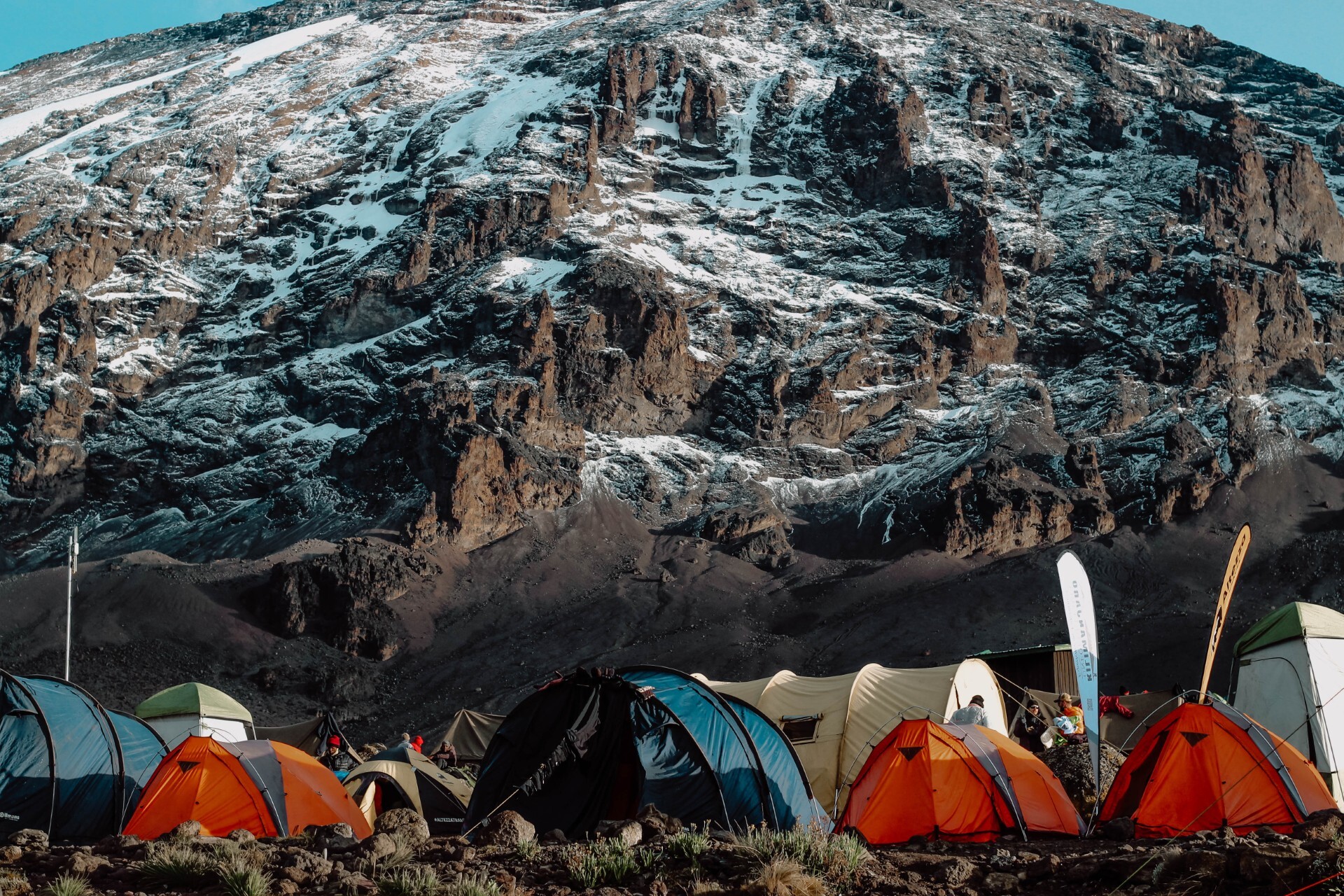
What surprised us most was the weather. We expected cold temperatures near the summit, but we didn’t expect the constant rain, hail, snow, and dampness the entire trek. Our clothes never really dried. Every morning meant putting back on wet socks, damp gloves, and cold layers from the previous day and just continuing on. The scenery was incredible, though — starting in lush rainforest and gradually changing into open moorlands, volcanic landscapes, and alpine desert terrain that looked almost otherworldly.
At the end of each day, we’d arrive exhausted back at camp, warm up in the dining tent, eat dinner together, and have the guides check our heart rates and oxygen levels to monitor how the altitude was affecting us. The kids usually spent any downtime playing UNO in the community tent — they even taught some of the porters how to play — while the adults drank much-needed tea and tried to thaw out. Then we’d head back to our tents, prep our gear for the next morning, and do it all over again.
The one exception was summit day, which was absolutely brutal. We got into camp around 8 p.m., slept a few hours, woke back up around 3 a.m., and began hiking by 4 a.m. in freezing temperatures and complete darkness with only headlamps lighting the trail. The altitude is severe at that point — even a single step feels impossible. The climb becomes completely mental. Then suddenly the sun rises over Africa, and it’s honestly the most incredible thing we’ve ever seen. It gives you this emotional and physical second wind even though the climb is still extremely intense. It took us about 8 hours to reach the summit and another 10 hours to descend back down to our camp for the night. Hands down the hardest thing we’ve ever done in our lives!
The next day we hiked out of the park and celebrated with a huge lunch alongside all the guides and crew who had gotten us there. We received our national park summit certificates, took countless photos, and left with an enormous appreciation not only for the mountain itself, but for the people who made the entire experience possible.
What are your biggest takeaways from the trek?
Aedan: When things are really hard and seem like too much, take one step at a time and don’t think about more than taking that next step over and over until you reach your goal. Also, having great friends by your side to share it with helps a lot! I don’t know if I could have done this without my friends. We really helped each other a lot, sometimes with gear and stuff but most of the time with just making each other laugh or encouraging each other. I’m really proud of what we accomplished. After the term when we were getting ready to fly back home, I looked up at Mt. Kilimanjaro from the road and it looked so massive. I thought, “Wow — we actually climbed that. That’s incredible!”
Danielle: For me, I learned that I can get through so much more than I thought I could. There was a point when I was just about 1,000 feet from the top that I seriously wanted to turn around and go back, to give up. It’s crazy the thoughts and doubts that pop into your head at times of extreme challenge. I somehow forced myself to keep going (mainly for Aedan because I didn’t want to let him down) and I pushed through. I am SO GLAD I did. When I sit and think about how close I came to giving up when the end was so clearly in sight, it kills me. I would have been so mad at myself if I had stopped! I think that is a lesson learned I will carry with me forever. Even when my mind tells me I have nothing left in the tank, there is always a deeper reserve I can pull from, and I will forever be reminded to never give up on myself.
Ged: People like to challenge themselves. It’s human nature to push our limits, expand our boundaries. The tourism industry will thrive anywhere in the world where it can meet the demand to provide that service. I saw hundreds of people on this trek — workers, observers, climbers, hustlers, leaders, followers, young, old — all striving for the same goal: Make it to the top! Even though there were all levels of commercialism, no luxury experience is going to get you through the cold, rain, steep grades, thin oxygen, and unforeseen obstacles, unless you are willing to accept the challenge and put forth the effort knowing you may fail. I have great admiration for all who succeeded, failed, and helped us all. The best part was experiencing this unforgettable trek with my family.