


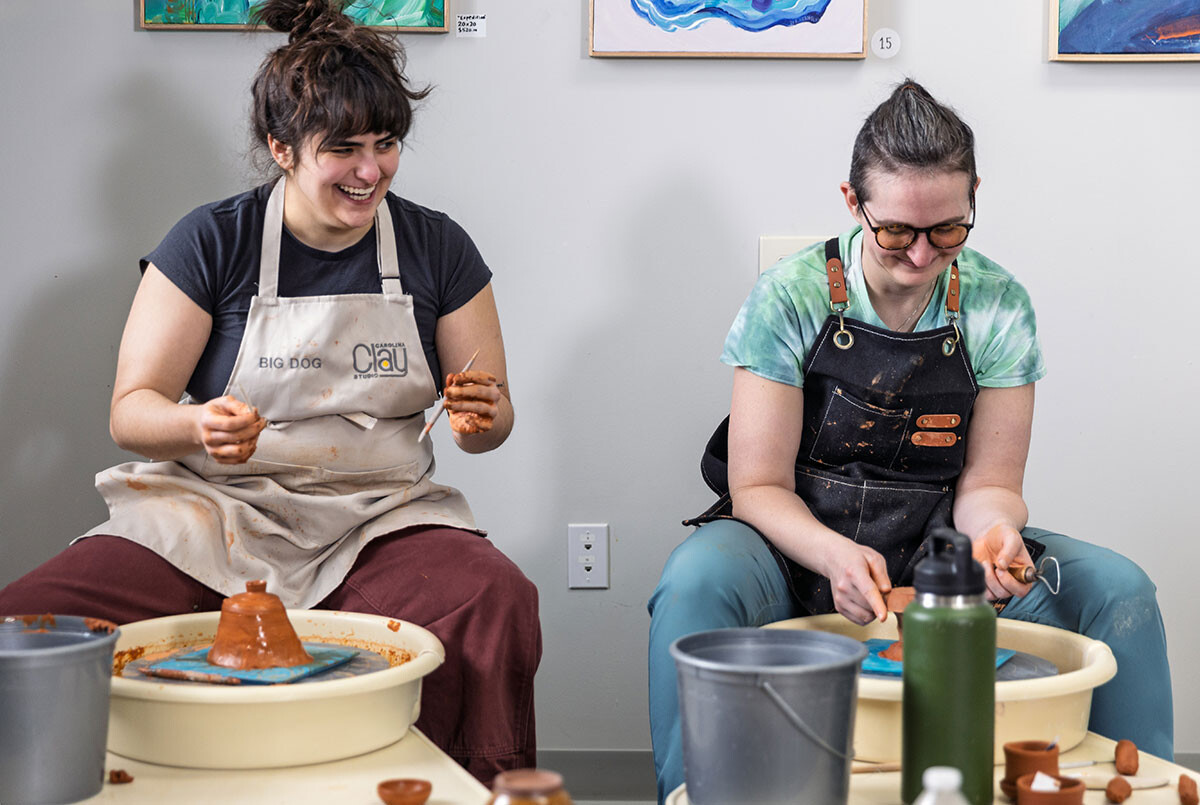
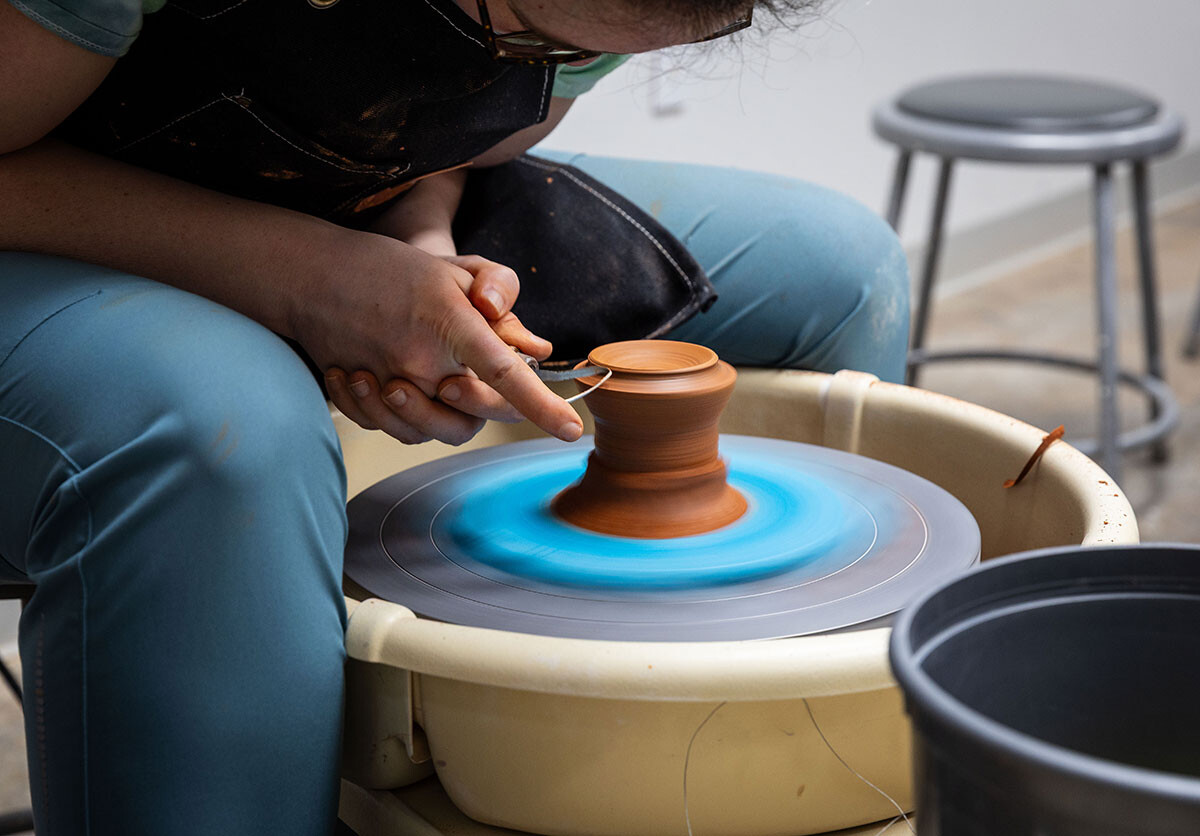
“This business really started with one simple concept, which is community,” says Carolina Clay Studio owner and instructor Nate Goldman. After falling in love with pottery, Nate started teaching and managing studios. Getting to witness how people’s lives were transformed by these spaces meant that when a studio they were managing was forced to shut down, Nate’s students shared the impact of the classes on their lives and how much the community studio meant to them. “I’m opening up my own place,” Nate decided in that moment.
Although it would take another three years to welcome students, and Nate started with “nothing in the bank and a lot of dreams and plans,” Carolina Clay Studio, which opened in October 2025, already has 13 members and is currently bringing on several more. There are a variety of classes offered, with the foundational course being the six-week Intro to Wheel, which focuses on the fundamental cylinder and bowl forms.
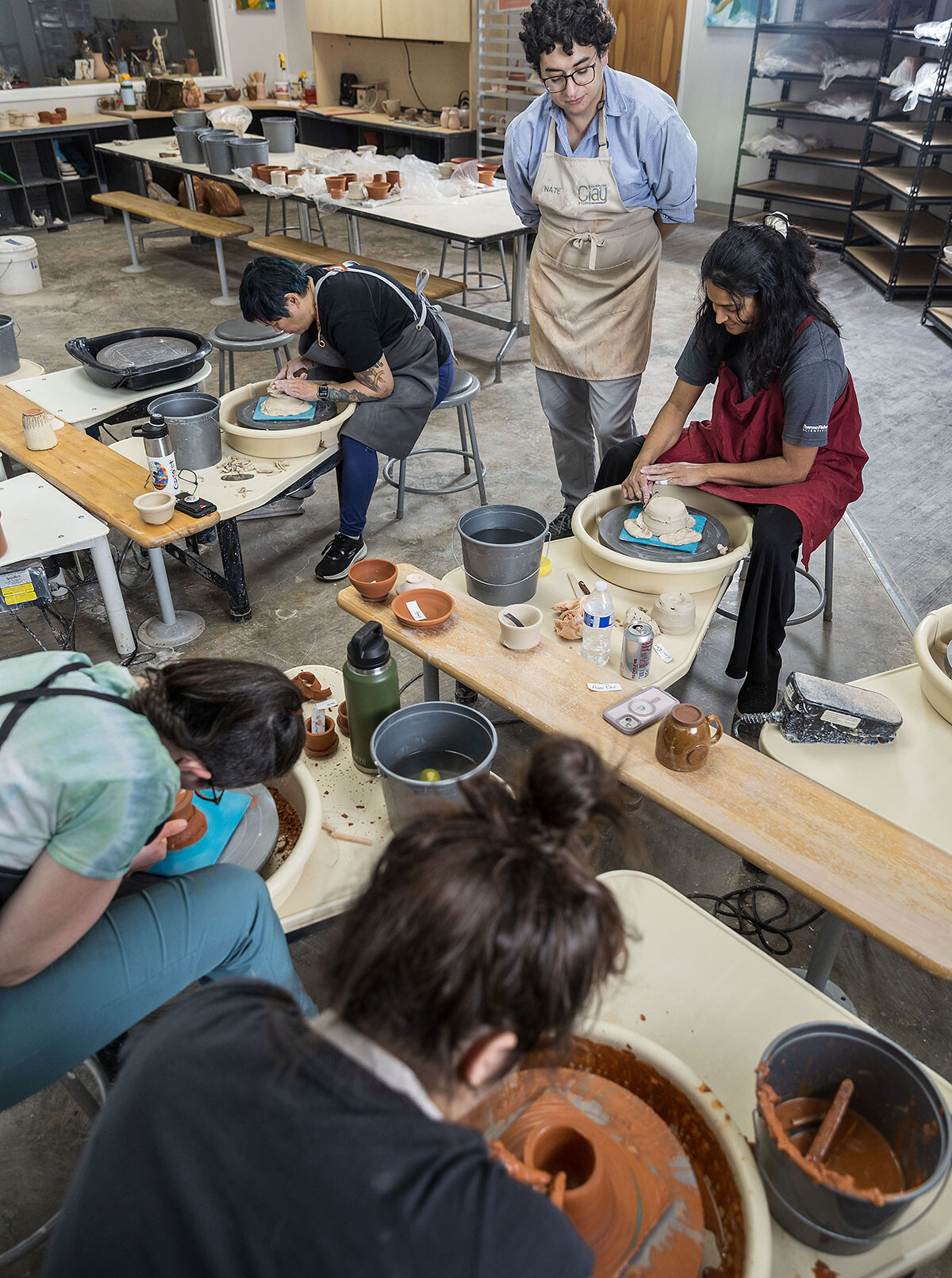
Nate Goldman has spent years building and revitalizing pottery studios and possesses a deep commitment to educating their students.
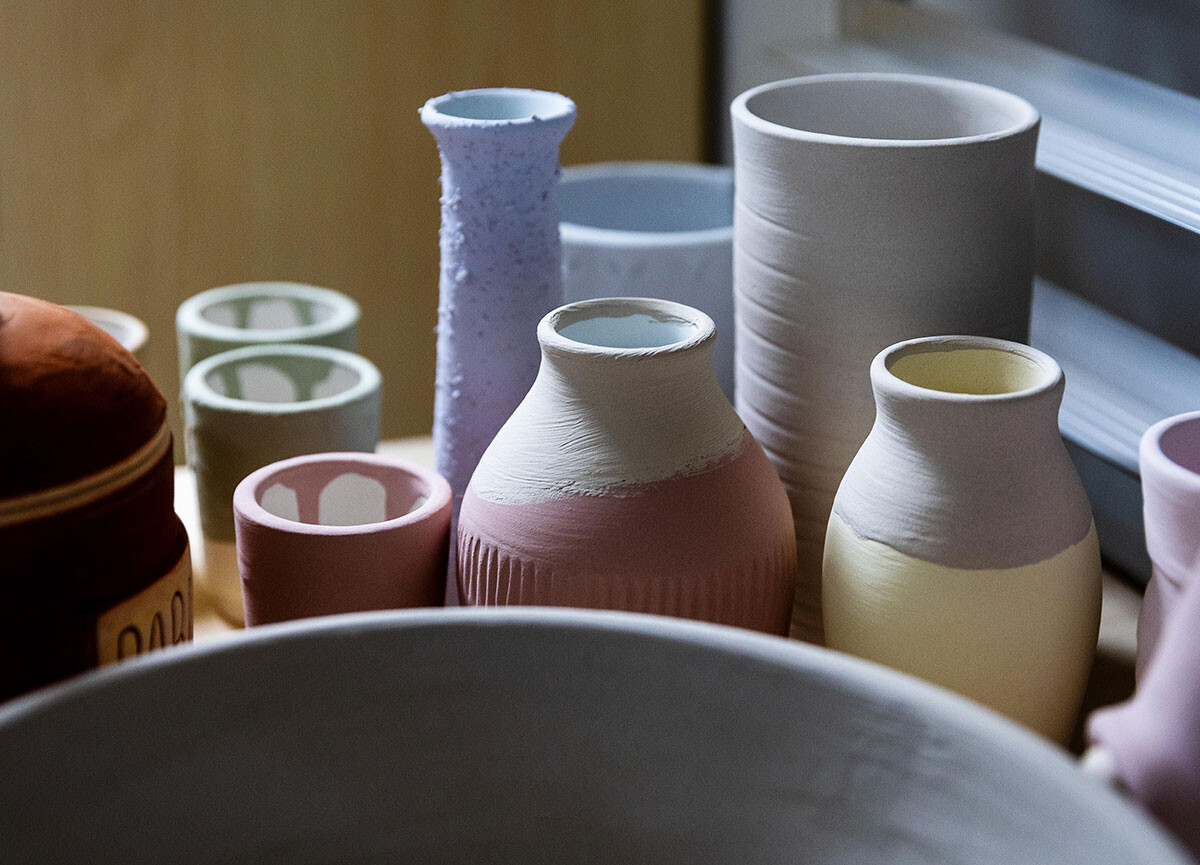
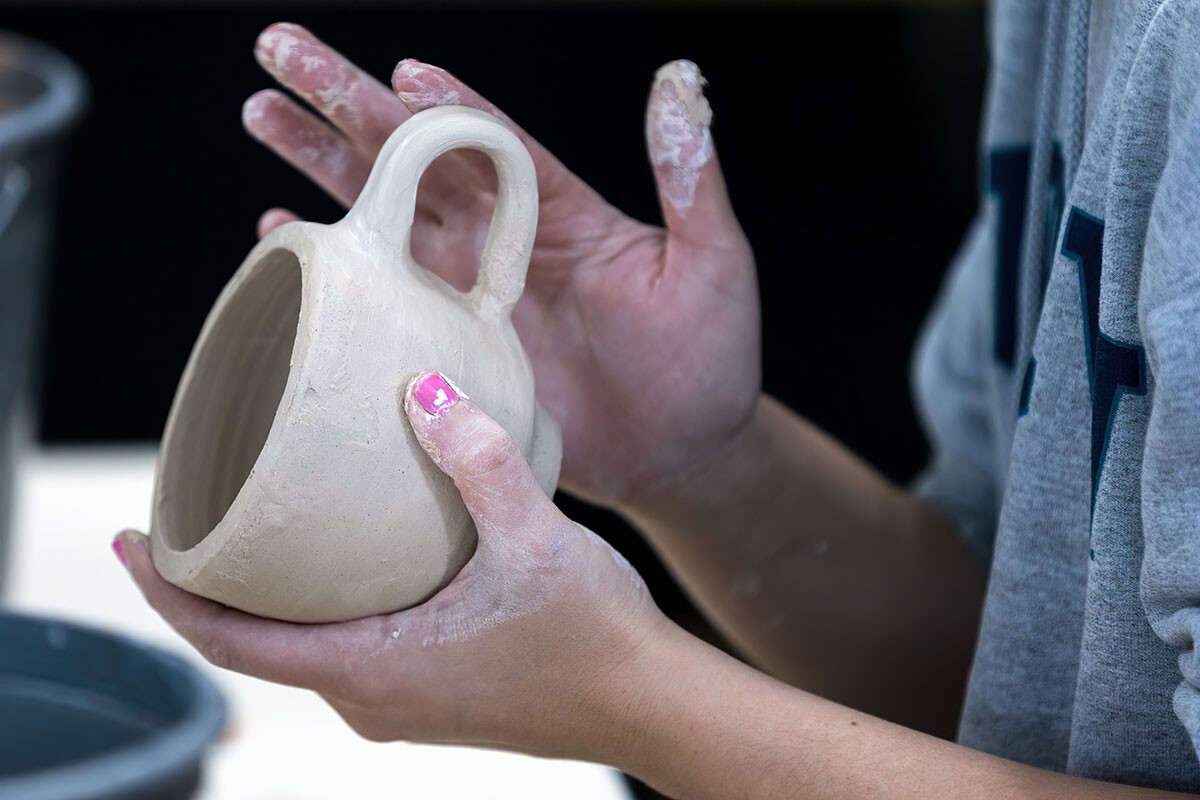
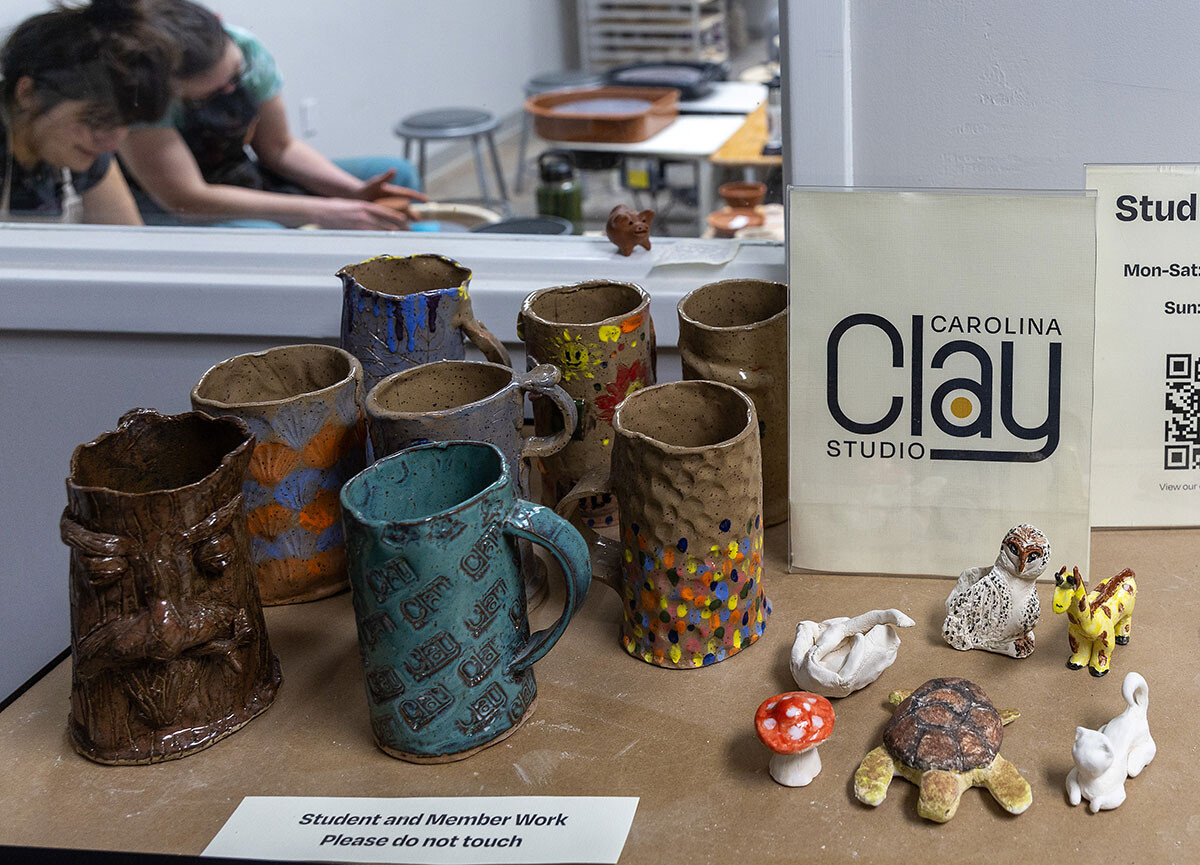
Beyond these primary forms, everyone’s individual style is unique. “Every artist,” Nate explains, “is going to create something with their visual voice, so there’s a lot of room for design. We can put handles on our cylinders and turn them into mugs, and then, of course, the way we glaze — which is where we get that glass and color — that is going to be individual to the artist as well.”
A phrase Nate often hears from people is: “I’m not an artist.” With pottery, though, the surface isn’t two dimensional — it’s a whole-body form of creative expression. “We get a lot of students who say they can’t paint a stick figure … who end up making fantastic work,” Nate shares, pointing out that those with STEM backgrounds or who are good at analytics and processing make great potters because it is such a process-based art form.
Juliana Schiano, a Cary resident who works as a therapist for an outpatient practice based in Raleigh, started pottery and ceramics during graduate school as a way to practice self-care, largely “just playing, and whatever I made, I made.” Juliana says that it wasn’t until she started taking classes with Nate that she felt she could be any good at pottery.
Working with your hands and developing something that you can use in your daily life is a mindful practice that requires focus and patience, Nate says. “It’s not something you can rush. You need to be fully present with each step.”
Sometimes, students finish a class and say, with a huge smile on their face, “Oh, I forgot I was having the worst day.” The experience of stepping into the studio space and focusing on the craft is one Nate describes as “otherworldly.” Using the object you create, integrating it into your rituals for coffee or tea or breakfast cereal, is just a bonus.
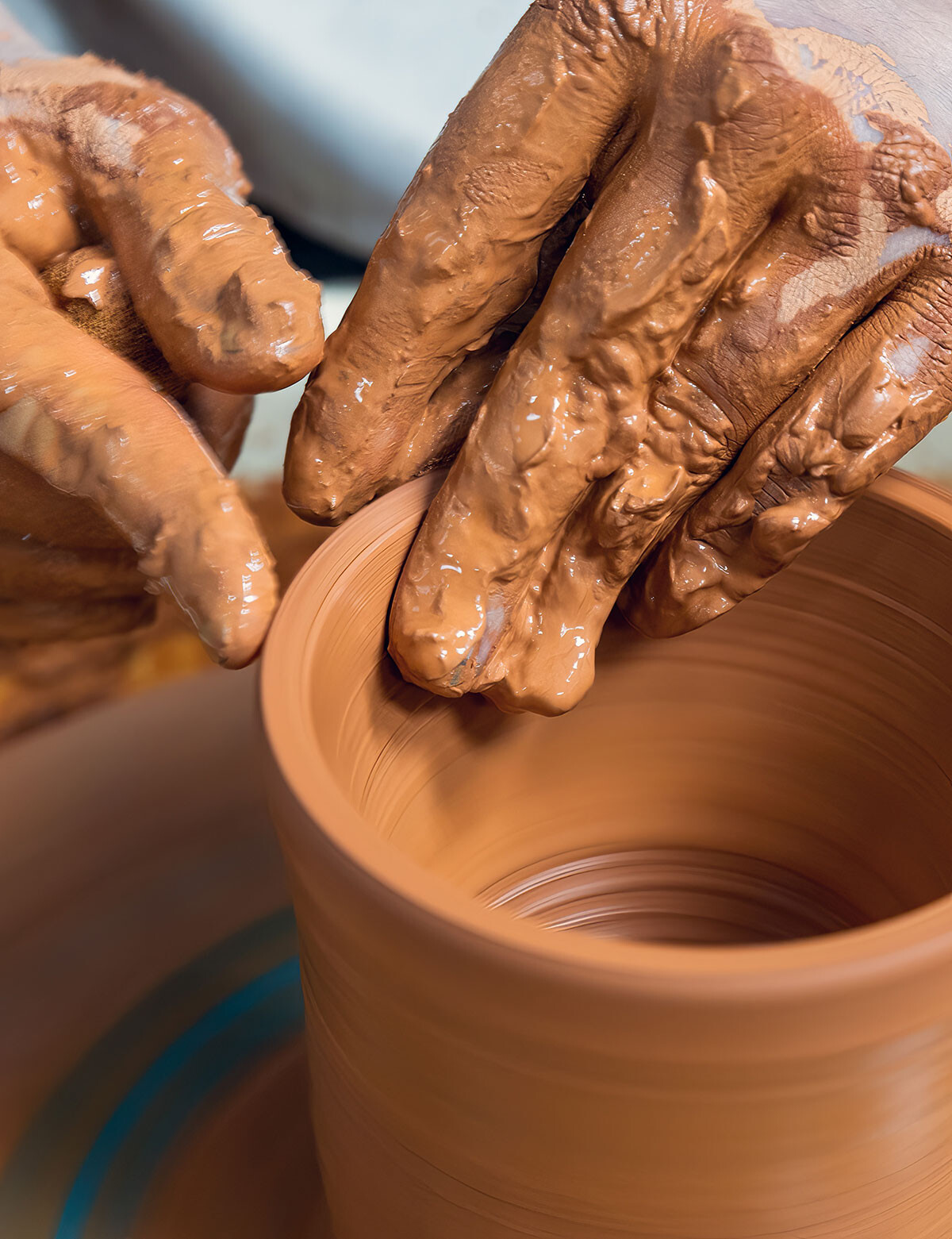
While some members in earlier stages of life bring unbridled energy, Carolina Clay Studio has a large base of retired individuals who no longer have the strength and flexibility they once did (some with advanced arthritis). Thanks to the integration of different techniques, every class remains accessible; people with all sorts of abilities can approach and enjoy the medium.
One of Nate’s favorite things about classes is that students are working on things they’ve never done before with people who are in the same situation. “There’s a lot of trial and error,” Nate says. “People are usually pretty focused, and pottery definitely takes a lot of attention and concentration — especially at first.”
The act itself is also intimate. Students’ hands are in the mud, and they are interacting with the wheel, touching every particle of clay that is used to make their vessel. Their fingers make a direct impact and are the main tool. There’s something very humbling and human, Nate says, about using dirt and water to make beautiful works of art. Iron-rich clay has been used as long as we’ve made handcrafted tools, and pottery has developed independently in every major civilization.
Nate selected Cary as the home for the studio because the community comprises many great minds that come from different facets of life. “With that,” Nate says, “they bring their own unique story … and they’re able to show that in both their art and the way they connect with each other in the studio.” Real creativity, Nate shares, doesn’t happen in private rooms — it happens through conversations with people of different backgrounds.
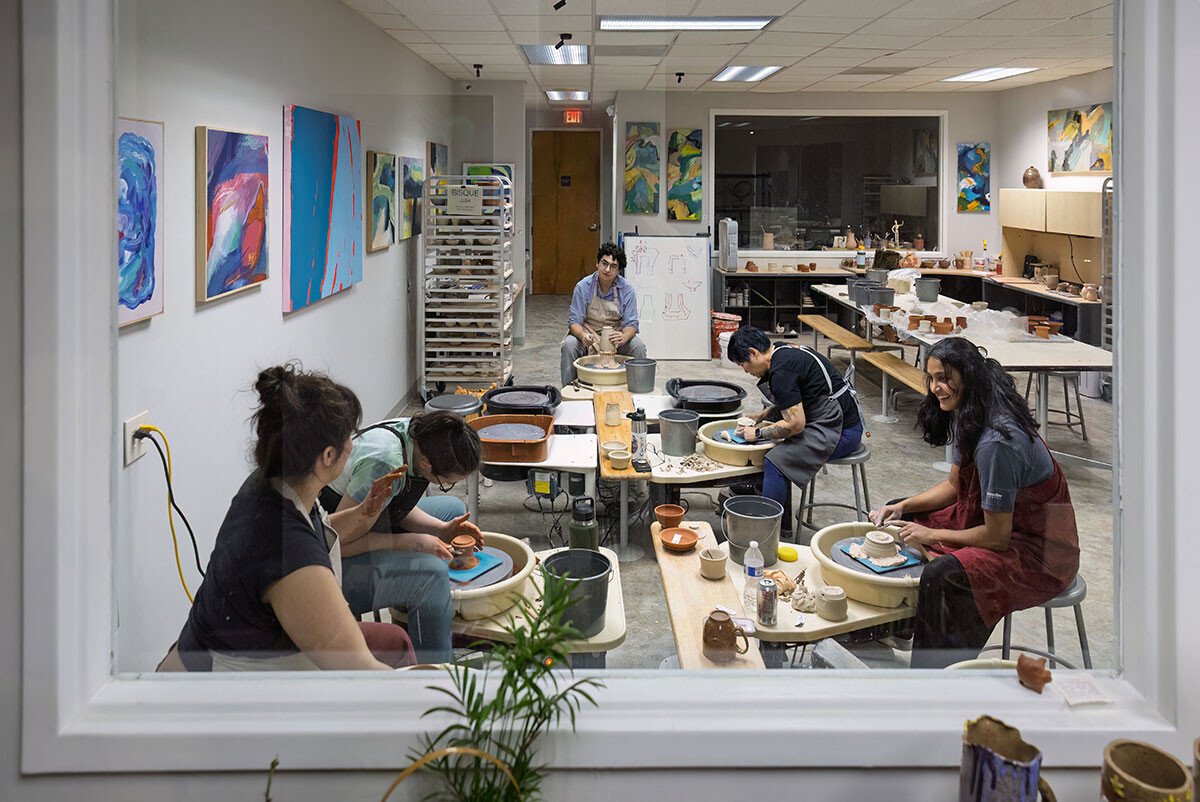
The shared intimacy of Carolina Clay Studio has already helped great friendships form. People admire each other’s works in progress and give compliments and tips. Nate thoughtfully chooses music to set the right vibe. Much as with a fantastic meal, there’s room for both silence and focus and interactive chatter.
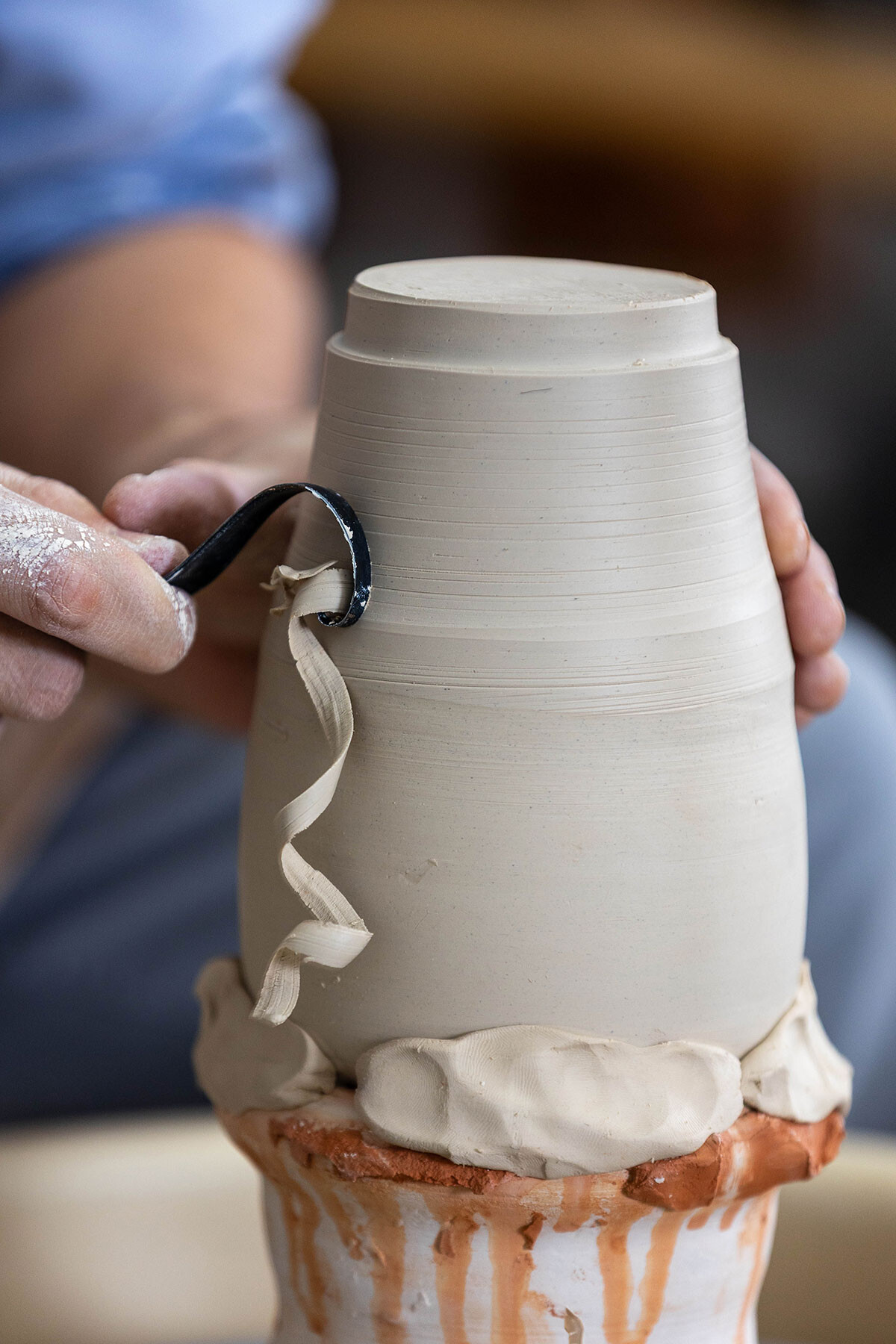
Nate understands that in the studio, conversations get profound quickly. People, Nate says, “make the space.” Because you can’t have a community pottery studio without a community, a painter recently exhibited on Carolina Clay Studio’s walls, which will transition to rotating exhibitions of members’ work. There’s also a resident potter, and the studio hosts vendors markets across the Triangle.
Nate’s care for the Carolina Clay community is what makes the studio so special, Juliana says. With every piece made and every class taught, Nate’s love for those within the studio and for the ceramics discipline is deeply evident to students. “The studio is truly a special place, from Nate to the many wonderful community members,” she says. “There are few places I love more in this world than Carolina Clay Studio, and that is largely because of the work and support of those amazing people.”
Nate knows that if you want a mug, you can go to Target and be checked out in three minutes. “If you want to make your own mug,” they say, “it takes so much more time and so much more focus and intention, but then you have a mug that also has so much more meaning.”
Slowing our rate of consumption and inviting mindful practices are just two of the benefits of spending time in Carolina Clay Studio — where ceramics are shaped by community.

- Pay It Forward: United Arts Wake County
- Recipes from Readers: Anne’s Way Kentucky Derby Panzanella Salad
- Liquid Assets: Larry The Cucumber
- Caffeinated Canvases
- Getting Frank About Pimento Cheese
- Garden Adventurer: Easter Lily-ology
- Small Business Spotlight: Carolina Clay Studio
- A Stage for Youth
- Light the Way
- Women’s Work
- Things to Do: April 2026