



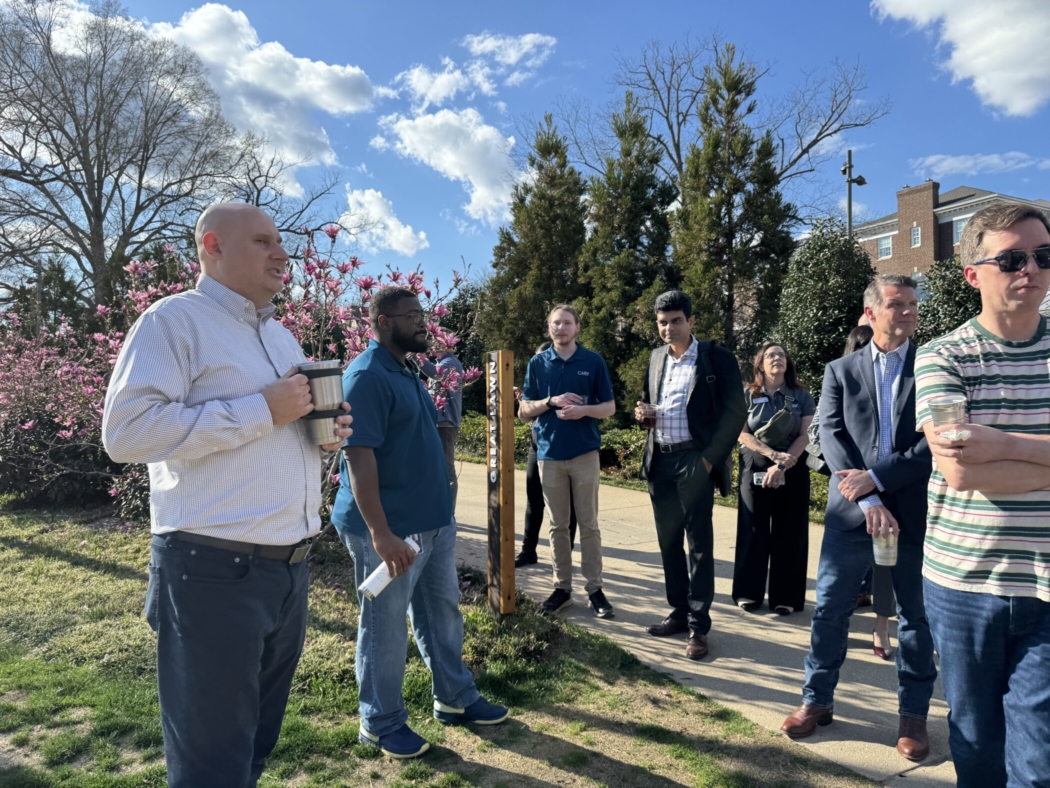
The Smart Cities Connect conference took place in Raleigh March 10-12, but it began with an opening event in downtown Cary.
The conference brings together municipal leaders and technologists from around the world to discuss ways in which innovative tools can be used to improve daily life. Using everything from cameras to Wi-Fi, sensors to AI, conference attendees seek insights into how to more effectively and efficiently deliver services to their residents. So for them, the Downtown Cary Park is not just a great venue, it’s a demonstration of success.
Breaking New Ground
Opened in 2023, the Downtown Cary Park embodies 7 acres in the heart of the town, featuring waterways, a large stage, dog parks, a playground, and a skywalk. The ultimate price tag for the park was $65 million, but less than three years after its opening, that feels like a bargain. Preliminary estimates indicate that the park drives $15 million or more of annual economic impact, and the project has won numerous awards, including Fast Company’s Best Urban Design Project (2025) and USA TODAY’s #1 Public Playground in America (2025).
Beneath the surface, the park is working hard for Cary residents, serving as a testbed for the kinds of innovative projects that keep Cary a top place to live.
“What makes this park unique is not only what you see, but how it operates behind the scenes,” said Mayor Harold Weinbrecht at the event’s opening remarks. “Technology and data help us to better understand how this space is used, how to care for it, and how to continuously improve it. And that insight allows us to be proactive, more efficient, more responsive to the people we serve.”
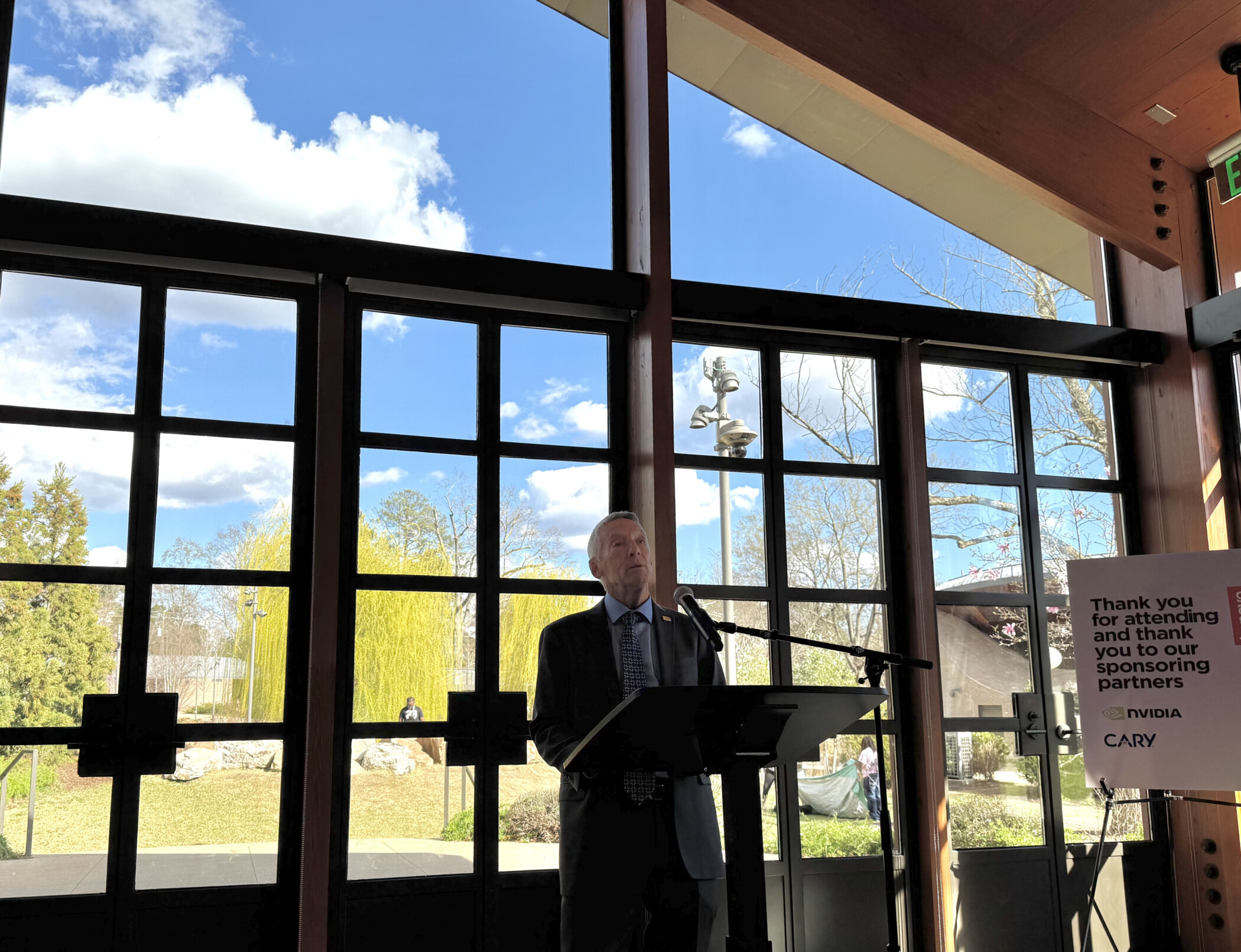
Cary Mayor Harold Weinbrecht delivered opening remarks at the Smart Cities Connect conference opening event.
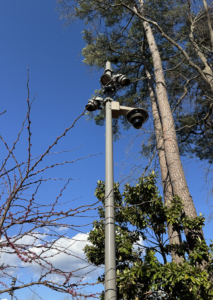
Much of this tech is innocuous. Towering posts keep sensors and cameras that collect weather and crowd data out of the way, while also delivering Wi-Fi across the park. Hidden devices monitor everything from trash cans to paper towel dispensers, ensuring timely and efficient deployment of resources. And deep in a collection of bushes, a robotic lawnmower waits for a peaceful moment to emerge and tackle the Great Lawn in the center of the park.
With the data they’re collecting, the Town of Cary IT team, led by Nicole Coughlin, is looking for insights, creating dashboards, and generating alerts. For example, the park’s horticulturalists have a dashboard that provides insights powered by weather information, soil sensors, and water measurements. With this data, Town staff can check to ensure that the more that 1,000 species of plants are getting the right amount of water, drainage, sun exposure, and temperatures to ensure a healthy ecosystem.
 Alerts are also a critical tool for Town staff. The park has an amazing playground, featuring a hill covered in slides. Several of those slides are metal, and as many parents know, they can get very hot in summer months under direct sunlight. The Town has sensors that monitor the temperature of these slides and can alert staff when they reach a certain threshold so the slides can be temporarily closed until things cool off.
The park also hosts a large weather detection tool on top of the parking deck, measuring air quality, sun exposure, barometric pressure, temperature, and much more. One of the key functions of this tool is monitoring lightning strikes, and when those become a concern, Town staff can be alerted to communicate lightning detection. Visitors to the park might notice subtle music being piped in through the more than 300 speakers dispersed across the seven acres. In case of emergencies, like lightning strikes, Town staff can communicate warnings and share safety information. There are also five kiosks spread around the park, mainly near entry corridors. These normally show upcoming events and Town notices, but can be used for alerts in cases of emergencies.
Extending the Innovation
What Cary learns from the Downtown Cary Park is getting repurposed. For now, the focus remains on some of the larger, event-based spaces such as the USA Baseball Training Facility and WakeMed Soccer Park. But there are plans to continue to expand the deployment of sensors and data collection across municipal buildings and parks.
In the meantime, some small-scale testing of these tools is also in use on area infrastructure. The Town is measuring temperatures on some key areas of pipes to monitor for freezing temperatures that could cause damage and disrupt utilities.
The park was also intended to support the broader Cary downtown area. Downtown Cary was actually built on a flood plain, and while it wasn’t a priority for town founders in 1871, it has become a bigger issue over time as 100-year storms become more common. Downtown Cary Park mitigates this issue with storm water vaults below the park that can store and carefully release excess water during heavy rains. Additionally, rain gauge and flood detection tools are in use throughout the town to alert staff of dangerous and rising water levels.
It’s this dual purpose: solutions for safety and growth delivered with an improved resident experience, that makes the Downtown Cary Park and the Town of Cary a model for others. Cary resident and State Chief Information Officer Teena Piccione spoke of this effort, so well illustrated by the park’s commitment to turning urban infrastructure into a shared sanctuary.
“The goal isn’t just smarter technology; it’s smarter communities, better services, and a brighter future for everyone that we serve.”