



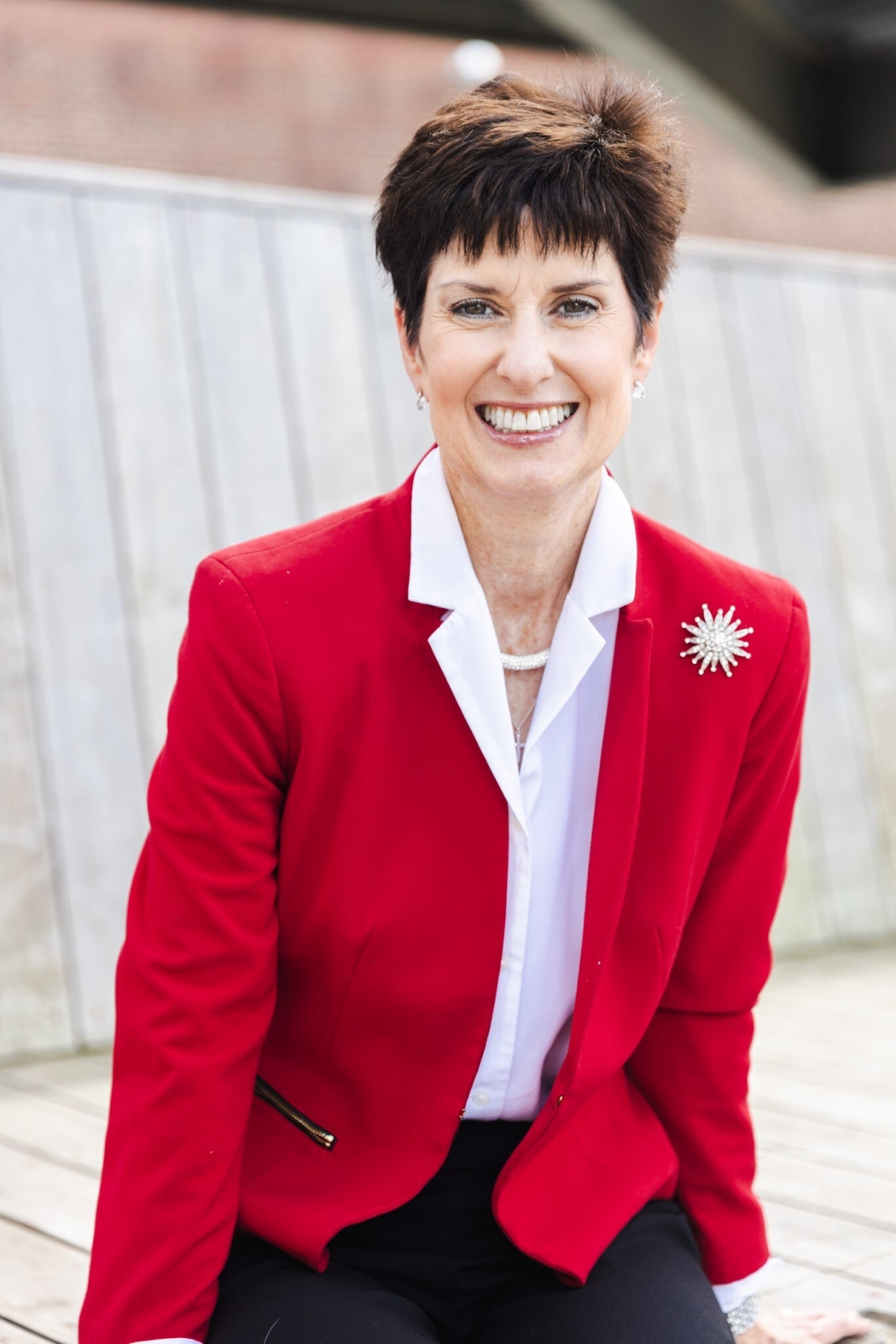
Teena Piccione has an outstanding career in technology and leadership, capped by her latest role, Secretary & State CIO of North Carolina. Her experiences, and how they led her to Cary, are a testament to her passion for supporting the residents of North Carolina and the ability of governments and corporations to improve life through technology.
I sat down with Teena recently at The Refreshery in downtown Cary for juice and some of the juicy experiences from her career in tech.
Jen: You have a wealth of corporate experience: AT&T, Fidelity, RTI, Google. Which of those roles was the most formative for you, and why?
Teena: I would say each one was a stepping stone to the next.
So, at AT&T, they gave me the grace of a new role every two and a half years so I could lead every aspect of the business. I had a lot of advocates that helped me continue to grow in that company. I loved every moment of it.
When I went to Fidelity, I had to learn an entire new skill set. It was a new industry. I had to learn that a Fidelity head nod meant that they weren’t really agreeing with you, but they were just making you feel better about the non-agreement. It taught me how to negotiate a lot more than I ever thought I would be able to.
RTI — such a great company on a great mission — and being able to help them in 73 different countries, was such a blessing.
And then on to Google, and being instrumental in making sure that Google had a presence in North Carolina. I had two unique roles there that allowed me the benefit of seeing all different sides of Google, and it stretched me in ways I never could have imagined. I took a sales role when I never had sales experience, but I think there’s a lesson in there for everyone. Don’t be afraid because you don’t know how to do something; instead, jump in and learn it.
At what point in your career did you come to North Carolina? And then why did you stay?
I came to North Carolina with Fidelity. They had just opened the Morrisville branch, and I (accepted) sight unseen. I spent one night at the Umstead and moved the entire family across the country.
I had lived in Georgia, in Texas, California, all these places, but we really loved North Carolina and the East Coast. After a few years, Fidelity said, “We need you back in Boston as the chief operating officer.” And I actually left Fidelity over that. My kids were seniors, so we ended up staying. I went to RTI. I’ve had lots of offers to leave and never have. I think it’s such a special place. Why not bring the world here instead of us having to go to the world?
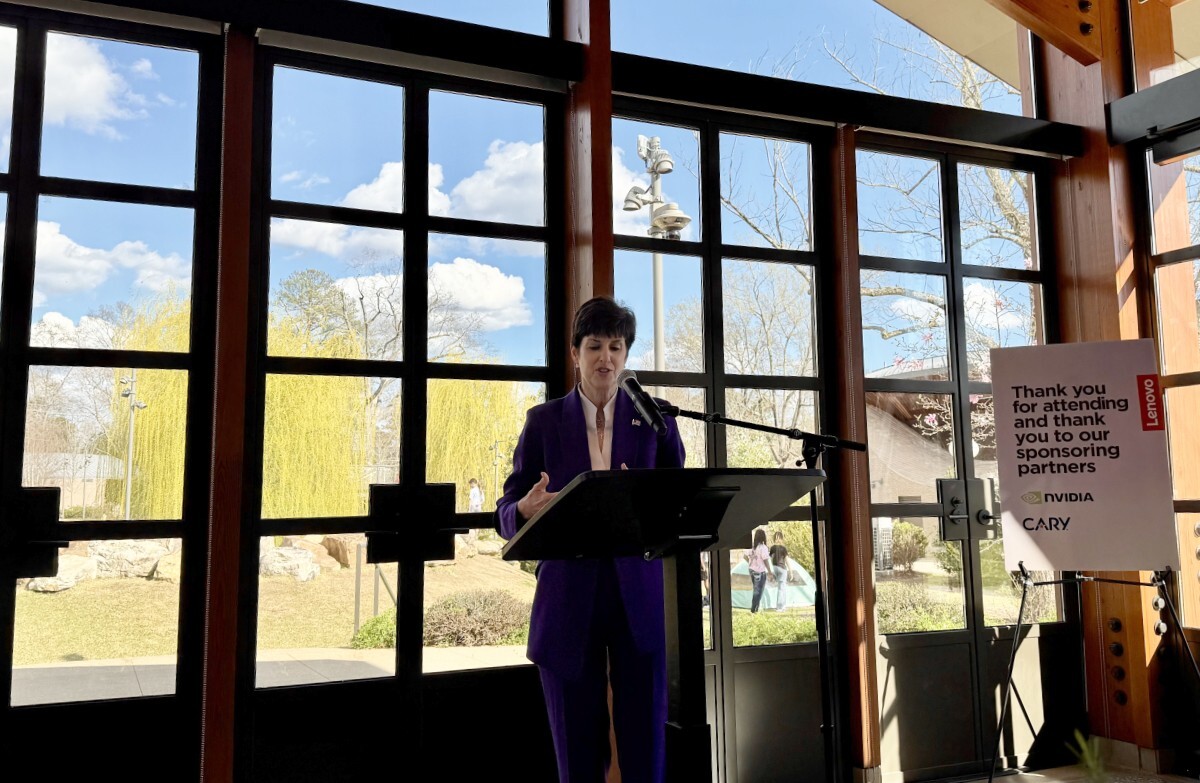
With so many years in corporate roles, what made you even consider, let alone make the move into a government role?
Josh Stein (governor-elect at the time) called and asked, “Would you mind coming and interviewing for this role?” And that was so funny. I’m thinking, “I don’t know if it’s a scam or not.” So I looked it up, and sure enough, it was real. I interviewed for the position, and I was flying back from New York, literally on the plane, and he called and went, “Would you come and work for me?” And I’m like, “Again, who is this?” He goes, “You have got to save my number in your phone.”
I did remind the governor I’m independent: I’m not red; I’m not blue. I vote for smart people, and I asked him if he was smart. I don’t think he’d ever heard that.
So, anyway, fast forward, I ended up saying yes and starting to roll with Josh to really transform technology. And I left it a lot better than I found it.
What made you say yes? Why did you think, “I’m going to have more of the impact that I want to have in North Carolina than I am at Google”?
When you look at the end of your career and you think about how you want to end, what type of impact do you want to leave? What type of legacy can you make at Google? You’re one of many incredibly smart people, and Google is full of some of the most brilliant minds in the world. But you can make a really big impact in the government because they’re all politicians. I’m not saying they’re not smart, but they’re all politicians. So, having a different lens to be able to come in and show the art of possible and think about things from a different viewpoint, that’s where I really felt I could have the bigger impact.
In politics, whoever the leader is — I don’t care if it’s the president; I don’t care if it’s the governor, or whoever it is — they need to put people in roles where they have the breadth and depth of experience. Then give them the tools and people and support to ensure they can deliver on the promise and fulfillment of that role. The state of North Carolina, and its citizens, should expect no less.
And I was really tired of the DMV lines, and I was really tired of the websites for the government, and I really hated most of the tech, so I figured I had to put my money where my mouth was and be able to make that impact and sacrifice. I will tell you, when they say it is service, it is service.
How does Cary compare to other locations that you’ve lived in terms of the atmosphere of technology, the implementation of technology, the excitement about technology?
I’ve lived in a lot of places: Atlanta, Dallas, Texas, San Jose, California. I’ve worked out of Boston, Massachusetts, New York City, all tech cities. I had offices in Zurich, in Munich, in Ireland. I have lived all over the world and worked in some of the hottest tech cities. I would say Cary blends that down-home feel with the technology that makes it effortless, but at the same time you still feel like no matter where you go, you can meet someone on the street and have the Wi-Fi connectivity to be able to do anything with them. I think that’s the blending that people are looking and hungry for across the United States, and yet we have it right here in our backyard. It’s the experience of a hometown, but the technology to enable everyone to feel safe and secure, and make it an effortless experience. For the state, that’s what I will always be on the side of striving for.
You were a founding member of Chief (network for women leaders); you’ve had speaking roles at dozens of female-forward events. What do you think is harder: being a woman in tech or being a woman in leadership?
I would say it’s both, and here’s why. Being a woman in tech, I am still the only woman in the room. We want to inspire the next generation, and especially women, to get involved in tech, yet when they go to any college or university, there are only one or two of 50 or 60 (women) in a tech major. They’re going to aspire to be where they actually see female leaders, because that’s what we do: We naturally gravitate toward where we feel most comfortable. I’ve had to remain uncomfortable my entire career.
I will tell you, women in leadership is so rare that, unfortunately, sometimes it doesn’t show up well, because if a female leader missteps, it’s all over the news. I am questioned about everything, and I finally got to where I had to find my confidence, and there’s a lot of times I have to act a lot more than I feel comfortable. Even in political events, there’s very few women in those seats. No matter where I’ve gone in my career, I’ve always found I’m going to have to create my own path.
But I will always pull people with me. When I was at the state, I populated my senior leadership team out of Google, Fidelity, out of AT&T, I pulled them out of RTI. And the reason was they were trained. They were some of the best in the world, and I convinced them to come, not because the state paid well, not because it was a sexy place to work, but because they knew I believed in them, and that’s what we need more leaders to do.
What comes next? If you could create a job for yourself, who would it be with, and what would it be doing?
Right now I am advising companies and helping a lot of startups in our area be able to really make a difference. I’ll decide on my next adventure as I go, but I will remain here.
If I could pick anything? It would be with an AI company to be able to help educate everyone on AI in a way that takes the fear factor out. AI is a tool. Tt is nothing more than a tool, and we have to be able to show how it can be used correctly. I don’t care if it’s Microsoft, Google, AWS, Open AI, Claude. We’ve got to be able to have that voice and passion to help every single person in a job be able to go much farther than where they are. Let’s teach them how they can embrace it, and how it can really help them, but also how to pressure test it, because it’s not going to give you the right answer all the time.
That’s my passion, having the ability to help people see the art of what’s possible. Go out and take the market; go out and fill that niche that we’re all missing, and use these tools to do it.